Government agonizing over 'contributing to transit' in the Strait of Hormuz... Observed to be reviewing various options including deploying warships.
- Input
- 2026-05-02 10:40:06
- Updated
- 2026-05-02 10:40:06
Amidst mounting U. S. pressure to join the Maritime Freedom Coalition (MFC), the government has entered a final phase of deliberation regarding multifaceted contribution measures, including the deployment of warships, in an effort to kill two birds with one stone: securing safe passage for Korean vessels and strengthening the ROK-U.
Amidst mounting U. S. pressure to join the Maritime Freedom Coalition (MFC), the government has entered a final phase of deliberation regarding multifaceted contribution measures, including the deployment of warships, in an effort to kill two birds with one stone: securing safe passage for Korean vessels and strengthening the ROK-U.
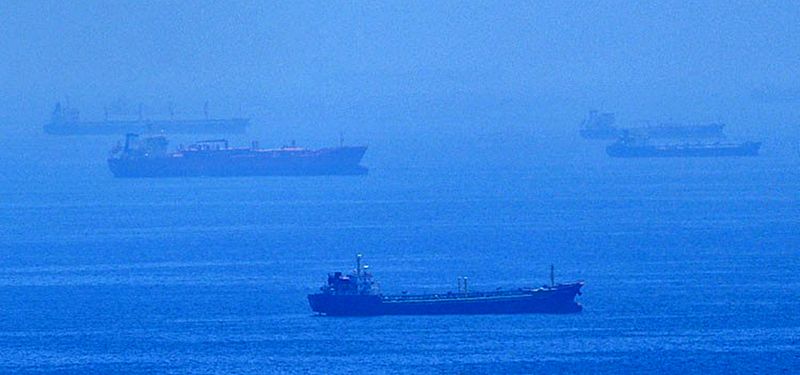
According to the Ministry of Foreign Affairs and the Ministry of National Defense on the 2nd, the government has recently been receiving repeated official and unofficial requests from the U. S. to join international cooperation for the protection of civilian vessels in the Strait of Hormuz.
The issue is that the situation requires a comprehensive consideration of the potential for diplomatic friction with Iran and the actual defensive capabilities of our military assets. It is understood that 26 South Korean-flagged vessels and approximately 120 crew members are currently stranded in the waters near Hormuz. While ensuring their safety is the top priority, military concerns are being raised that deploying warships into the narrow strait could lead to entering a "kill box"—a zone vulnerable to enemy drone or surface-to-ship missile attacks.
Security experts believe that the South Korean military's contribution will not be limited to a simple "dispatch of warships. " This is the background behind the serious consideration of a "third way"—such as dispatching liaison officers for information sharing or temporarily expanding the operational scope of the Cheonghae Unit—which can demonstrate substantial contributions to security while minimizing diplomatic burdens.
A government official stated, "The stability of energy supply and the protection of citizens' lives are non-negotiable principles," adding, "We will maintain close cooperation with allies such as the United States while devising the most strategic timing and methods for deployment to maximize national interests. " The prevailing view is that the government's choice will serve as a severe diplomatic test, requiring it to solidify the trust of the ROK-U.
S. blood alliance while safeguarding the practical interests of Korean companies and shipping firms in the Middle East.
This cautious stance by the government aligns with analyses by major global security strategy research institutes. The Center for Strategic and International Studies (CSIS) warned in its Q1 2026 situation report that "while the Strait of Hormuz is a vital artery through which 20% of global crude oil shipments pass, asymmetric threats utilizing drones and mines have recently surged.
" CSIS analyzed that countries highly dependent on energy imports, such as South Korea, will be required to make substantial asset contributions beyond the dispatch of liaison officers or intelligence sharing, if only to avoid controversy over "security free-riding. " The International Institute for Strategic and International Studies (IISS) also pointed out in an emergency security briefing last April that "military tensions in the Strait of Hormuz are highly likely to take the form of low-intensity asymmetric conflict rather than conventional warfare," adding that "advanced assets possessed by the South Korean Navy, such as Aegis destroyers, can play a key role in establishing a multi-layered defense network, but at the same time, they will incur 'strategic costs' in the form of having to endure diplomatic friction with Iran.
"
Amidst mounting U. S. pressure to join the Maritime Freedom Coalition (MFC), the government has entered a final phase of deliberation regarding multifaceted contribution measures, including the deployment of warships, in an effort to kill two birds with one stone: securing safe passage for Korean vessels and strengthening the ROK-U.
[email protected] Lee Jong-yoon Reporter