"Honey, don’t we own Google? The neighbors are quitting"... Google’s push toward $400 leaves retail investors in tears [Friday U.S. Stock Investors]
- Input
- 2026-05-01 15:30:00
- Updated
- 2026-05-01 15:30:00
[The Financial News] "Honey, why did you stop me when I said we should buy Google last year? The family next door says they’re taking a trip with the money they made from selling Google, and look at us now!"
During Wall Street’s 'Big Tech Super Week,' painful sighs filled living rooms across ordinary households in South Korea.
The unprecedented wave of earnings releases from giant companies dominating the top of the global market cap rankings, including Alphabet Inc. (Google), Microsoft Corporation, and Meta Platforms, split investors around the world between heaven and hell.
Even though they were all riding the same ship called the 'Artificial Intelligence (AI) revolution,' a brutal scoreboard was unveiled as a strict sorting of winners and losers began, making some suddenly rich and others suddenly poor.■ Meta plunges 10%, Microsoft falls 4%... the brutal backlash triggered by AI optimism
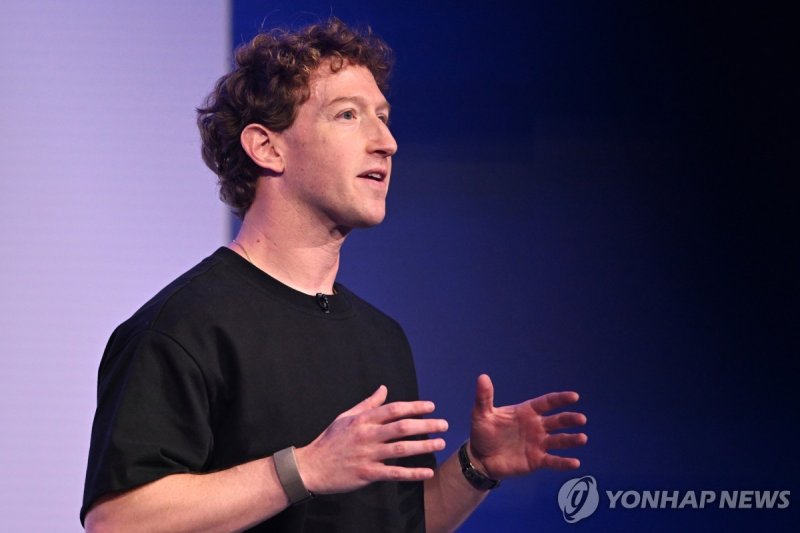
Meta Platforms was the first to bleed. Despite posting strong first-quarter results, its stock plunged more than 10%.
When CEO Mark Zuckerberg warned that it would take a "multi-year, heavy AI investment cycle" before profits materialize, investors, gripped by fears of a 'cost shock,' hit the sell button. A huge bearish candle appeared, and the stock ended up crashing by more than 10%.
Even more shocking was the fact that Microsoft Corporation (MSFT), long seen as a symbol of stability, could not escape the knife.
Microsoft reported strong results that beat market expectations, with core Microsoft Azure cloud revenue surging 31%. It was, naturally, an earnings surprise, and a very solid report showing that the company is steadily preparing for the AI era.
But the market’s already elevated expectations were unforgiving. Concerns over rising AI CAPEX, or capital expenditures, and the 'cost fear' sparked by Meta Platforms spread across the sector. Microsoft’s shares also fell to around $398 intraday and closed regular trading down nearly 4%.
No matter how much money a company makes, if it fails to meet the market’s expectations for an overwhelming lead, it gets hit without mercy.■ The 'return of the king' Google tears through the market with unbelievable results... a nuclear-level 10% explosion!
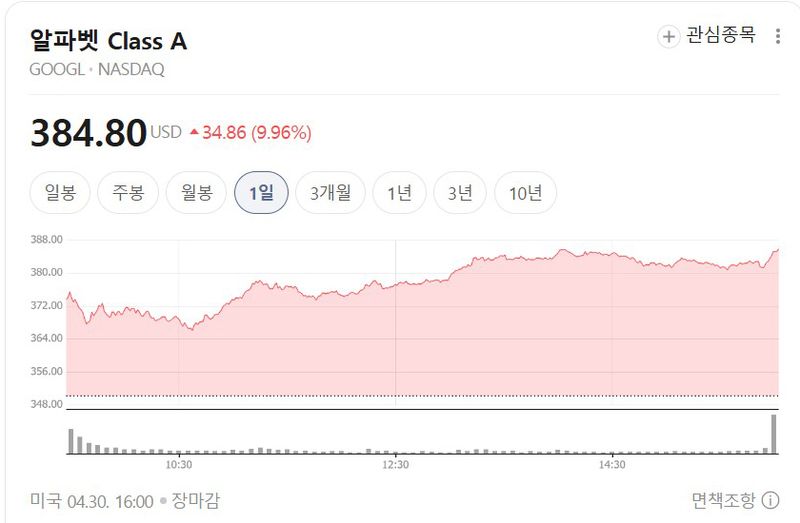
While everyone else trembled in fear and fell, there was one absolute powerhouse that surged alone and sucked in all the market’s money like a black hole. That was Alphabet Inc. (Google).
Google’s first-quarter results were nothing short of astonishing. Revenue jumped 22% from a year earlier to $109.9 billion, setting the company’s highest quarterly growth rate since 2022. Net profit soared 81% to $62.6 billion, and earnings per share came in at $5.11, shattering Wall Street’s expectations.
The heart driving this overwhelming performance was clearly cloud. Google Cloud revenue surged 63% year over year, crossing the $20 billion mark for the first time at $20.02 billion. Operating profit jumped to $6.6 billion, tripling in just one year. Even more striking was the backlog. In just one quarter, it nearly doubled from $240 billion to $460 billion, signaling a massive flood of cash over the next two years.
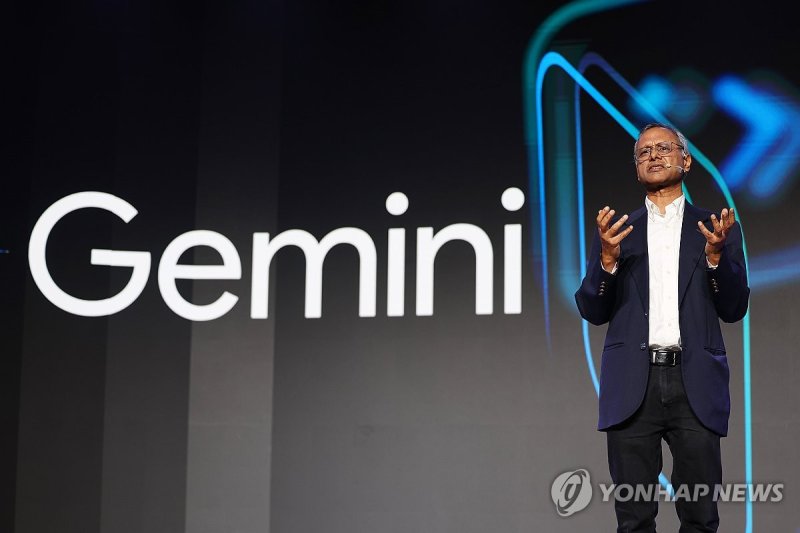
This was more than just revenue growth. It sent Wall Street a powerful message. As demand for the enterprise AI model Gemini Enterprise exploded, Google became the first to prove a turning point: "AI investment is no longer a bottomless pit, but has begun to generate real gold." That is why CEO Sundar Pichai said, "AI is lighting up every part of our business."
With its core search business at $60.4 billion and YouTube advertising at $9.88 billion also holding firm, Google raised its planned AI infrastructure CAPEX for the year to as much as $190 billion. While rivals were weighed down by costs, Google moved to secure infrastructure ahead of time, backed by its enormous cash-generating power.
To cap off the market’s enthusiasm, Google also raised its quarterly dividend to $0.22 per share, sending the stock soaring. It rose more than 9% intraday, and including after-hours and weekly trading, it had already climbed more than 10% and was charging toward the $400 level.
Google had its best month since 2004.■ "Where will the next explosion be?"... Now that the Google train has left, the real battle begins
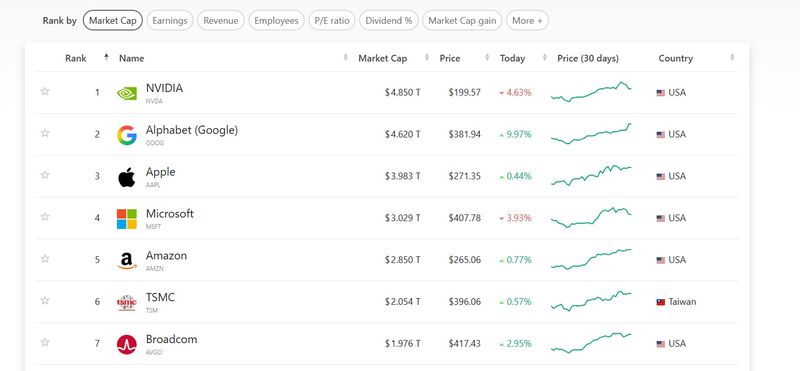
"Honey, should we buy Google now too?" That question will be repeated in countless living rooms tonight, but harshly enough, the winners and losers have already been decided.
For those who overcame the fear of buying at the top and grabbed Google at the bottom, this is simply a celebration as they watch the company break through a $4.6 trillion valuation.
But it is too early to be discouraged. The fireworks Google set off are not the end, but the beginning of a new war. Even now on Wall Street, the next leading stocks that have reached their own 'critical point of explosion' and are quietly compressing energy are waiting for their moment.
From energy alternatives that can power massive AI demand to giant wild horses trying to choose a direction at the edge of the chart, the next opportunity is out there. If you missed yesterday’s sudden riches, you need to cast your net for the powder keg that will explode tomorrow.
Will you keep nursing your frustration over the Google that already left, or will you jump into the bloody battlefield for the next 'second Google'? Wall Street’s clock does not stop for losers.
[email protected] Jeon Sang-il Reporter