Exports Surpass $80 Billion for the Second Straight Month, Lifted by Semiconductors Despite Middle East War
- Input
- 2026-05-01 09:26:57
- Updated
- 2026-05-01 09:26:57
[The Financial News]
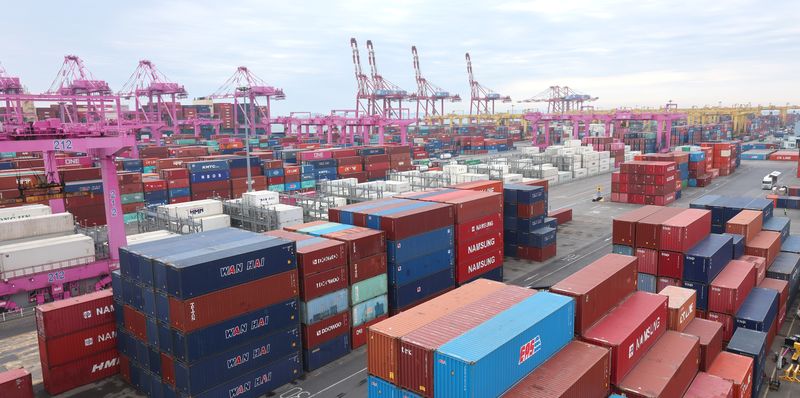
Despite the Middle East War, exports in April also topped $80 billion, marking the first time on record that the figure has exceeded $80 billion for two consecutive months.
According to the Ministry of Trade, Industry and Energy (MOTIE) on the 1st, April exports rose 48% from a year earlier to $85.89 billion. Imports increased 16.7% to $62.11 billion, and the trade balance posted a surplus of $23.77 billion.
After setting an all-time monthly export record of $86.6 billion last month, April exports ranked second-highest on record.
By item, semiconductor exports once again led the overall growth. As demand for AI servers continued to rise and fixed memory semiconductor prices increased, exports reached $31.9 billion, setting a record for the highest April performance for the 13th consecutive month.
Automobile exports fell about 5.5% to $6.17 billion, as logistics disruptions caused by the Middle East War persisted and U.S. tariffs prompted greater local production in the United States. However, exports of eco-friendly vehicles such as EVs and hybrid vehicles increased.
Petroleum product exports rose 39.9% to $5.11 billion as the surge in oil prices caused by the Middle East War sharply lifted export prices. However, export volume fell 36%. In particular, after analyzing the impact of export controls on gasoline, Diesel, and kerosene, exports of those products fell by about 43.0%, 23.2%, and 99.9%, respectively, from a year earlier. Petrochemical exports rose 7.8% to $4.09 billion, as the pass-through of higher oil prices to product prices came with a lag. Export volume, however, fell 20.9% due to increased domestic supply.
Computer exports also reached $4.08 billion, setting a new monthly record for the second straight month as excess demand for SSDs continued amid growing demand for AI infrastructure. Wireless communication apparatus also posted strong results, with exports of $1.62 billion driven by robust sales of finished products rather than components.
By region, exports to seven of the nine major export destinations increased.
Exports to China rose 62.5% to $17.7 billion overall, led by semiconductors, the top export item, as well as strong sales of IT products such as computers and wireless communication apparatus. This marked the sixth consecutive month of growth.
Exports to the United States came to $16.33 billion. Shipments of tariff-targeted items such as automobiles, auto parts, and general machinery were weak, but exports of tariff-exempt items such as semiconductors and computers posted strong growth.
Exports to ASEAN also rose sharply by double digits to $15.41 billion, with broad-based gains in semiconductors, petroleum products, displays, and other items.
By contrast, South Korea's exports to the Middle East fell 25.1% to $1.27 billion, as logistics disruptions and uncertainty caused by the Middle East War dragged down most major items, including automobiles and general machinery.
Meanwhile, April imports increased 16.7% to $62.11 billion. Energy imports stood at $10.61 billion, up 7.5%. Crude oil imports rose 13.1% to $7 billion, as import volumes declined because of the Middle East War but higher import prices driven by surging oil prices pushed up the total.
Minister of Trade, Industry and Energy Kim Jeong-kwan said, "April export performance was made possible because our companies secured supply chains in advance amid global expansion in AI investment and higher petroleum product prices driven by rising oil prices." He added, "There are concerns that export volatility could widen due to intensifying competition in major items and difficulties in securing raw materials caused by the Middle East War."
In response, the government said it plans to actively use its trade network to secure additional alternative supplies of crude oil and Naphtha, creating conditions that will allow companies to continue demonstrating global competitiveness.
[email protected] Park Ji-young Reporter