Trump May Use USFK Reduction as Leverage Amid Foreign Troop Controversy
- Input
- 2026-04-30 11:26:05
- Updated
- 2026-04-30 11:26:05
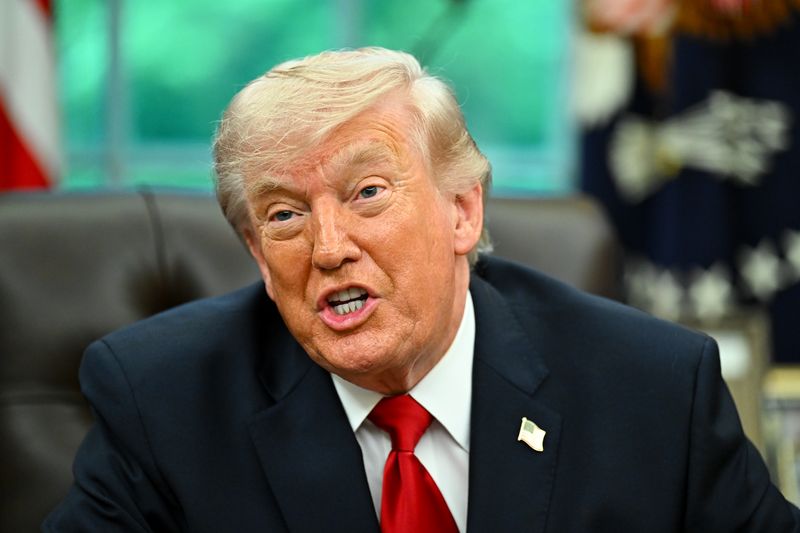
Trump has previously hinted at retaliatory measures after requests for NATO, South Korea, Japan and others to send warships to the Strait of Hormuz were rejected.
On the 30th, foreign affairs and security experts said the Trump administration's changes to domestic and foreign security policy are making a reshaping of U.S. forces stationed overseas increasingly likely.
As a result, a shift in the strategy for USFK's presence on the Korean Peninsula appears inevitable. USFK has already been pursuing modernization and greater efficiency.
That effort aims to maximize military capabilities by reducing troop numbers and introducing cutting-edge weapons and technology.
The move is tied to the United States' Indo-Pacific Strategy to counter China. It is also shifting toward reducing fixed deployments in South Korea and increasing mobility. As a result, a reduction in USFK is seen as only a matter of time.
Plans are already under way to reduce some air assets at Camp Humphreys and replace them with modern alternative capabilities such as Unmanned Aerial Vehicle (UAV) systems. However, domestic political circles are clashing over changes to USFK's role and any reduction in its presence.
President Lee Jae-myung said on the 28th, "Why should we feel anxious that we cannot defend ourselves without foreign troops?" He added that South Korea's defense capability ranks fifth in the world and is already at a significant level. As commander-in-chief, he expressed confidence that security could be maintained even if USFK were reduced. Jang Dong-hyuk, leader of the People Power Party, however, said the president's remarks ignored the reality of security on the Korean Peninsula.
Through Facebook, Jang said, "Russia, which is effectively in a blood alliance with North Korea, is ranked second, and China, which would be the first to help if war breaks out, is ranked third. North Korea even has nuclear weapons." He added, "If USFK leaves, foreign investment will pull out first. To fill the gap left by USFK, defense spending would have to rise sharply, and young people's service periods would also have to be extended." He also warned that European countries had to raise their defense budgets by as much as 14% simply because Trump mentioned the possibility of withdrawing from NATO.
The Democratic Party of Korea, meanwhile, pushed back, saying Jang was stoking security fears. The party said, "Ignoring the rapidly changing international situation and South Korea's security reality, Jang has exposed a submissive view of security that relies only on alliances."
[email protected] Kim Kyung-soo Reporter