Samsung Electronics posts 66% semiconductor operating margin in Q1; to supply first HBM4E samples in Q2 (roundup)
- Input
- 2026-04-30 09:38:51
- Updated
- 2026-04-30 09:38:51
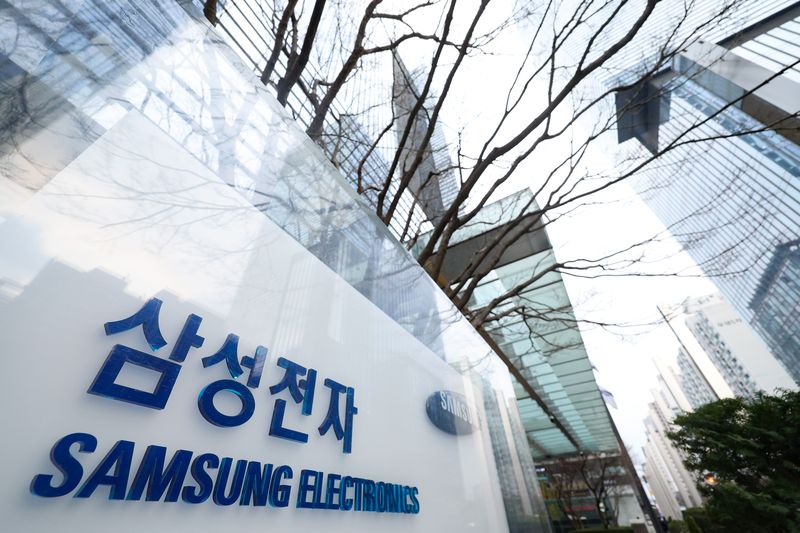
[Financial News] Samsung Electronics Co., Ltd. has ridden the AI-driven memory supercycle and shattered its all-time best performance. Of the 57.2 trillion won in operating profit in the first quarter of this year, the semiconductor division (DS) accounted for 53.7 trillion won, or 94% of the company's total profit. Analysts say the combination of rising commodity memory prices, mass production of HBM4, and strong demand for high-value-added products has put the company on a firmly high-margin track. However, the DX Division, which oversees home appliances and mobile phones, barely managed to post an operating profit of 3 trillion won. Within that, the home appliance and TV businesses earned only 200 billion won. Despite record-breaking results, Samsung's concerns are expected to deepen.
Earnings driven by the memory supercycle, reaching 53.7 trillion won
Samsung Electronics Co., Ltd. announced on the 30th that it posted consolidated sales of 133.9 trillion won and operating profit of 57.2 trillion won in the first quarter. Sales rose 69.16% from a year earlier, while operating profit jumped 756.1%. The company said it achieved record quarterly sales and operating profit through AI-driven innovation and proactive market response.
The semiconductor division (DS) recorded sales of 81.7 trillion won and operating profit of 53.7 trillion won. DS generated 93.9% of the company's total operating profit. The semiconductor operating margin stood at around 66%.
Memory led the strong performance. The memory semiconductor business achieved record quarterly results by responding aggressively to demand for high-value-added AI products within limited supply capacity, while benefiting from rising market prices. The company also began mass production and sales of HBM4 and SOCAMM2, the next-generation low-power memory module, for the first time in the industry. It further strengthened its leadership in the memory market by developing PCIe Gen6 SSDs in a timely manner.
System LSI improved its results on stronger sales of flagship SoCs. The foundry business saw weaker performance due to the off-season, but it continued to win orders in the high-performance computing market. It also secured large orders from optical communications module makers, laying the groundwork for its Silicon Photonics business.
The DX Division posted sales of 52.7 trillion won and operating profit of 3 trillion won. The MX (Mobile Experience) Business Division, including the Network Business Division, recorded operating profit of 2.8 trillion won. Sales and profit grew on solid flagship product sales and a higher share of Samsung Galaxy S26 Ultra sales. The Digital Appliances and Visual Display businesses posted operating profit of 200 billion won, narrowly avoiding a loss. Profitability in the VD business improved thanks to strong sales of premium and large-screen TVs and better operational efficiency. In home appliances, however, gains were limited despite the launch of new air conditioner models, as higher costs and tariff effects weighed on results.
First HBM4E samples to be supplied starting in Q2
Looking ahead to the second quarter, the DS Division expects further improvement as memory prices continue to rise on the back of ongoing investment in AI infrastructure. The memory business plans to keep meeting strong demand for AI-related products. To reinforce its technological leadership, it will also supply its first HBM4E samples. It plans to actively respond to early memory demand for new graphics processing units and central processing units set to launch in the second half of the year. System LSI plans to further expand sales of smartphone SoCs and image sensors, although revenue is expected to decline from the previous quarter. The foundry business is expected to improve as demand for advanced-node products increases, and it will continue winning advanced-node orders based on its 2-nanometer technology. From the second half of the year, it will also begin mass production of a new inference chip, the Groq 3 LPU, for Nvidia Corporation's latest AI accelerator, Vera Rubin.The DX Division plans to expand sales of premium-focused products and pursue structural cost efficiency, while also working to fundamentally improve its business foundation and secure future growth engines by strengthening organizational competitiveness over the medium to long term. MX expects revenue to fall from the previous quarter as the effect of new model launches fades, but it aims to grow sales year on year by expanding flagship sales and launching the new Samsung Galaxy A series. The Network business is expected to improve on higher sales in overseas markets. VD plans to boost sales by capturing demand from global sporting events with an enhanced lineup that includes Micro RGB TV. Home appliances will focus on expanding sales of new products such as the Bespoke AI Laundry Combo and driving revenue growth by meeting peak-season demand for air conditioners.
[email protected] Lim Su-bin Reporter