Tax Breaks Only for Owner-Occupiers?...The Hot-Button Debate Over the Long-Term Holding Special Deduction [Real Estate Walk]
- Input
- 2026-05-02 09:00:00
- Updated
- 2026-05-02 09:00:00
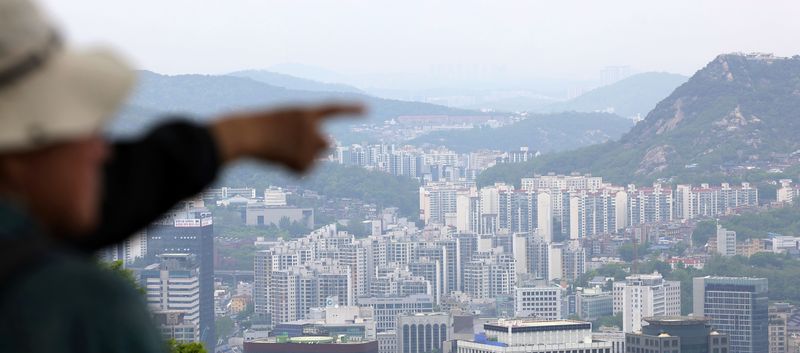
The long-term holding special deduction is now a major issue. President Lee Jae-myung recently wrote on social media, "A capital gains tax break for the period of residence is necessary, but cutting capital gains taxes simply because someone held a home for a long time as an investment without living in it is not a housing protection policy. It is a 'policy that encourages housing speculation.'"
At present, Rep. Yoon Jong-oh of the Progressive Party has proposed a partial revision to the Income Tax Act that would abolish the special deduction for long-term holding. The controversy has deepened further as Rep. Choi Hyeok-jin, an independent politician, introduced another Income Tax Act amendment that would eliminate the holding-based deduction under the special deduction for long-term holding and raise the residence-based deduction from 40% to 80%.
The controversy over the special deduction for long-term holding and the freedom to move
The government has not yet set a specific direction, but non-owner-occupied single-home owners are likely to become subject to regulation. Beyond whether the proposed bills are right or wrong, the debate over the special deduction for long-term holding has shown that many people have a mistaken view of the rule. Even among real estate experts, some argue that the 80% deduction itself is too generous and should be reduced further.
At first glance, the special deduction for long-term holding may seem like an excessive benefit. Single-home owners already receive a 100% tax exemption on gains of up to 1.2 billion won, and if they meet the requirements, they can also receive an additional 80% long-term holding special deduction on any amount above that.
But the special deduction for long-term holding was not created to help real estate investors. It exists to protect the freedom to move. Leaving aside acquisition taxes and moving costs, if a person cannot cover the capital gains tax burden with separate funds, they cannot move. That is why long-term holders are seen as being far removed from speculative demand and are given the benefit.
Even during the Moon Jae-in administration, when many regulatory measures were announced, policy gradually shifted toward emphasizing actual residence. The deduction rate itself was not lowered because of the freedom to move.
Will the special deduction for long-term holding become a Long-term Residence Special Deduction?
Because the government has not yet announced a concrete position on the special deduction for long-term holding, it is too early to draw conclusions. Still, various views are emerging. Some say that if the holding-based deduction is removed, it can no longer be called a 'special deduction for long-term holding' and should instead be a 'Long-term Residence Special Deduction.'
Looking at Rep. Choi Hyeok-jin's proposal, it would also apply to all real estate other than housing. It also includes a plan to fully abolish the special deduction for long-term holding on non-residential assets such as land and building, which currently allows a deduction of up to 30% of capital gains after more than 15 years of ownership. That is a different issue from the freedom to move. It is essentially the same as stripping away a measure that at least accounts for inflation.
If this bill becomes reality, non-residential assets would face a structure in which, once acquired and later sold, the owner could not purchase an asset of equal value because of taxes. Until an unavoidable situation arises, owners will try not to sell, and the result will only make the asset market more rigid. The special deduction for long-term holding has a far greater impact on the real estate market than many people may think. It is disappointing that the issue is being treated too lightly. /Kim Je-gyeong, Ph.D., Tumi Real Estate Consulting※This article reflects the author's personal views and may differ from this newspaper's editorial direction.
[email protected] Lee Jong-bae Reporter