"The international order has returned to the late Joseon era ... We need a new strategy of pragmatic diplomacy, including security" [News analysis from the editorial desk]
- Input
- 2026-04-29 18:39:50
- Updated
- 2026-04-29 18:39:50
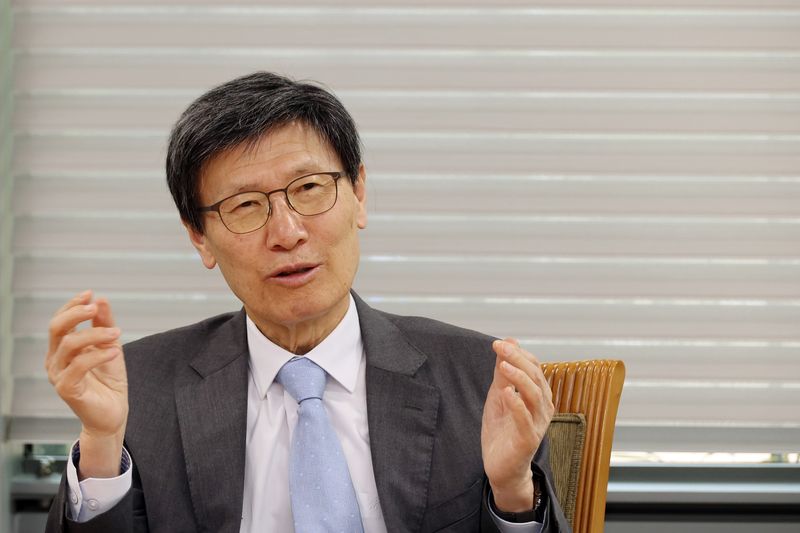
— The logic of power dominates the international community. What should we do?
▲ We are moving from a society that respects rules and norms to a world where power runs rampant. It is returning to a situation similar to international politics in the late Joseon era. China's claims in the South China Sea and Russia's invasion of Ukraine were also problems, but the decisive factor was that the US, which had led a rules-based international order after World War II, gave up its leadership. With nuclear-armed North Korea posing a threat, South Korea's top diplomatic priority is national survival, meaning security. While rapidly strengthening defense capabilities, diplomacy must focus on making the US believe that South Korea is a special country that must be protected. Donald John Trump is a leader who views alliances through a transactional lens, so South Korea must show its value. That means demonstrating a willingness to help the US in strong manufacturing sectors such as shipbuilding, nuclear power plants, semiconductors and the defense industry. We should use that as leverage to get the US to honor its defense commitments and cooperate on issues such as revising the Nuclear Cooperation Agreement or building a nuclear-powered submarine. The question is how to turn that leverage into concrete diplomatic results.
— Which countries should we cooperate and coordinate with first?
▲ South Korea should greatly strengthen solidarity with countries that, like us, want a rules-based international order to endure and are democracies. The most important country is Japan. It is a country that shares a similar strategic position and similar hardships. If the two countries cooperate, each can raise its strategic standing. We also need to deepen ties with Global South countries. That is essential for solving supply chain problems as well. Among them, India is especially important. India will occupy a very important place in international politics in the future. Because it is a democratic giant with a population of 1.47 billion, South Korea should strategically strengthen ties with India.
— The government's pragmatic diplomacy seems to be heading in the right direction.
▲ I think former President Kim Dae-jung also practiced pragmatic diplomacy. It was a case of maintaining good relations with neighboring countries while achieving diplomatic goals and pursuing national interests. Pragmatic diplomacy puts national interest ahead of ideology and values. Scholars identify the first priority of national interest as security, the second as economic prosperity, and the third as national prestige. Looking at relations among South Korea, the US and China, North Korea's threat means that for national survival and security, the ROK-US Alliance has to be treated as the most important. This should be made clear, but quietly, to Chinese leaders as well. The message is that South Korea wants to understand China's position while also maintaining good relations with China. China also wants peace and stability on the Korean Peninsula, and South Korea shares that view. After that, the two countries need to build political, economic and cultural cooperation based on reciprocity and mutual respect.
— What impact will the Middle East crisis have on South Korea?
▲ First, there is the issue of severe disruption to crude oil imports from the standpoint of economic security. In addition, Patriot missiles and THAAD missiles have been withdrawn from USFK bases in South Korea. That is a serious issue because it could weaken deterrence against North Korea. Another concern is the possibility of problems in bilateral diplomacy with the US. President Trump has expressed frustration with uncooperative behavior, but his main targets appear to be NATO countries in Europe. Still, the government should work to prevent any disadvantage in advance through smooth communication at the official level.
— What should our stance be between the US and Iran?
▲ We should look at it from the standpoint of national interest. If relations with Iran worsen, South Korea could suffer damage in economic areas such as energy supplies and construction cooperation. But if the Iran issue causes relations with the US to deteriorate, the damage would be far more serious than the losses from worsening ties with Iran. So, for security reasons, we have no choice but to place priority on the US, our ally.
— Denuclearization is a goal of humanity. Shouldn't we oppose Iran's nuclear armament?
▲ The Republic of Korea is a party to the Treaty on the Non-Proliferation of Nuclear Weapons, which includes 191 countries around the world. South Korea has no choice but to oppose Iran's nuclear development, and that should be our government's basic position. However, there are points to consider regarding how to stop Iran's nuclear program. The question is whether to negotiate or, as the Trump administration did, to carry out military strikes. It took about two years of difficult negotiations on Iran's nuclear issue before the Joint Comprehensive Plan of Action was reached in July 2015. It was signed by eight countries, including the US, the UK, France, Germany, China and Russia. The International Atomic Energy Agency was also positive about Iran's compliance with the agreement. But in 2018, during Trump's first term, the US withdrew and resumed economic sanctions. Iran then restarted its nuclear development, leading to the current situation. There may be differing views on whether military action is the most effective way to achieve denuclearization. The US will also feel pressure to deliver results that are better than the JCPOA agreement.
— What does North Korea think when it sees Iran being attacked?
▲ North Korea could become even more determined to arm itself with nuclear weapons. It may conclude that Iran was attacked by the US and Israel because it had not completed its nuclear armament. There have also been other events that pushed North Korea toward obsession with nuclear weapons. One of the most consequential was Russia's invasion of Ukraine. In 1994, the Budapest Memorandum was signed. Under that agreement, the US, the UK and Russia promised to guarantee Ukraine's security if it gave up nuclear weapons. Ukraine trusted that promise and dismantled its nuclear arsenal. But Russia, one of the signatories, invaded Ukraine. Kim Jong Un may have looked at these events and concluded that North Korea made the right choice by pursuing nuclear development. Overall, the international situation is moving in a direction that makes North Korean denuclearization more difficult.
— North Korea continues to take a hostile stance despite our peaceful gestures.
▲ North Korea is deepening its hostile policy toward the South while insisting on a theory of two hostile states. A situation in which inter-Korean confrontation becomes entrenched and tensions rise is never desirable. In a climate of confrontation and tension, even a minor accident can escalate into military conflict. There are historical cases that led to war. To prevent a catastrophic outcome, there must be a hotline or communication channel between top leaders or military authorities. Without one, the situation can become dangerous. President Trump has a very unusual position on North Korea. Most US presidents have been reluctant to talk with North Korea. Trump actively wants dialogue, so it would be desirable for South Korea to support it. If North Korea-US talks move forward, tensions between the two Koreas could also ease. If progress is made in North Korea-US negotiations, a key diplomatic goal will be to ensure that South Korea's security concerns are fully reflected through close communication and coordinated action between the South Korean and US presidents.
— Some have even called for South Korea to obtain nuclear weapons.
▲ Government policy choices must always take both costs and benefits into account. We need to make a calm assessment and choose the option that minimizes costs and maximizes gains. The same applies to nuclear armament or nuclear development. Those benefits and costs change depending on the international situation surrounding the Korean Peninsula. If the US abandons the security alliance or withdraws its defense commitment, nuclear development could become an option to consider. For now, other options such as tactical nuclear weapons would likely offer more benefits at lower cost.
— The Taiwan issue seems like a dilemma: we cannot intervene, but we also cannot stay out.
▲ The Taiwan issue cannot be considered separately from the Korean Peninsula issue. When North Korea invaded the South, what worried the US was a Chinese invasion of Taiwan. That is why, even in that urgent situation, it sent the United States Seventh Fleet to the Taiwan Strait to block the possibility of invasion. Conversely, if something happens in Taiwan, there is a significant chance that a similar situation could unfold on the Korean Peninsula. In that case, South Korea would have to cooperate with its ally, the US, while focusing on defending itself. The immediate priority is North Korea, and the US would understand that. How South Korea cooperates with the US in such a case, and at what level, would have to be decided based on the situation at the time.
— The Middle East crisis has reminded us of the importance of securing supply chains.
▲ The normative system of free trade and an open economy is breaking down. The supply of goods is being abused as a political weapon. South Korea has a high trade dependence ratio, with exports and imports amounting to about 87% of nominal GDP, and manufacturing also accounts for a large share of the economy. We must prepare thoroughly for supply chain risks. It is urgent to diversify trade, investment and economic cooperation. We should expand diplomatic ties and strengthen solidarity with the Global South, including India, Brazil, Latin America and Africa. Lithium and rare-earth elements are key minerals for semiconductors and secondary batteries. Chile has the world's largest lithium reserves, while Indonesia ranks first in nickel reserves. Rare-earth elements are abundant in places such as the Republic of Zambia and the Democratic Republic of the Congo. We need to secure many alternative sources like these. Strengthening the Minerals Security Partnership and diversifying investment in local processing facilities are also necessary.
— There is a dispute between South Korea and the US over Coupang.
▲ Didn't the situation once escalate when the US said it would raise auto tariffs back to 25% because South Korea was not properly fulfilling its investment promises? Japan gives the impression that it is proactive and faithfully carrying out its commitments, while South Korea seems less convincing. The Coupang issue is viewed differently by the two sides. The US appears to think it is being discriminated against. Because communication has not been sufficient, frustration is building on the US side. If this continues, security cooperation between South Korea and the US could become difficult. To resolve this issue, the role of the National Assembly is as important as that of the administration. The ruling party should take the initiative and actively support diplomatic efforts.
Son Sung-jin, Editorial Director
[email protected] Reporter