One in Seven People in Their 20s and 30s Is 'Just Taking a Break'... Young People Face an 'Employment Cliff'
- Input
- 2026-04-30 06:00:00
- Updated
- 2026-04-30 06:00:00
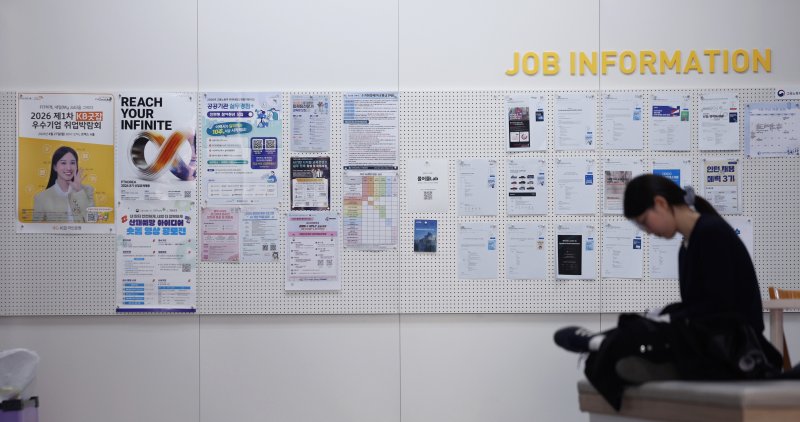
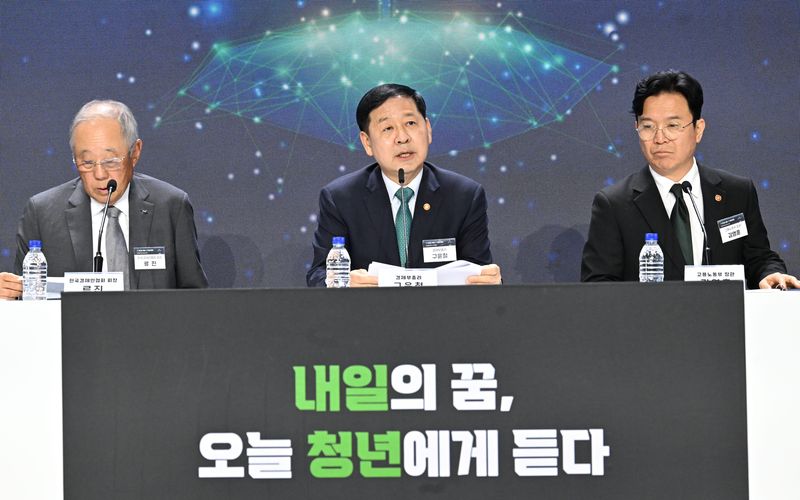
[Financial News] As demographics and industrial conditions change rapidly, young people are emerging as the most vulnerable group in the labor market. The government also recognizes that the worsening employment situation for young people is not an individual problem, but a structural one that requires a comprehensive response from the state and society. That is why it announced the Youth New Deal Initiative on the 29th, saying it would help 100,000 young people make a fresh start through job training and public-sector jobs. To fund the program, it allocated 800 billion won in the April supplementary budget in addition to the main budget, and plans to spend it within this year. The government’s aim is to lower the barriers to entry and provide an initial boost so that more young people can move into society.
1.71 Million Young People Unemployed or 'Just Taking a Break'
Even the data released by the government on the day shows that the youth employment situation is severe.
The number of people in their 20s and 30s who are struggling to find work, unemployed, or 'just taking a break' has reached 1.71 million. That means one in seven of the total population in their 20s and 30s, or 12.53 million people, is preparing for a job, taking a break, or unemployed.
The reasons vary, but 720,000 young people in their 20s and 30s are also classified as 'taking a break' after leaving the labor force.
According to the Ministry of Economy and Finance (MOEF) and the Ministry of Data and Statistics, the youth employment rate for people aged 15 to 29 stood at 43.5% in the first quarter of this year, down 1.0 percentage point from a year earlier.
In March, the youth employment rate was 43.6%, down 0.9 percentage point from the same month last year. It has now fallen for 23 consecutive months.
Employment among people in their late 20s, a key working-age group, also fell 0.6 percentage point from a year earlier to 70.6%.
Looking back over the past decade, the long-term deterioration in youth employment is clear.
The youth employment rate peaked in 2022 at 46.6%. From 2015 to 2020, it averaged only 42.2%, then gradually recovered to 44.2% in 2021. It stayed in the 46% range from 2022 to 2024, but fell to 45% last year and has continued to decline since then.
Employment among people in their late 20s stood at 69.3% from 2015 to 2020, then slipped to 68.5% in 2021. It rose slightly to 71.4% in 2022, 72.3% in 2023, and 72.5% in 2024, before falling to 71.8% in 2025. In the first quarter of this year, it dropped further to 70.6%, raising the likelihood that the annual rate could fall below the 70% range.
'Taking a Break' Youth to Rise to 450,000 This Year
The unemployment rate is lower than in the past, but it is rising again. The number of young people 'taking a break' is also increasing.
The youth unemployment rate fell from 9.7% in 2016 to 2018 to the 5% range over the past decade. It dropped from 9.0% in 2020 to 7.8% in 2021, 6.4% in 2022, and 5.9% in 2024. But it rose again to 6.1% last year, and climbed to 7.4% in the first quarter of this year.
The number of young people 'taking a break' has also fluctuated with economic conditions.
It rose from 360,000 in 2019 to 448,000 in 2020, an increase of more than 80,000 in a year. After a slight decline, the figure has remained in the 400,000 range since 2023. In the first quarter of this year, it climbed back to 452,000, returning to the 2020 level.
As a result, the number of people in their 20s and 30s who are unemployed or simply taking a break has reached 1.71 million.
Among them, there are 260,000 unemployed people in their 20s and 190,000 in their 30s. These are people who either looked for work in the past four weeks or had no job in the past week.
The economically inactive population, meaning those who are neither employed nor unemployed and have no intention of working or job-seeking, includes 2.07 million people in their 20s and 1.15 million in their 30s.
Among them, 430,000 people in their 20s and 300,000 in their 30s said their main activity over the past week was 'taking a break.'
The number of people in their 20s attending job-preparation academies or training institutions, or preparing for employment, was 380,000. For those in their 30s, the figure was 160,000.
AI and Industrial Slowdown Are Shrinking Quality Jobs
This youth employment crisis can no longer be seen as an individual problem. At a broader level, it must be viewed as a structural issue requiring a response from the state and society. The government agrees.
Lee Juseop, Director General for Public Livelihood and Real Economy Policy at the Ministry of Economy and Finance, said, "Young people taking their first steps into society are receiving fewer opportunities, and rapid technological advances such as AI are weakening the ability to create jobs that young people want." He added, "This goes beyond a problem that individuals can solve on their own, and the government agrees that a comprehensive response from the state and society is needed."
The youth employment crisis has multiple causes, including demographic shifts driven by aging, the rapid replacement of labor by advanced technologies such as artificial intelligence and automation robots, a decline in quality jobs in manufacturing and other sectors, a mismatch between jobs and applicants caused by companies' preference for experienced hires and highly educated young people’s preference for large corporations, and intensified competition among generations for a limited number of quality jobs.
Government youth employment policies such as job training and work experience can serve as temporary catalysts to help young people enter the labor market. However, analysts say they are limited as a fundamental solution to the structural problem that makes it difficult for young people to find jobs, including industrial restructuring driven by the AI transition, changes in sectors with high employment spillover effects such as manufacturing, construction, Information Technology (IT), and services, and intergenerational job conflicts caused by the reemployment of older workers and possible future extensions of the retirement age.
Joon Mo Yang, professor in the Department of Economics at Yonsei University, said, "Companies are increasingly favoring proven experienced workers over new hires." He added, "When the labor market is rigid, youth hiring is bound to shrink, so policy must shift toward improving the structure of the labor market itself."
There is growing support for policies that create real jobs for young people, rather than short-term measures that simply hand out cash for one-off jobs or job-training subsidies.
To do that, laws and institutions must support the revitalization of industries with strong employment effects, such as manufacturing, construction, IT, services, and content, in line with the industrial transition. Experts say the government should expand state-led investment in future industrial infrastructure with a long-term perspective and offer greater incentives for domestic corporate investment so that more quality jobs can be created.
They also say the government needs to take an active role in fostering industries such as K-content and tourism and cultural services, which have strong job-creation effects for young people, and in investing in related infrastructure.
[email protected] Jung Sang-gyun Kim Jun-hyuk Kim Chan-mi Reporter