Chey Tae-won: "Memory bottlenecks will persist amid surging AI demand; infrastructure investment is needed"
- Input
- 2026-04-28 18:41:14
- Updated
- 2026-04-28 18:41:14
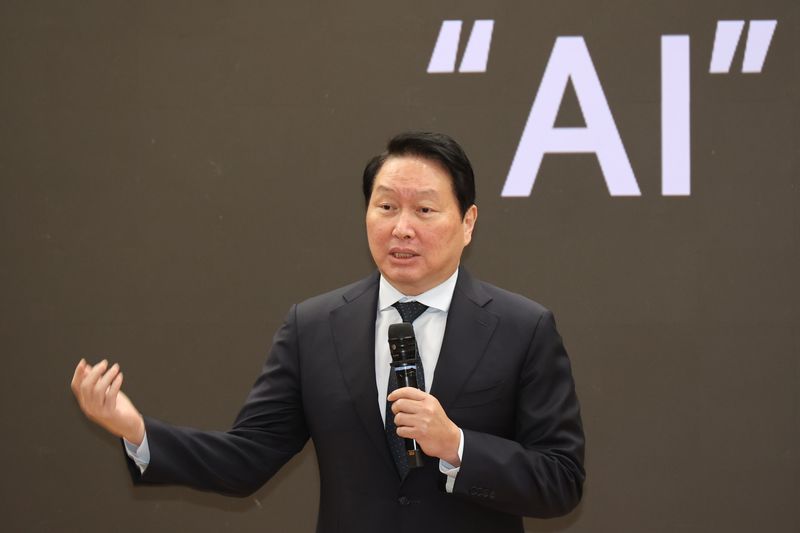
Chey Tae-won, chairman of the KCCI, said on the 28th that "many efforts are under way to break through the memory shortage, but the memory bottleneck will continue," describing the current situation in the memory supply market.
Speaking as a panelist at the policy seminar held that day at the National Assembly Members' Office Building, Chey said, "Even if people want to buy memory, there are cases where we simply cannot supply it." He explained that the surge in demand for memory in the artificial intelligence sector has changed the market so dramatically that supplies for consumer products such as smartphones, PCs and TVs are nearly disappearing.
Chey also noted that if the memory shortage continues for too long, dependence on memory could actually decline. "Some people say the shortage is, in a way, good news for us, and that making a lot of money is not a bad thing. But this cannot go on forever, so as SK hynix, we need to expand supply as quickly as possible," he said. His point was that if the supply crunch persists and memory prices rise too sharply, the market may instead seek every possible way to reduce memory use, turning the situation into a negative factor.
Chey introduced several technical efforts aimed at easing the memory bottleneck. One is replacing the copper wires that connect graphics processing units (GPUs) and memory semiconductors with photonics technology, which processes signals using light. Another is memory pooling. Under the current system, memory is allocated to each GPU, but this approach would separate and pool memory so that multiple GPUs can access it, enabling full utilization. The last is to break away from the existing structure in which computing and memory are separated and create new types of computers, such as quantum computers.
Still, Chey said, "If photonics technology is applied, it will save more energy and improve speed, solving a great deal of the bottleneck. But the memory bottleneck will ultimately continue," adding that "cost and supply issues will inevitably remain with us forever."
On South Korea's response strategy in the AI power race, he said, "The key is how many AI data centers we can build well."
"To do AI well, there must be the capability to produce AI, and the first requirement is infrastructure," Chey said. "South Korea still does not have a truly outstanding AI data center." He added, "It is not easy to create AI without factories," and suggested that "if we want to pursue a strategy, we must first invest boldly in infrastructure."
Meanwhile, the Democratic Party of Korea has floated a plan to allow large companies to prepay three years' worth of electricity bills in exchange for tax benefits. The idea is to secure trillions of won in funding early and use it to build a nationwide power transmission network. Democratic Party lawmaker Park Jeong told Chey Tae-won, chairman of SK Group, who had been invited to the policy seminar hosted by the Korea-China Parliamentarians' Association, "SK and Samsung make a lot of money, so would you be willing to prepay one year or three years of electricity bills? The state can offer tax reductions instead of putting the money in a bank." The proposal is being interpreted as a way to ease the financial burden on Korea Electric Power Corporation (KEPCO), which is responsible for building the so-called energy highway.
[email protected] Jeong Won-il Song Ji-won Reporter