[Editorial] "Samsung Electronics' profits are not the exclusive property of its employees" — a statement that is absolutely right
- Input
- 2026-04-28 18:11:58
- Updated
- 2026-04-28 18:11:58
The semiconductor industry plays an overwhelming role in South Korea's exports and growth. Semiconductors account for 25% of exports and 55% of growth contribution. Exports, jobs, national creditworthiness, and even the strength of the stock market all rise and fall with the fortunes of Samsung Electronics and other semiconductor companies. In the domestic market, where the KOSPI Composite Index has been setting record highs day after day, the influence of the semiconductor "top two," Samsung Electronics and SK hynix, is enormous. Together, the two companies account for 40% of KOSPI market capitalization. Without semiconductor-related companies, both stock prices and exports would be in the doldrums. In harsh times, semiconductors are acting as a breakwater.
Even amid war, China's low-price offensive, and the rising tide of global protectionism, semiconductors have driven record exports and surprise growth. It is also a source of pride that South Korea has world-leading semiconductor companies during this super boom fueled by the artificial intelligence (AI) transformation. The strength of these companies is the result of relentless innovation by individual firms, bold moves by technical talent, and national support. It also includes investors who willingly put money into the industry's future, as well as workers who quietly kept the factories running on the ground.
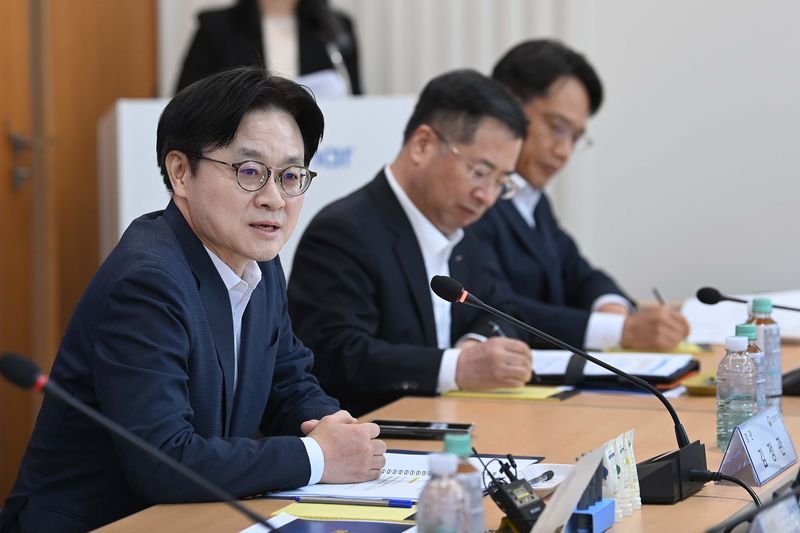
In a global market where hegemonic competition is intensifying, the semiconductor industry cannot survive if even one element is lacking. Kim's remark that "Samsung Electronics' achievements are connected to countless infrastructure assets, countless partner companies, more than 4 million retail shareholders, and the National Pension Service (NPS)" reflects that context. With the support of the entire nation, Samsung Electronics has achieved what it has today. That is why it should reward its employees appropriately with the profits it has earned, while also using those gains for society as a whole and for future investment.
Samsung Electronics must now be seen not merely as a private company, but as a strategic asset of the Korean economy. The state should take every possible measure to strengthen the global competitiveness of semiconductor companies. More generous support is needed in areas such as water, electricity, and talent in science and technology. In step with that, Samsung Electronics must invest boldly in future competitiveness. If it falls behind by even one generation in process technology, its technological edge can disappear in an instant. Intel in the United States went through that, and so did semiconductor companies in Japan. That is the lesson that must be learned if South Korea is to remain a winner in the era of AI technological supremacy. As Kim said, "A strike is something that is hard to even imagine."
Samsung Electronics still has many hurdles to overcome, including maintaining its lead in memory chips, strengthening its competitiveness in High Bandwidth Memory (HBM), and rebuilding its foundry business. It also faces investment tasks at production bases in both South Korea and the United States. The union, which is demanding the abolition of the cap on performance bonuses and a 15% share of operating profit as bonuses, should take a hard look at its own position. If the union's demands are met, the company would have to pay out as much as 45 trillion won in bonuses based on this year's expected annual operating profit.
It bears repeating that Samsung Electronics has reached this point thanks to technology built by earlier generations, industrial infrastructure funded by taxpayers, and the sacrifices of partner companies. The union's all-out strike over bonuses is effectively pressure on the entire industrial ecosystem, and ultimately on the public and the economy. If a strike becomes reality, losses from factory shutdowns are said to amount to tens of billions of won per minute, or 100 billion won a day. Experts warn that the bigger risks are not the direct losses from a strike, but customer anxiety, the loss of business partners, and supply chain restructuring. A union strike could become a national disaster.