[Editorial] Youth Unemployment Is in Crisis; We Need Fundamental Solutions, Not Stopgap Measures
- Input
- 2026-04-28 18:11:57
- Updated
- 2026-04-28 18:11:57
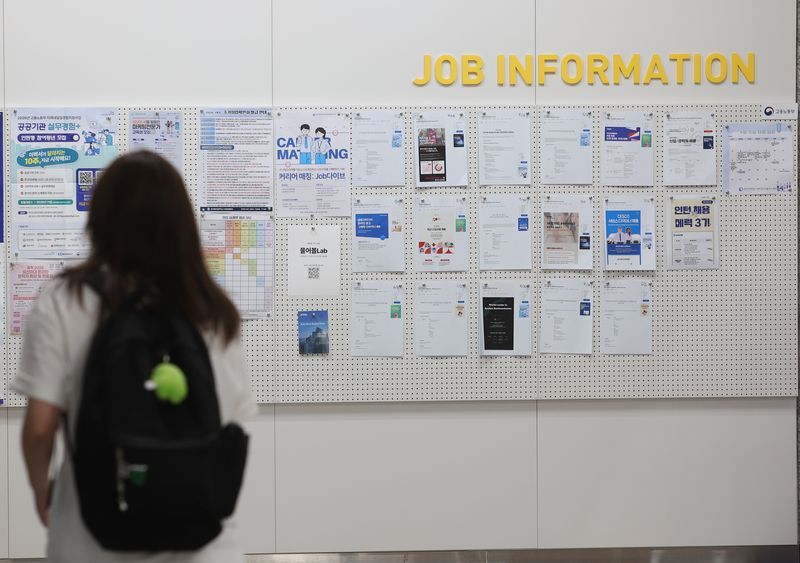
Youth employment is now in a crisis. The youth employment rate has been falling for 23 straight months, and the number of young people in their 20s and 30s who are simply taking a break has reached 770,000. These young people are classified as economically inactive because they are not looking for work and are neither employed nor unemployed. Since they have no intention of working at all, they can be seen as a potential loss of labor force.
According to KEF, the main reasons for weak youth employment are a mismatch between labor supply and demand, the mandatory retirement age of 60, and entrenched low growth. In other words, there are too few jobs that match young people's expectations, and the retirement age has been extended since 2013. The most important cause is slowing growth and an economic downturn. Except in a few sectors such as semiconductors and cars, business conditions remain poor, and high-quality jobs continue to shrink.
In fact, there is no obvious direct solution to youth unemployment. Employment is driven by companies and the government, but unless business conditions improve, hiring is unlikely to increase. The government can expand the number of civil servants and public-sector workers, but there are limits given the state of public finances.
Job mismatches are ultimately a matter of choice. There are many difficult and dangerous jobs, but young people tend to avoid them. Employers in those fields are left struggling to find workers, and many have no choice but to rely on foreign labor to keep their businesses running. This mismatch, too, is difficult to solve because it stems from individual choices.
In the end, the government has little choice but to revive the economy and raise the growth rate. To escape low growth, it must design sound economic strategies and work with the private sector to discover and nurture new industries. It should also actively support companies that create jobs and offer policy incentives to firms that lead the way in youth hiring.
Unfortunately, the development of artificial intelligence (AI) and robots is making the future of employment even darker. If cheaper labor can replace people, there is little reason to expand hiring. This is not a problem unique to Korea. The government needs to hold in-depth discussions about the future relationship between AI and employment.
Indirect support measures such as this cash payment are certainly needed, but the government must begin now to establish fundamental solutions to youth employment. It should not even try to create a statistical illusion by generating short-term, temporary jobs. Cash-based support can also fall into the category of such stopgap measures.
The more young people stop looking for work, the weaker economic vitality becomes. An increase in young people who are idle or unemployed can eventually turn into social problems such as crime, withdrawal, and isolation. Before it is too late, the government must deliberate and present a national-level response.