U.S. USTR Again Criticizes Network Usage Fee Debate, Saying "Only Korea Imposes It in the World"
- Input
- 2026-04-28 09:41:32
- Updated
- 2026-04-28 09:41:32
[The Financial News] The Office of the United States Trade Representative (USTR), which has opposed discussions on collecting network usage fees in South Korea since 2022, raised the issue again about a month later. USTR claimed that even though South Korea has not yet made such fees mandatory, it is the only country in the world that has created a trade barrier through network usage fees.
On the 27th local time, USTR posted on its X account a message titled "The most outrageous foreign trade barriers facing U.S. exporters" and criticized 10 cases. It first cited Costa Rica's customs inspections on agricultural products and then pointed to South Korea as the fourth example. USTR wrote, "No country in the world charges its own internet service providers a network usage fee for transmitting internet traffic, except South Korea." The list also included Türkiye's ban on imports of U.S. rice, Japan's partial opening of imports of Russian seafood, Nigeria's ban on U.S. beef imports, and Australia's regulation of video streaming companies.
A network usage fee is an additional charge that internet service companies pay to telecom operators in the course of delivering content. It includes dedicated line fees and data center hosting costs. Around the world, some argue that users generating massive traffic on telecom networks should pay more to the operators that run those networks, similar to a network usage fee. The United States, home to major internet service companies such as YouTube and Meta Platforms, Inc., says the debate discriminates against U.S. companies and argues for net neutrality, under which network operators should not discriminate among users based on content.
In South Korea, unlike USTR's claim, network usage fees are not currently being collected from U.S. companies by force. Since 2020, lawmakers have introduced multiple amendments to the Telecommunications Business Act related to network usage fees, but none have passed.
In May 2022, USTR criticized South Korea's network usage fee bills, saying they specifically targeted U.S. companies. It repeated similar claims in its March 2023 trade barriers report. In this year's National Trade Estimate Report on Foreign Trade Barriers, published on the 31st of last month, USTR again listed the network usage fee policy as a barrier in the services sector, along with South Korea's platform regulation bills, restrictions on the overseas transfer of location-based data, and complex certification and security standards related to payment services.
The United States, which last year imposed reciprocal tariffs on South Korea and others under the International Emergency Economic Powers Act (IEEPA), quickly began looking for another legal basis after the Supreme Court of Korea ruled in February that the measure was illegal. On the 11th of last month, USTR said it would launch an investigation into unfair practices under Section 301 of the Trade Act of 1974 against 15 countries, including South Korea, and the EU, while mentioning electronics and automobiles.
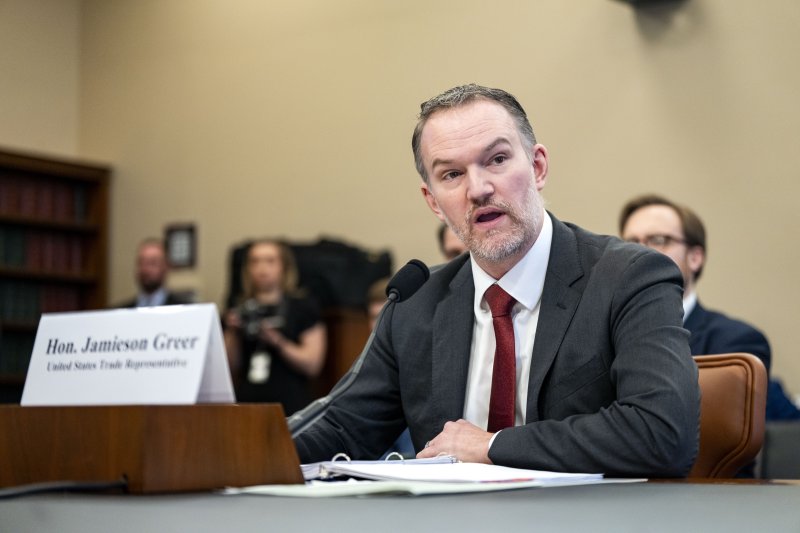
At a U.S. House of Representatives hearing on the 22nd, Greer was asked when a Section 301 investigation into foreign digital issues would begin. He said, "We want to make sure that other countries do not discriminate against our companies, burden them excessively, or use them as cash cows." Without giving a specific timeline, he added, "We want to see results from countries like the European Union, Australia, South Korea, and EU member states."
[email protected] Park Jong-won Reporter