Why Did Ambassador Kang Kyung-wha Suddenly Return Home? Concerns Grow That the Korea-U.S. North Korea Coordination Rift Could Drag On for a Month
- Input
- 2026-04-28 06:54:50
- Updated
- 2026-04-28 06:54:50
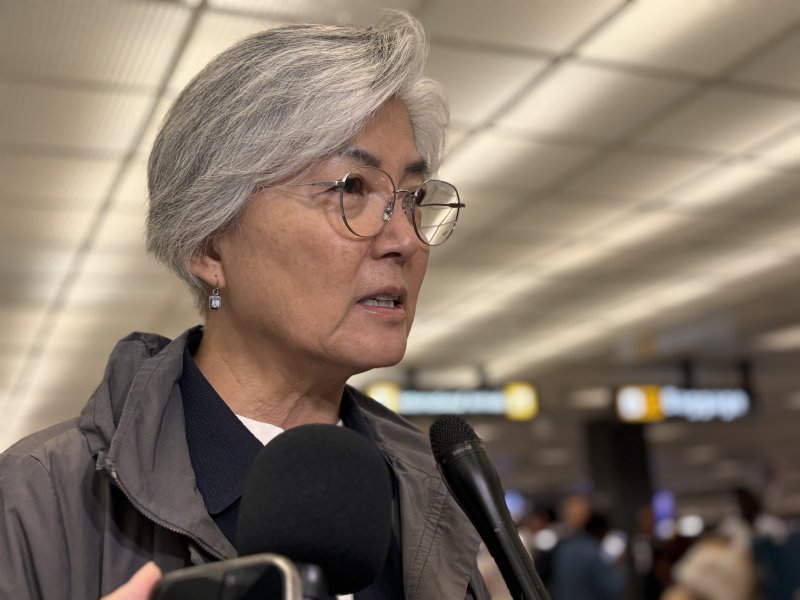
According to political circles on the 28th, frustration is growing in the diplomatic and security teams as there are still no signs of restoring the U.S. suspension of intelligence sharing on North Korea.
The United States, which has shown resistance to Chung Dong-young's call to open some sections of the Korean Demilitarized Zone (DMZ) and to controversy over leaks of North Korea nuclear secrets, has not lifted restrictions on sharing classified information on North Korea for a month. Yeondoo Jeong, head of the Bureau of Diplomatic Strategy and Intelligence at the Ministry of Foreign Affairs of the Republic of Korea, met with Allison Hooker, U.S. Under Secretary of State for Political Affairs, on the 24th local time, but failed to achieve any meaningful results.
In addition, the issue has become controversial after it was reported that U.S. political circles openly raised the possibility that legal action against Coupang could disrupt the implementation of the nuclear-powered submarine construction agreement reached by the two presidents.
During her temporary return, Ambassador Kang discussed the Coupang issue and the disruption to Korea-U.S. intelligence sharing on North Korea with Minister Cho and shared the atmosphere in Washington. Earlier, Kang had received a letter from 54 Republican members of the U.S. House of Representatives asking her to prevent discrimination against the U.S. company Coupang.
As U.S. demands have been seen as excessive, lawmakers from the ruling bloc and the progressive camp in South Korea have launched a counteroffensive, creating a political standoff between the two countries' political circles. These lawmakers plan to send a protest letter to the U.S. administration, demanding action to address concerns over the safety of Bom Kim, chairman of Coupang, Inc., and pressing for a suspension of high-level security talks. The letter states that the U.S. administration's demands amount to an infringement on judicial sovereignty.
Lawmakers including Kim Nam-geun and Hong Bae Park of the Democratic Party of Korea have asked lawmakers from the Democratic Party of Korea, the Rebuilding Korea Party, the Progressive Party and the Social Democratic Party to join a signature campaign on a protest letter against what they called U.S. interference with judicial sovereignty. More than 80 lawmakers had already joined the signature drive as of the previous day. The Democratic Party, however, drew a line, saying the letter was signed voluntarily by individual lawmakers and was not being sent on the party's behalf.
On the other hand, the People Power Party is calling on President Lee Jae Myung to dismiss Chung Dong-young, saying he caused the friction between Seoul and Washington. The party argues that, since Wi Sung-lac, the presidential office's national security chief, has also acknowledged problems in the security consultations between the two countries, Minister Chung should be held accountable first for deepening the crisis.
[email protected] Kim Kyung-soo Reporter