U.S. and Iran Fail to Narrow Differences Over the Strait of Hormuz and Nuclear Issues, Entering a 'Chicken Game' [U.S.-Iran War]
- Input
- 2026-04-26 18:48:22
- Updated
- 2026-04-26 18:48:22
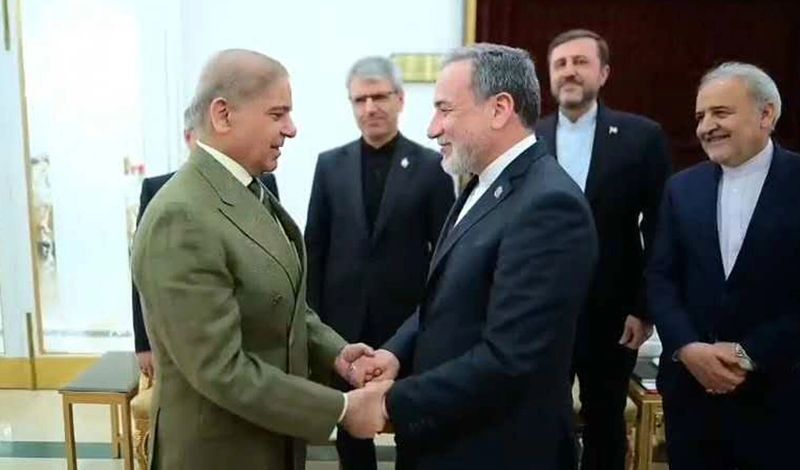
U.S. President Donald John Trump said on Truth Social on the 25th local time, "We just canceled our delegation's trip to Islamabad, Pakistan, where they were going to meet with the Iranian side." The plan had been to send Middle East envoy Steve Witkoff and Jared Kushner to Pakistan this weekend for a second round of ceasefire talks with Iran. However, the Iranian negotiating team, which had arrived in Pakistan the previous day, immediately left and headed to Oman.
Iranian Foreign Minister Abbas Araghchi also said on social media that, regarding the outcome of his visit to Pakistan, he had "conveyed Iran's position on a workable framework for a ceasefire" and added that "it remains to be seen whether the United States is sincere about diplomacy." His remarks left room for talks to resume, but also suggested that the atmosphere was not yet ripe for dialogue. He is also expected to visit Pakistan again as early as the 26th, drawing attention. Iran's state-run Islamic Republic News Agency (IRNA) reported on the 25th that Araghchi would "visit Pakistan again after completing his schedule in Oman and before heading to Russia."
■ Dissatisfaction with the level of the proposal and the rank of the negotiators
The cancellation of the second round of ceasefire talks between the United States and Iran appears to have been driven by both the lack of substantive progress in Iran's proposal and U.S. dissatisfaction with the rank of the negotiating team.
At a press briefing on the day, President Donald Trump said of the ceasefire proposal Iran had delivered to the United States, "It was much better, but still not good enough." He repeated, "They proposed a lot, but it was not enough." The remarks are interpreted as meaning that Iran made no meaningful concessions on Washington's key demands, including the handling of highly enriched uranium and future limits on its nuclear program.
The rank of the counterpart negotiators was also cited as a problem. Trump complained that although the U.S. delegation was preparing for a long trip to Islamabad, the Iranian officials expected at the table were not of the level Washington had anticipated. "I'm not going to travel 15 or 16 hours to meet people I've never heard of," he said. "It wasn't even to meet the leader of that country." He was criticizing the absence of a figure capable of making top-level political decisions. Still, he did not close the door on talks. Trump said, "We hold all the cards and they hold none," adding, "If they want to talk, they can just call."
■ Economy or politics: who will break first?
The confrontation between the United States and Iran is increasingly taking the form of a chicken game, with each side waiting to see who will crack first. The United States is trying to squeeze Iran's economy through a maritime blockade and bring it to the negotiating table, while Iran has begun to hold out, calculating Washington's political and time constraints. According to CNN, Iran's economy is already being severely shaken by the impact of the war. One million jobs have disappeared, and about 2 million workers have been affected. Food and medicine prices have surged three to four times. Supplies in Tehran's markets are still being maintained, but the real economy is deteriorating rapidly.
However, while Iran's economy is clearly suffering, some analysts say a complete collapse is unlikely. One assessment is that "Iran already experienced the maximum pressure policy during Trump's first term and managed to endure even after cutting oil production in half." Iran is currently believed to have secured additional storage capacity of about 30 million barrels. It is also reviewing plans to convert decommissioned oil tankers into temporary storage facilities, which could allow it to hold out for at least another two to three months.
Iran's calculation is simple. It believes that U.S. political pressure will reach its limit before the economic pain becomes unbearable. President Donald Trump is facing growing fatigue in the United States over a prolonged war and the risk of political backlash. He is also under pressure from rising oil prices and inflation ahead of the November midterm elections. In the end, for Iran, the question is whether the economy will break first; for the United States, it is whether politics will break first. Both sides are using time as a weapon while waiting for the other to reach its limit.
[email protected] Reporter