"Labeling Citizens' Property Rights as Unearned Income"...PPP Pushes Back Against Lee Administration's 'Real Estate Demonization'
- Input
- 2026-04-25 11:18:34
- Updated
- 2026-04-25 11:18:34
On the 25th, the People Power Party said in a statement by Park Chung-kwon, its chief floor spokesperson, that the current administration's amateurish governance, which blocks supply and ties up borrowers with loan regulations while focusing only on designing a "tax bomb," has completely cut off the housing ladder for young people and those without homes. It also said the Seoul jeonse supply-demand index has been pushed up to the 180 level, driving the real estate market into an irreversible crisis. The party argued that repeated failed policies, while ignoring market logic, are harming ordinary people's housing lives.
The People Power Party said, "While ignoring the grim reality that jeonse listings have fallen to the lowest level since statistics began and that ordinary people are being pushed to the outskirts, they are only thinking about how to empty the public's pockets based on ideological standards." It added, "People are outraged by the hypocrisy of attacking a home built through a lifetime of savings as 'unearned income' while remaining silent on whether speculative non-owner-occupied homes will actually be sold."
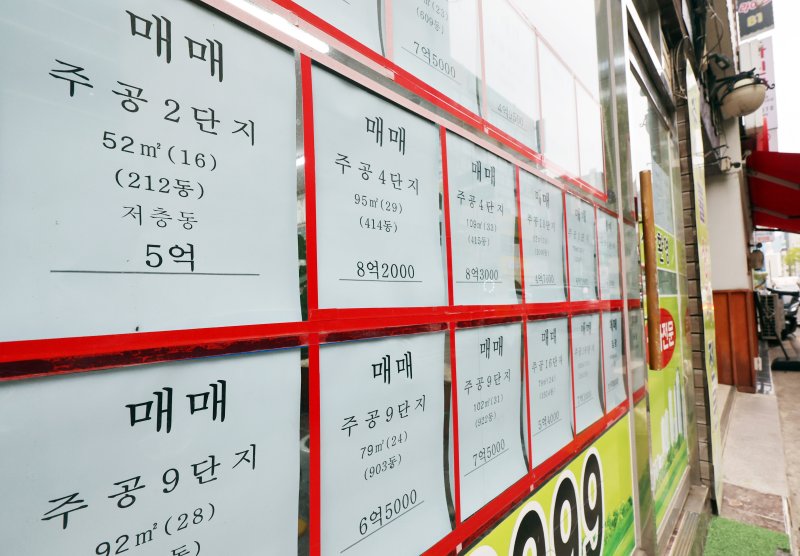
Meanwhile, apartment prices in the Gangnam area, which influence housing prices nationwide, are on a downward trend, but Seoul as a whole continues to show a decoupling pattern, with prices still rising.
According to the Korea Real Estate Board (KREB), Seoul apartment prices rose for the 62nd straight week in the weekly apartment price trend for the second week of April. The pace of increase slowed after President Lee mentioned in January that he would consider suspending the heavier capital gains tax on multiple-home owners, but the overall upward trend continued. Gangbuk District, where apartments priced at 1.5 billion won or less are concentrated, rose 0.27%, the largest increase among Seoul's 25 districts. Gangseo District also gained 0.24%. All other districts also posted positive growth rates.
By contrast, the three Gangnam districts (Gangnam, Seocho and Songpa) fell for the eighth consecutive week, showing a different pattern from Seoul's overall housing market. Seocho District and Gangnam District each declined 0.06%, while Songpa District fell 0.01%. Outside the three Gangnam districts, Yongsan District was the only area in Seoul to post a decline, down 0.04%.
[email protected] Kim Kyung-soo Reporter