"I Don't Know Anything About Politics. If Business Is Good, That's a Benevolent Ruler"... In Darkening Alleys, Elderly Vendors Unable to Pack Up Their Stalls [Recorder of the Low Places]
- Input
- 2026-04-26 06:00:00
- Updated
- 2026-04-26 06:00:00
On city streets and around markets, there are people who set up early in the day. They get through the day with a few items and worn-out tools in front of them, but their spot can be an inconvenience for passersby and a source of income for themselves. This report looks at the balance between livelihood, enforcement, taxes, and responsibility in front of small street stalls.
[Financial News] "How much is a bag of bean sprouts?" "Just give me 1,000 won. Take it."
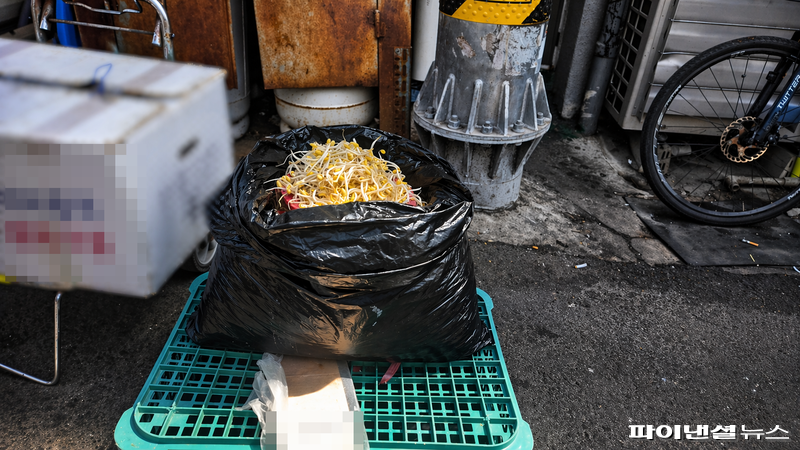
On the 23rd, small stalls were scattered throughout the alleys around a market in Cheongnyangni, Dongdaemun-gu, Seoul. In one alley, an elderly vendor waited for customers, placing a black plastic bag of bean sprouts on a plastic mat. In another, a different elderly vendor was repairing shoes, laying out shoe polish, brushes, a lighter, and repair tools around a yellow box.There were no signs or price tags, but people slowed their pace.Kim, a salaried worker in his 50s, said he buys a bag now and then while passing by because it is cheaper than the supermarket. A customer standing in front of the shoe-repair stall said it was convenient to hand shoes over right away, rather than going to a formal shop, but added that it becomes inconvenient when the alley gets narrow with too many people. Some also said of the food stalls, "I buy it because it's cheap, but if I get sick after eating it, I don't know who to tell."
This scene is not unusual in the Cheongnyangni area. Some elderly vendors sell small amounts of bean sprouts, wild greens, and vegetables, while others repair shoe heels or fix sneaker laces. For residents, it is a familiar market scene. For nearby merchants, however, it raises questions of fairness with stores that pay rent and taxes.
A Day's Earnings in a Bag of Bean Sprouts
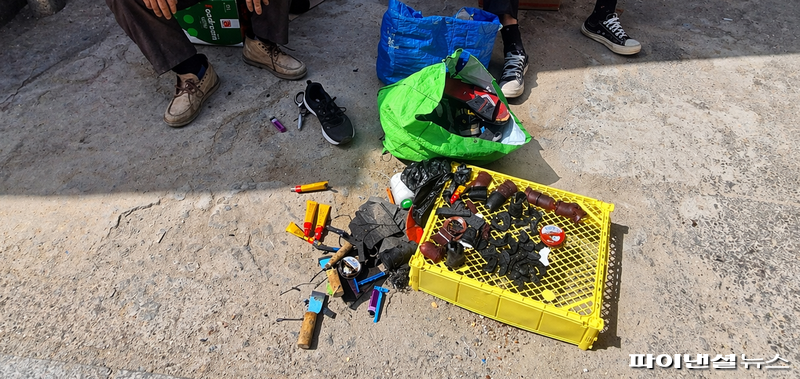
An elderly man in his 70s who repairs shoes told this reporter, "I do business depending on the situation." He added, "It would be nice to make money, but there are many days when I can't. I just keep at it all day like this."Even when business is good, the day's earnings are not large, and bad weather or enforcement can cut that off as well.When asked casually about the local election scheduled for June, the vegetable vendor waved it off."I don't know anything about that. If I can just sell everything I brought out today and go home, that's the best."He then smiled with a wrinkled face, saying there are not many days these days when he can sell everything and go home.For elderly people who find it difficult to pay rent and secure a shop,a roadside stall is a workplace with few alternatives.Those who have trouble finding work, or who cannot endure fixed working hours, look for empty spaces around markets so they can earn money for as long as their bodies allow. Nearby merchants, however, say they cannot simply leave stalls that block the front of their shops in place. One merchant said, "We understand it's unfortunate, but if they block the front of the store, we can't do business either."
Taxes Still Apply Even When You Sell on the Street
One of the most common questions about street stalls is taxation.Selling on the street does not make tax issues disappear.The National Tax Service (NTS) says business operators must register their business at each place of business and apply to the relevant tax office within 20 days of starting operations. If income is generated through business activity, it may be subject to comprehensive income tax filing.
However, value-added tax treatment varies depending on the item. Unprocessed food such as bean sprouts or vegetables may be exempt from VAT. The NTS explains that if a business only sells VAT-exempt goods, such as unprocessed food or other daily necessities, it does not have to file or pay VAT. That means VAT may not apply, but it does not eliminate income tax obligations.
A shoe-repair stall is different from an agricultural produce stall. That is because it provides a repair service rather than selling goods. If there is repair income, business registration, VAT, and comprehensive income tax issues may arise depending on the business model and sales volume. If the business operates from a fixed location, it may also need to be reviewed for a road-use permit. The Road Act requires permission from the road management authority when someone wants to use a road.
Mixed Feelings in Front of Small Stalls... A Day in the Alleys of Cheongnyangni
Food stalls also bring hygiene and liability issues.Because transactions are often made without receipts or business names, it can be difficult to find the seller again if someone gets sick after eating. Illegal food-related activity can be reported to the Report Hotline for Illegal and Unsafe Food Products or to the local district office, but at street stalls it is often not easy even to identify the seller in the first place.The fact that these stalls are set up on the street also deepens the conflict. The area around the market is shared by handcarts, motorcycles, and pedestrians. If goods take up one side of the sidewalk, people have to walk toward the road or detour between the stalls. As hygiene and liability concerns are compounded by pedestrian inconvenience, calls to regulate street vendors continue.
As a result, Dongdaemun-gu has continued efforts to regulate street vendors in the Cheongnyangni area. The district said it cleared 200 illegal or non-operating street stalls between Jegi-dong Station and Cheongnyangni station in January 2025. It explained that the Jegi-dong and Cheongnyangni-dong areas are places where traditional markets such as Gyeongdong Market and Cheongnyangni Traditional Market Complex are concentrated, making them areas where street stalls tend to form easily.
The targets for regulation included stalls that excessively occupied pedestrian paths, family-run or business-style stalls operated by relatives in two or more locations, and stalls occupying crosswalks, fire hydrants, and bus stops. Stalls with assets above a certain level, making them difficult to classify as livelihood-based operations, were also included.
Still, applying those standards directly on the ground is not simple.The question remains how far enforcement should go, even for a stall with nothing more than a bag of bean sprouts and shoe-repair tools.One passerby said,"It's true that it's inconvenient, but when you see them out there at that age, it's hard to just criticize them."The day's life in the market alley continued in front of these small stalls, where taxes, hygiene, and responsibility are all intertwined.
We record stories of real lives in print. Even if rough around the edges, we preserve the words gathered on the scene as they are. From alleys and markets, from someone's workplace, the record of an ordinary day that we may have passed by comes to readers. If you would like to follow [Recorder of the Low Places] more easily, please subscribe to the reporter page.
[email protected] Han Seung-gon Reporter