"If Samsung Electronics hits 250,000 won, I’d sell right away; if it falls to 100,000 won, I’d probably hold on to the end" [World of Retail Investors]
- Input
- 2026-04-25 06:00:00
- Updated
- 2026-04-25 06:00:00
Then one day it finally went above 100,000 won, so I sold. " Broadcaster Jee Seok-jin recently appeared on the YouTube channel Salon Drip and shared a story about a failed investment in Samsung Electronics.In fact, it was not really a failure. He made a return of more than 20%.The problem came after that. Right after he sold, the market entered a hot streak, and Samsung Electronics surged well past 200,000 won.
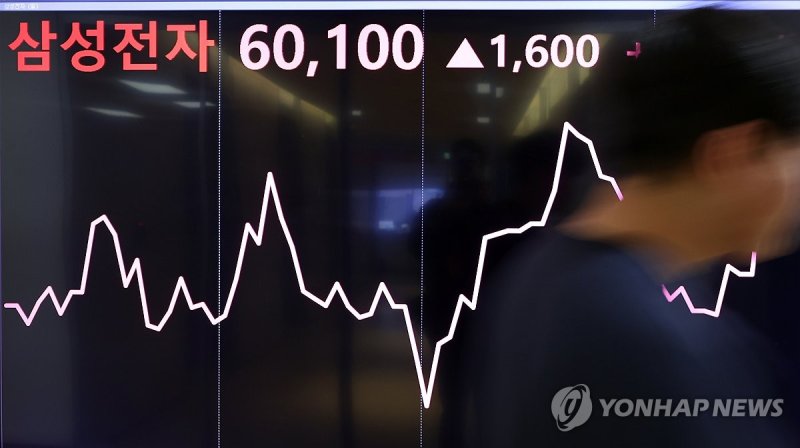
Just a year earlier, retail investors' dream had been the "70,000-won Samsung Electronics. " /Yonhap News Agency [The Financial News] "I bought it in the 80,000-won range, and it always seemed to fall before crossing 100,000 won.
Bought Samsung Electronics in the 60,000-won range, endured the bottom, then took profits as soon as it hit 70,000 won Many retail investors smiled wryly while listening to Jee's story. Kim Jung-min, 48, from Seoul, a pseudonym with about 20 years of investing experience, has a similar story.
Just a year earlier, retail investors' dream had been the "70,000-won Samsung Electronics. " /Yonhap News Agency [The Financial News] "I bought it in the 80,000-won range, and it always seemed to fall before crossing 100,000 won.In May 2024, hoping for a "100,000-won Samsung Electronics," he bought 100 shares in the 67,000-won range. Watching Samsung Electronics sink to the 40,000-won range left him frustrated.
He wanted to sell as soon as he got back to breakeven, but after Samsung Electronics recovered to the 70,000-won range in August 2025 and then moved sideways for more than a month, he sensed another deep decline ahead and took profits at 73,000 won. A few days after he sold, Samsung Electronics shot up like a fireball and became a "220,000-won Samsung Electronics.
" It was impossible to keep up. Even while promising himself, "I'll buy again tomorrow," he could not bring himself to repurchase the stock he had sold at what seemed like a cheap price.In reality, many people repeat the pattern of "buying at the knees and selling around the waist." This tendency to sell winning stocks quickly and hold losing stocks for too long is called the "Disposition effect." Profit quickly, loss slowly.the human instinct to postpone pain In 1985, behavioral economists Hersh Shefrin and Meir Statman first defined this phenomenon in academic terms in a paper, and its theoretical foundation goes back to Daniel Kahneman and Amos Tversky's Prospect Theory, published in 1979.According to this theory, people do not respond to gains and losses symmetrically.The pain of losing 100,000 won feels psychologically greater than the pleasure of gaining 100,000 won.
Just a year earlier, retail investors' dream had been the "70,000-won Samsung Electronics. " /Yonhap News Agency [The Financial News] "I bought it in the 80,000-won range, and it always seemed to fall before crossing 100,000 won.
That is why, in profitable positions, the urge to "lock in gains now" takes over, while in losing positions, the desire to avoid admitting a loss prevents selling.
Just a year earlier, retail investors' dream had been the "70,000-won Samsung Electronics. " /Yonhap News Agency [The Financial News] "I bought it in the 80,000-won range, and it always seemed to fall before crossing 100,000 won.This was already demonstrated in 1998 by Professor Terrance Odean.
After analyzing 10,000 accounts held by U.S.5 times faster than losing ones.
In other words, the disposition effect is not a matter of personal character, but a universal phenomenon rooted in the way the human brain works.
As Jee Seok-jin's case shows, the disposition effect often causes investors to cut profits too early.
In theory, Samsung Electronics could have delivered a 150% gain as it rose from 80,000 won to 200,000 won.But by selling at 100,000 won, the return was limited to about 25%.The disposition effect is even harsher in losing positions.When it is time to sell, some investors hold on, thinking, "It will go up someday," only to suffer even bigger losses.Shefrin and Statman explained this by saying, "Investors do not like to admit that they were wrong.
Just a year earlier, retail investors' dream had been the "70,000-won Samsung Electronics. " /Yonhap News Agency [The Financial News] "I bought it in the 80,000-won range, and it always seemed to fall before crossing 100,000 won.
" That is because the moment they lock in a loss is also the moment they admit their judgment was wrong.
Just a year earlier, retail investors' dream had been the "70,000-won Samsung Electronics. " /Yonhap News Agency [The Financial News] "I bought it in the 80,000-won range, and it always seemed to fall before crossing 100,000 won.Experts: "Set a stop-loss level before you buy" Experts recommend setting a target price and a stop-loss level before buying.The idea is that if you establish rules before emotions get involved, you will be less likely to be swayed by psychology when the moment comes.Another option is to set a Trailing Stop, which raises the selling threshold as the stock price rises.
Another way to avoid the disposition effect was suggested by Jee Seok-jin.On the show that day, he advised that "if you invest in ETFs for the long term and buy them in installments like saving money in a deposit account, you cannot fail." His point was that ETF dollar-cost averaging, which steadily accumulates an index without obsessing over the ups and downs of individual stocks, can help block the impatience that leads investors to cut profits too early.
Just a year earlier, retail investors' dream had been the "70,000-won Samsung Electronics. " /Yonhap News Agency [The Financial News] "I bought it in the 80,000-won range, and it always seemed to fall before crossing 100,000 won.
I do not want to become someone who keeps saying, "I should have bought, I should have sold, I should have held." Yet every day it still feels like everyone else is doing well in stocks, real estate, and investing, except me.The world of investing is difficult no matter how much you study it, so if you want to receive stories from [World of Retail Investors] more conveniently, please subscribe to the reporter page.We also welcome tips from retail investors who have investment stories they would like to share.
Just a year earlier, retail investors' dream had been the "70,000-won Samsung Electronics. " /Yonhap News Agency [The Financial News] "I bought it in the 80,000-won range, and it always seemed to fall before crossing 100,000 won.[email protected] Kim Hee-sun Reporter