Lebanon and Israel Agree to Extend Ceasefire by Three Weeks After White House Talks
- Input
- 2026-04-24 07:32:01
- Updated
- 2026-04-24 07:32:01
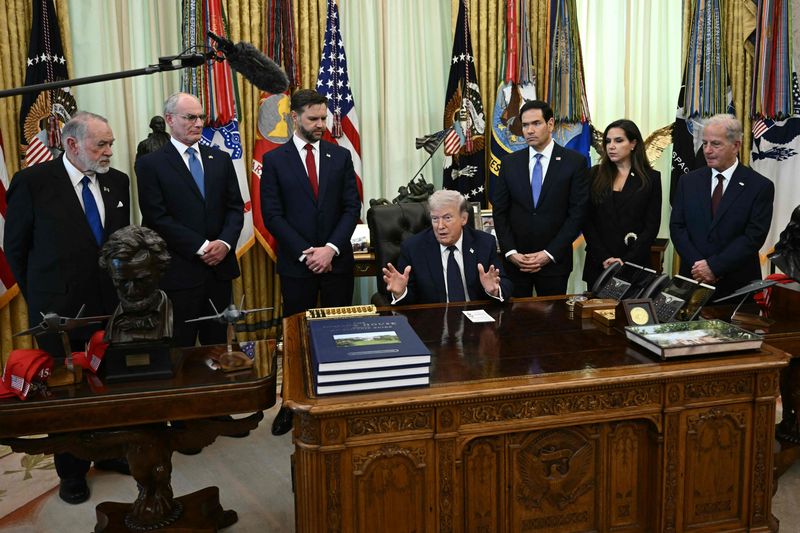
, on the 23rd (local time) after talks on extending the ceasefire between Israel and Lebanon. AFP-Yonhap News [The Financial News] Israel and Lebanon have agreed to extend their current ceasefire for another three weeks. According to foreign media reports, including The Associated Press (AP), on the 23rd (local time), U.
S. President Donald Trump announced at high-level talks between Israel and Lebanon at the White House in Washington, D. C.
, that the two sides had agreed to extend the ceasefire now in effect by three more weeks. The move extends the initial 10-day ceasefire, which took effect on the 17th and was set to expire on the 27th. It is drawing attention as a possible turning point toward ending the war between the two countries.
Trump said the meeting between Lebanon's ambassador to the U. S. , Nada Hamadeh Moawad, and Israel's ambassador to the U.
S. , Yechiel Leiter, went "very well. " The talks were the second high-level negotiation between the two sides since last week.
The U. S. delegation included key figures from the country's diplomatic and security establishment, including Vice President JD Vance, Secretary of State Marco Rubio, Ambassador to Israel Mike Huckabee, and Ambassador to Lebanon Michel Issa.
In a social media post, Trump said, "The United States will work with Lebanon so it can protect itself from Hezbollah," adding that he looked forward to meeting soon with Israeli Prime Minister Benjamin Netanyahu and Lebanese President Joseph Aoun in person. President Aoun's office requested that, along with the ceasefire extension, Israel stop demolishing homes in villages it has occupied since the war broke out on March 2.
On the 22nd, the Office of the President of Lebanon called for a complete halt to Israeli attacks, the withdrawal of its forces, the release of Lebanese prisoners held in Israel, and the deployment of Lebanon's regular army to border areas. In response, Israel's foreign minister Gideon Sa'ar said there is no serious territorial dispute with Lebanon and that minor border clashes can be resolved.
He added, however, that "the only obstacle to peace is Hezbollah, which is backed by Iran. " He also said Lebanon must break free from Iran's influence if it is to restore sovereignty, independence, and freedom.
Despite the diplomatic progress, tensions on the ground remain high. Hezbollah senior official Wafiq Safa rejected the talks outright, saying, "We will not abide by any agreement reached through these direct negotiations.
" In fact, fighting continued during the ceasefire period. On the 22nd, well-known journalist Amal Khalil was killed in an Israeli airstrike while covering events in Southern Lebanon, and gunfire was also reported at an ambulance approaching the rescue scene, underscoring repeated violations of the truce.
Since Israel's founding in 1948, the two countries have officially remained in a state of war, so the fact that they sat down at the negotiating table is being seen as a historic event. Separate from Iran's demand in U.
S. -Iran talks for an end to a "regional war," the Lebanese government is pushing hard for peace while insisting on its own independent representation.
The IDF currently occupies a buffer zone extending 10 kilometers into Southern Lebanon beyond the border, and the world is watching closely to see whether the two sides can produce a lasting peace plan during the ceasefire extension.
S. president, speaks to reporters at the White House in Washington, D. C.
[email protected] Yoon Jae-joon Reporter