[Editorial] Expanding labor inspectors to 8,000 will increase uncertainty for businesses
- Input
- 2026-04-23 18:34:01
- Updated
- 2026-04-23 18:34:01
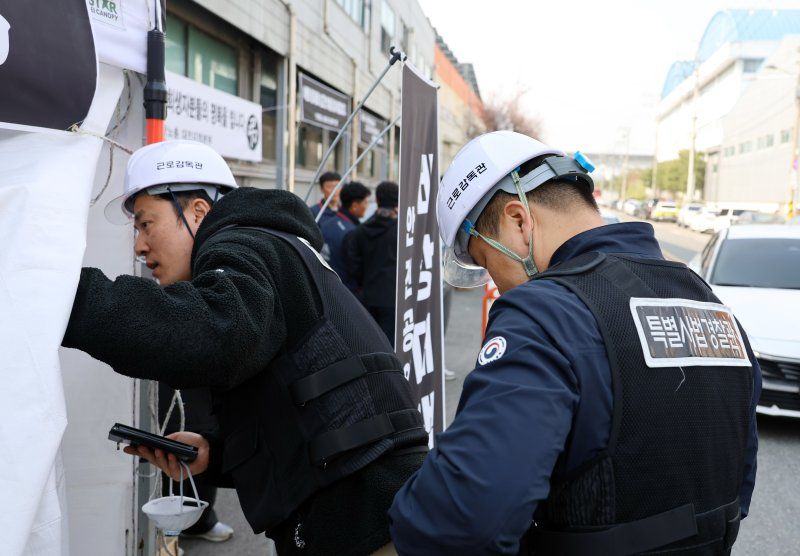
Labor inspectors are special judicial police officers who check working conditions and refer cases to the prosecution service when violations are found. They also have the authority to conduct searches and seizures and summon suspects. Their title has already been changed from 'labor inspector' to 'labor inspector,' and some inspection powers that had been concentrated in the central government will also be delegated to local government starting in November. As the scope of authority expands in this way, a sharp increase in personnel will inevitably have a greater impact on the ground.
Labor inspections are carried out on a regular, planned, or ad hoc basis. Because workplace inspections are generally conducted without warning, companies have no choice but to remain on edge. Some may ask what there is to worry about if there is no wrongdoing, but for the organizations being inspected, the inspection itself is already a burden. Once an inspection begins, a company must submit a large volume of documents, including employment contracts, payroll records, attendance logs, and industrial accident insurance enrollment materials, and it must also prove the facts. Even when no legal violation exists, the investigation process itself can disrupt business operations. If the number of inspectors rises sharply on top of that, the difficulties companies feel are likely to become even more widespread.
The bigger problem is whether the quality of preparation is sufficient compared with the quantitative expansion. More than half of front-line inspectors are already said to have less than five years of experience. There are also concerns that many cases do not make it all the way to referral to the prosecution service even after an investigation has begun. If the share of inexperienced personnel rises at a time when the inspection force is being expanded dramatically, workplaces could face both inconsistent judgments and heavier administrative burdens. The government says it will strengthen expertise through the Training Institute for Criminal Investigation, but it remains unclear whether short-term training can adequately cover complex labor and industrial safety issues.
Meanwhile, as changes to labor-related systems are being pushed at the same time, including tougher enforcement of the Serious Accidents Punishment Act, the Yellow Envelope Law, the introduction of the worker presumption system, and discussions on extending the retirement age, the business environment is becoming even more uncertain. Even if the purpose of tighter regulation is understandable, expanding unprepared systems will inevitably lead to confusion at worksites and higher costs. Companies are already bearing additional time and financial burdens as they expand labor and safety staff and seek legal advice.
Rather than focusing only on increasing the number of labor inspectors, the government should place greater emphasis on securing the expertise needed to accurately diagnose and resolve complex labor and industrial safety issues in the field. A short-term increase in personnel cannot guarantee effective oversight and may instead deepen confusion. Policy should be revised to cultivate experts with systematic training and field experience, while helping companies assess risks in advance and respond accordingly.