Why Did Cola, Soju and Doenjang Prices Rise? A 10 Trillion Won Starch Sugar Cartel Built Over 8 Years
- Input
- 2026-04-23 14:46:51
- Updated
- 2026-04-23 14:46:51
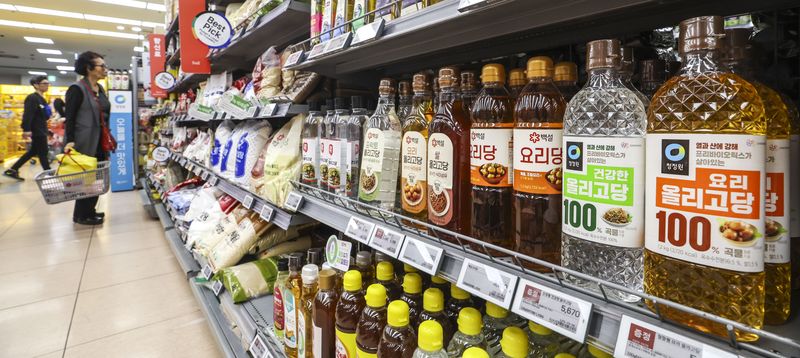
[Financial News] Prosecutors have wrapped up their investigation into the "10 trillion won starch sugar price collusion" case and sent 25 current and former executives and employees from food companies Daesang Corporation, Sajo CPK and CJ CheilJedang to trial. Their eight-year collusion pushed starch sugar prices up by more than 70%. Starch sugar is exactly what the name suggests: sugar made by dissolving starch. It is used in nearly all processed foods with a sweet taste, including carbonated drinks, fruit juice, soju, makgeolli, confectionery, bread, gochujang, doenjang, syrup, yogurt, ice cream and frozen foods.
The Fair Trade Investigation Division of the Seoul Central District Prosecutors' Office said on the 23rd that it had indicted the three corporate entities, 21 executives and employees, and the Korea Starch Sugar Association on charges of violating the Fair Trade Act. Daesang's business division head, identified only by his surname Kim, was arrested and indicted on the 16th. Samyang Corporation was also accused of the same offense, but its case was suspended in consideration of its cooperation with the investigation.
According to prosecutors, the four companies are suspected of colluding on the prices of starch sugar and its byproducts used in a wide range of products, including food, beverages, alcohol, snacks and livestock feed, in the domestic market between July 2017 and October 2025. The estimated scale of the collusion reached 1.0152 trillion won, the largest food-price collusion case in South Korea.
Prosecutors concluded that collusion took place across the industry, including about 729.8 billion won in general starch sugar price collusion, about 101.6 billion won in collusion involving bids from major buyers, and about 183.8 billion won in byproduct price collusion.
Chief Prosecutor Na Hee-seok explained, "Compared with prices before the collusion, starch prices rose by as much as 73.4%, and sugar prices by as much as 63.8%."
Prosecutors believe the companies reached a basic agreement to decide when and by how much to adjust prices for each starch sugar product in order to raise prices. They also suspect that, to conceal the collusion, each company proposed different price increase and decrease ranges to its customers.
In particular, prosecutors found that the companies had agreed in advance on the winning bidder and bid prices for major buyers that purchase starch sugar through procurement auctions, including Seoul Milk, Korea Yakult, Nongshim Co., Ltd., HiteJinro Co., Ltd. and POSCO.
Normally, in a legitimate procurement bid, major buyers ask the companies selling starch sugar to submit their own prices, and the suppliers compete to offer lower bids.
But Daesang Corporation, Sajo CPK and CJ CheilJedang allegedly rigged the process by setting a rotation order before the bidding began so they could take turns winning. The company scheduled to win would submit a specific price, while the other companies would act as dummy bidders and offer higher prices.
As a result, major buyers likely purchased starch sugar at prices higher than they should have paid, and prosecutors believe those higher costs were passed on to consumers as final product prices rose. POSCO is also known to use starch sugar in steel manufacturing processes such as casting.
The colluding companies were also accused of discussing and deciding the prices of byproducts generated during starch sugar production every month, then notifying customers of a jointly set price.
Na said, "We have clearly uncovered a chronic collusion scheme, and we exercised the right to request the Fair Trade Commission to file complaints against 22 individuals whose level of involvement was particularly serious." He added, "We have once again sent a strong message to the market that offenders who disrupt ordinary people's livelihoods through collusion will be punished without fail."
[email protected] Kim Dong-gyu Reporter