Iran's Oil Storage Capacity Nears Limit as U.S. Blockade Strategy Collides with 60-Day Deadline
- Input
- 2026-04-23 09:52:32
- Updated
- 2026-04-23 09:52:32
Ceasefire 'indefinitely'... Dismissing deadline speculation
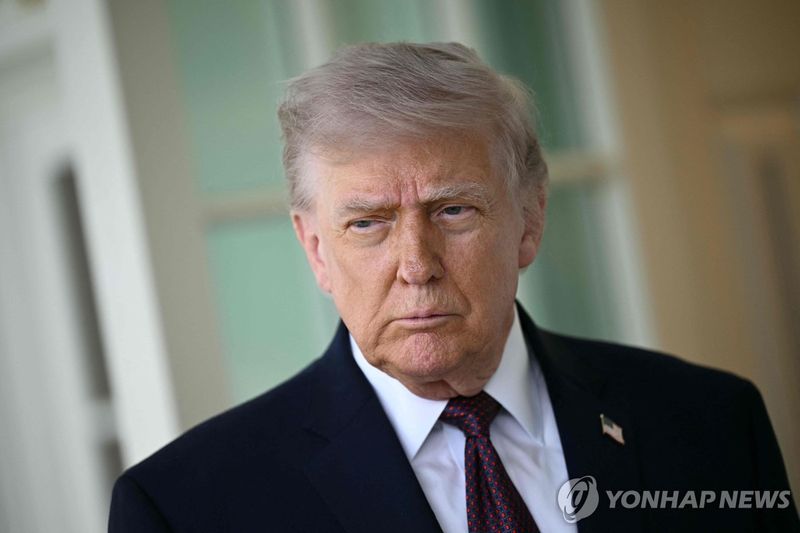
Donald John Trump said in a Fox News interview on the 22nd local time that there was "no time pressure" on the ceasefire and that reports of a "three- to five-day deadline" were "not true." The previous day, Trump said he would maintain an indefinite ceasefire until Iran presented a unified negotiating proposal. Axios, however, reported, citing anonymous sources, that Trump was privately thinking in terms of three to five days.
White House spokesperson Karoline Leavitt said, "Contrary to some reports, the president has not set a fixed deadline for receiving Iran's proposal," adding, "The ceasefire schedule is a matter for the commander in chief to decide."
Strait of Hormuz blockade... Maximizing pressure on Iran's economy
The United States of America is waiting for IRI's response while maintaining the Strait of Hormuz blockade, a move seen as part of a strategy to push Iran's economy to the brink. The key is to cut off exports of Iranian crude oil and exhaust storage capacity. Analysts say the plan is designed to create a chain reaction: storage facilities fill up, oil wells shut down, exports are blocked, and the regime comes under financial pressure.
Scott Bessent wrote on X that "Kharg Island's storage facilities will be full within days, and vulnerable Iranian oil wells will be forced offline," adding that "restrictions on maritime trade directly target the regime's core source of revenue."
The Foundation for Defense of Democracies (FDD), a hard-line anti-Iran think tank, argued that the Strait of Hormuz could become a structural weakness for Iran rather than a "game changer." According to The Guardian, Iran is expected to reach its oil storage limit around April 26.
In an article for Real Clear Defense, Lance Gordon also analyzed that "if production is forcibly halted, oil fields could suffer long-term damage, leading to a structural decline in output and revenue," and that "300,000 to 500,000 barrels per day of production capacity could be permanently lost."
Time Is on Our Side... The 60-Day Deadline as a Variable
Iran, by contrast, continues to insist that time is on its side. Gholam-Hossein Mohseni-Eje'i, head of Iran's judiciary, said, "The enemy is in no position to give us a deadline." Iran appears to believe that higher oil prices are fueling inflation in the United States of America and increasing its economic burden. In fact, soaring jet fuel prices are leading to flight reductions and cancellations, while lower hotel bookings during the summer peak season and rising raw material prices are spreading shocks across the global economy.
Meanwhile, the war has reached another turning point with a "60-day deadline." Under the War Powers Resolution of 1973, the president cannot continue military operations for more than 60 days without congressional approval, and that deadline falls on May 1. Signals are also emerging within the Republican Party that positions could change after the 60-day mark, leaving Trump with a choice of securing congressional approval, scaling back military operations, or seeking a 30-day temporary extension. Still, analysts say the possibility remains that the administration could ignore the deadline, as it has in the past, leaving open the prospect of a prolonged war.
[email protected] Lee Byung-chul Reporter