"Prices Rose by 1 Million Won Overnight, and They Want Us to Buy Now?"... Today Is the Cheapest Day to Buy a Laptop or Smartphone
- Input
- 2026-04-23 07:47:08
- Updated
- 2026-04-23 07:47:08
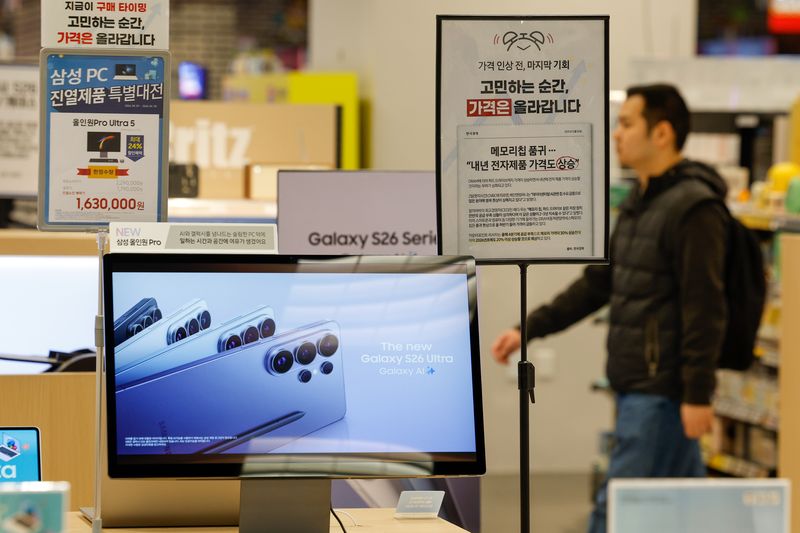
[The Financial News] As the memory semiconductor shortage triggered by surging demand for artificial intelligence (AI) moves beyond a temporary disruption and into a prolonged phase, prices of IT finished goods such as PCs, smartphones, and game consoles are climbing like dominoes. The so-called chipflation, or semiconductor-driven inflation, is directly squeezing consumers' wallets.
DRAM can meet only 60% of demand by the end of 2027
According to Nikkei Asia and other foreign media on the 22nd, global memory chip makers are expanding DRAM production, but supply is expected to cover only about 60% of market demand by the end of 2027.
Samsung Electronics Co., Ltd., SK hynix Inc., and Micron Technology, Inc. are accelerating facility investment and production-line expansion. However, because of the nature of semiconductor manufacturing, it takes a considerable amount of time for new plants to reach stable mass production. Industry watchers say the impact of expanded supply will likely begin in earnest in 2027 at the earliest, and not until after 2028 at the latest.
Earlier, SK Group Chairman Chey Tae-won also said at Nvidia Corporation's annual developer conference, GTC, held in March that the wafer supply shortage could last until 2030.
Industry sources say DRAM output would need to rise by more than 12% annually over the next two years to balance supply and demand, but actual production increases are likely to remain in the 7% range.
The gap between supply and demand has translated directly into soaring prices. In the first quarter of this year, fixed transaction prices for DRAM jumped more than 50%, while NAND flash memory prices surged by more than 90%. Further gains of up to around 90% are also expected in the second quarter.
The fundamental reason chipflation has entered a prolonged phase is the shift in demand brought on by the spread of AI servers.
As AI servers for data centers become more widespread, orders are concentrating on High Bandwidth Memory (HBM) and high-capacity products. Manufacturers are reportedly allocating more production capacity to higher-margin premium lines.
"Chipflation" pushes Samsung and LG laptops up by 900,000 to 1 million won
As a result, general-purpose DRAM and NAND flash for PCs and mobile devices have been pushed down the priority list, creating a sharper shortage in the consumer market.
The surge in memory prices is being reflected directly in finished product price tags. Samsung Electronics Co., Ltd. and LG Electronics' latest laptops have been launched at prices up to 900,000 to 1 million won higher than the previous generation.
Smartphones are no exception. The Samsung Galaxy S26 series has seen its launch price rise by as much as 295,900 won compared with the previous model, pushing the top-end version above the 2.5 million won mark.
The console game market has also joined the wave of price increases. Sony raised the selling price of the PlayStation 5 (PS5) by about $100, while overseas PC makers such as ASUS, HP, and Dell have either already adjusted prices or announced plans to do so.
There is also growing concern that PC finished-product prices could rise by another 20% or more by the end of the year. Industry observers largely agree that as long as the semiconductor supply structure continues to change, chipflation will be difficult to ease in the near term.

[email protected] Seong Min-seo Reporter