[Editorial] Bank of Korea Governor Hyun-Song Shin should build a 'buffer against crisis' with the government
- Input
- 2026-04-22 18:23:51
- Updated
- 2026-04-22 18:23:51
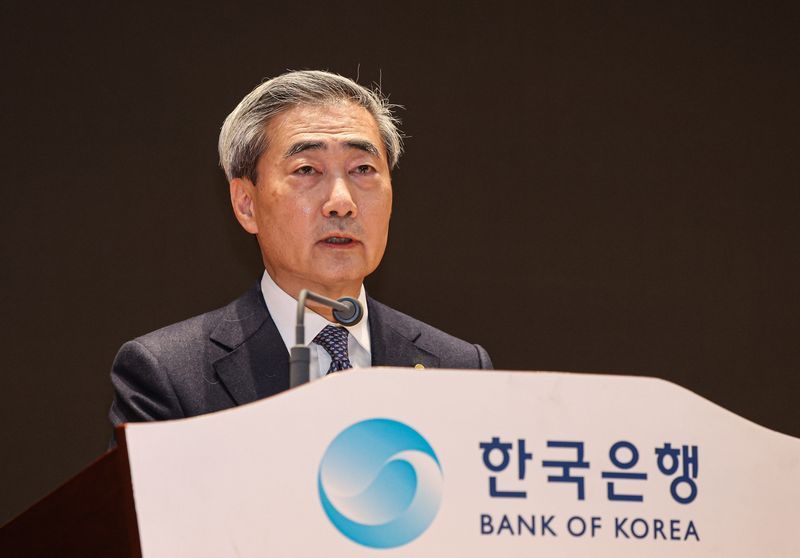
Under current law, the BOK's core mandates are price stability and financial stability. Although there is also a provision requiring it to coordinate with economic policy as long as price stability is not harmed, the central bank's main role has in practice been weighted toward inflation control. It is worth reviewing whether the BOK's response to overheating asset markets, financial imbalances, and structural economic problems has been sufficient.
By raising the question of the central bank's role in his inaugural address, Governor Shin appears to signal an intention to expand the BOK's function beyond its traditional inflation focus to include financial stability and structural change. The central bank should broaden its policy outlook and respond more proactively to a rapidly changing economic environment.
The South Korean economy is now facing a crisis of high oil prices, high inflation, and a weak won, driven by the Middle East war. Producer prices rose 1.6% from the previous month in May, the sharpest increase in four years. Prices of coal and petroleum products jumped by nearly 32%, marking the highest rate of increase since December 1997, during the Asian financial crisis. Producer prices typically feed into consumer prices with a lag of one to three months. Household living costs are already heavy, and it is difficult to gauge how severe the oil shock will be.
As the Middle East war drags on, rising costs and supply shortages are deepening the pain for companies and consumers alike. Petrochemical firms are cutting plant utilization, while construction companies are sending notices warning of higher project costs and possible delays in housing projects. Asphalt prices, a byproduct of refining, have surged so much that some roadwork has been halted. Supply disruptions in naphtha are creating shortages not only of delivery containers and garbage bags, but also of medical supplies such as syringes and IV bags.
Even as the real economy is being hit, the KOSPI Composite Index continues to set record highs day after day. This divergence between finance and the real economy is a warning sign. It is not enough to simply cheer a stock market rally that is being driven by liquidity even as high oil prices undermine corporate profitability and production. If the oil shock materializes in weaker earnings and slower hiring, investor sentiment could quickly deteriorate and financial market volatility could widen. It is troubling that these warning signals are not being heard.
The BOK should closely monitor market trends and work in close coordination with the government. It must concentrate its policy capacity on minimizing the shock to the real economy. Through a combination of monetary and fiscal policy, the burden on vulnerable households and marginal companies needs to be eased. Above all, it is important to build a preemptive "buffer against crisis" through policy management that balances inflation, growth, and financial stability.