Warsh nomination hearing for Fed chair raises expectations of a rate hold through year-end
- Input
- 2026-04-22 13:55:49
- Updated
- 2026-04-22 13:55:49
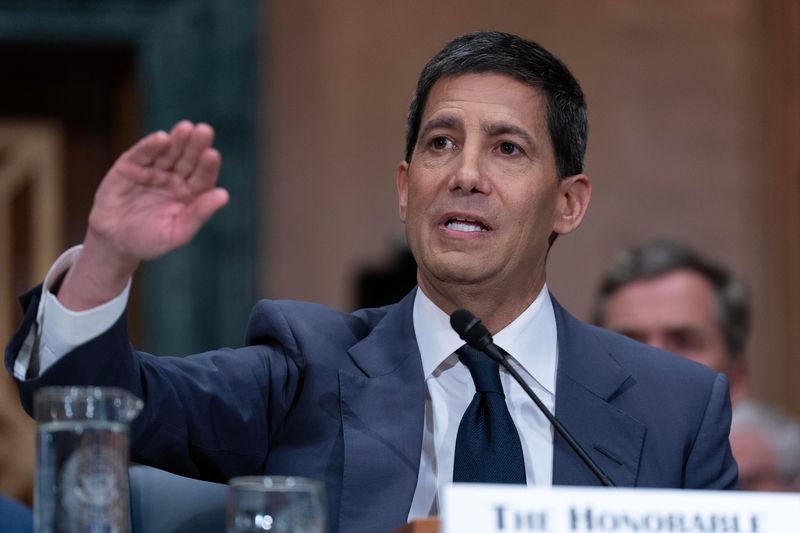
[Financial News] The United States Senate Committee on Finance held a confirmation hearing for Kevin Warsh, the nominee for chair of the Federal Reserve System (Fed), on the 21st (local time), and market expectations are increasingly pointing to no change in the benchmark interest rate through the end of the year.
According to the CME FedWatch Tool, as of 10:30 a.m. on the 22nd in Korea, the federal funds rate futures market was pricing in a 67% chance that the benchmark rate would remain at its current level of 3.50% to 3.75% through December. That was 13 percentage points higher than the previous day.
U.S. Treasury yields also rose, with the 10-year yield up 4.10 basis points to 4.293%. The 2-year yield, which is sensitive to monetary policy, climbed 5.9 basis points to 3.782%.
Foreign media analysts said the retreat in rate-cut expectations may have been driven less by Warsh's remarks than by broader macroeconomic conditions, including solid economic data and West Texas Intermediate crude oil prices that have topped $90 per barrel.
At the Senate Banking Committee confirmation hearing that day, Warsh laid out his views on the possibility of pressure from President Donald John Trump to cut rates. He said, "Presidents usually prefer lower rates, and Trump simply says so very openly," adding, "If Fed leaders decide for themselves what is right, I do not see political comments as a threat to independence."
He also signaled a 'regime change' in the current approach to inflation management.
Warsh said, "Inflation has slowed, but ordinary people still feel the burden of high prices. We need a new inflation framework that can more accurately identify underlying price pressures."
However, he declined to say exactly how the new framework would affect the future path of interest rates.
Warsh also criticized the Fed's communication style. He noted, "Too many Fed officials offer different views on the rate path, and that does not help policy operations."
Foreign media outlets said Warsh's views could clash head-on with the practices of the 12 regional Federal Reserve Bank presidents, who see market communication as a core part of their job, and predicted a rocky start after he takes office.
[email protected] Yoon Jae-jun Reporter