"Electric Vehicles Are Being Used as 'Power Assets' Beyond Simple Transportation"... Bidirectional Charging Commercialization Accelerates
- Input
- 2026-04-22 13:44:52
- Updated
- 2026-04-22 13:44:52
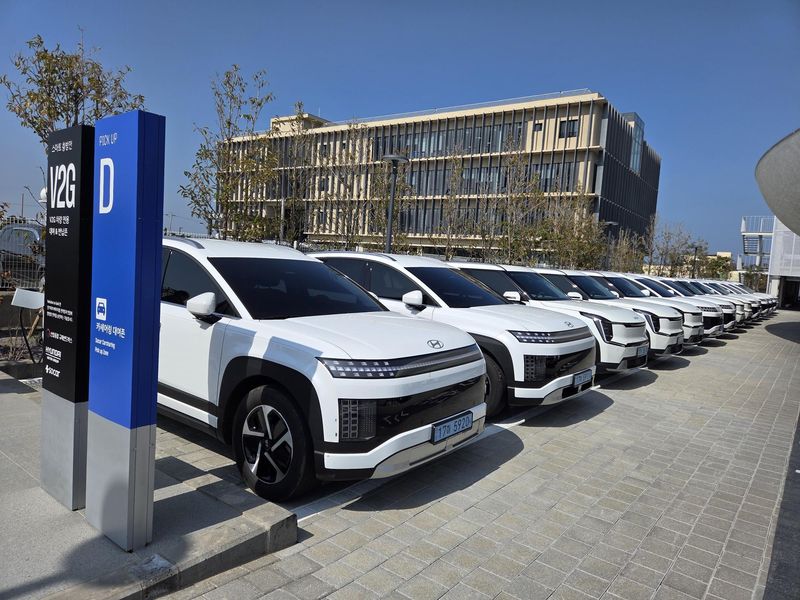
According to the auto industry on the 22nd, countries including South Korea, the UK, the US, Japan and the Netherlands are stepping up efforts to use electric vehicles not just as a means of transportation, but as power assets powered by Vehicle-to-Grid (V2G) technology.
V2G is a technology that connects an electric vehicle battery to the power grid so electricity can flow both ways. It can be implemented in electric vehicles equipped with power control and communication functions.
During late-night hours, when electricity demand is low, batteries can be charged. During peak hours such as 2 p.m. to 5 p.m., power stored in vehicle batteries can be discharged and supplied to the grid. This helps balance supply and demand while improving energy efficiency. Vehicle owners are offered incentives such as lower charging fees and opportunities to generate income.
In particular, in regions with a high share of renewable energy such as solar and wind, where output varies greatly depending on weather and time of day, V2G-enabled electric vehicles are emerging as an alternative that can improve the economics of renewable energy use and help stabilize the power grid.
In addition, countries that frequently suffer power grid damage from disasters are also using electric vehicles as core infrastructure in their energy systems.
In the State of California, efforts are under way, led by the California Public Utilities Commission (CPUC), to connect electric vehicles with local power grids and verify how quickly power can be restored during outages caused by wildfires and heat waves.
In Japan, where earthquakes are frequent, electric vehicles are being developed as a key element of disaster-response power infrastructure. During the 2024 Noto Peninsula earthquake in Ishikawa Prefecture, Japan deployed electric vehicles to affected areas to supply emergency power to homes, shelters and hospitals.
Domestic efforts to commercialize V2G technology using electric vehicles are also gaining momentum. Hyundai Motor Group is conducting demonstration services to build a V2G ecosystem and verify the technology based on dedicated electric vehicle models and bidirectional charging technology. Since December last year, it has been testing charging infrastructure and grid connectivity stability in Jeju Island using 55 electric vehicles, including the Hyundai IONIQ 9 and Kia EV9.
Institutional reforms for commercialization are also under way. At the V2G Public-Private Consultative Body launched late last year under the Ministry of Climate, Energy and Environment, central and local governments, power agencies, companies and academics are discussing a mid- to long-term roadmap covering tariffs, settlement and compensation methods, legal revisions and technical standards.
An industry official said, "Commercialization of V2G in South Korea will gain momentum only if the work to flesh out the institutional framework moves faster alongside pilot services." The official added, "If V2G is commercialized, it is expected to accelerate the shift to electric vehicles and serve as an opportunity to expand national energy strategic assets."
[email protected] Kim Dong-chan Reporter