Government to Conduct Nationwide Survey of 60,000 Children at Risk as 50 Die from Abuse Each Year
- Input
- 2026-04-22 10:48:47
- Updated
- 2026-04-22 10:48:47
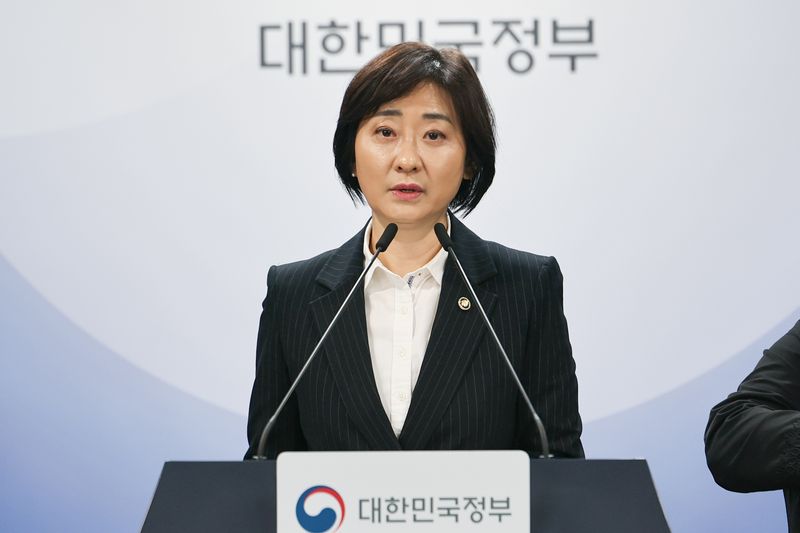
[The Financial News] Starting in May, the government will conduct a nationwide survey of about 60,000 children under age 6 who have never visited a medical institution. The goal is to identify children who are being abused or are at risk of abuse earlier. It will also strengthen punishment for child abuse crimes. In South Korea, 30 to 50 children die from abuse every year. There is also a problem with a social mindset that pays attention only when public outrage erupts after a child abuse death. Although the government knows how serious infant abuse is, much of which remains hidden, critics say it keeps repeating a pattern of delayed responses, only coming up with measures after a tragedy occurs.
On the 22nd, the Ministry of Health and Welfare announced the measures to strengthen child abuse prevention and response together with the United States Department of Education, the Ministry of Justice, the Ministry of the Interior and Safety, the Ministry of Gender Equality and Family, and the Korean National Police Agency.
The key goals of the plan are to detect children at risk of abuse, which have long been hidden, at an earlier stage and to strengthen punishment.
The plan reflects the fact that 84% of child abuse perpetrators are parents, that abuse often takes place inside the home, and that the abuse is concealed, making it difficult to find victims. In fact, among the 124 children who died from abuse between 2022 and 2024, those aged 2 or younger accounted for 46.8%, or 58 children. Abuse of infants and toddlers, who have difficulty expressing themselves, is easy to hide, and the detection rate for abuse among children under 2 remains at only about 2%.
Lee Seu-ran, 1st Vice Minister of Health and Welfare, said, "This measure is intended to prevent abuse of infants, toddlers and children with disabilities, who have difficulty expressing themselves directly, and to protect children who have been victimized." She added, "When parents apply to delay school enrollment for a child of school age, we will require the child to accompany them so that safety checks can be strengthened."
Accordingly, the ministry will begin a nationwide survey next month of about 58,000 children under age 6 who have never received a child health checkup or vaccination.
Working with the Korean National Police Agency, it will first survey children who are considered highly likely to be at risk through the e-Child Happiness Support System. If a household refuses a follow-up visit for additional checks, the case will be referred to the police for investigation.
When visiting households with children under 2, staff from Child Protection Agency will accompany the visit.
Starting next year, the ministry will also explicitly require medical staff, who are mandatory reporters of abuse, to check for signs of trauma and other abnormalities during infant and toddler health screenings.
It will also strengthen procedures for confirming the safety of children of school age. From the second half of the year, guardians who apply to delay a child's school enrollment will have to bring the child with them.
Punishment for child abuse crimes will also be strengthened.
The justice authorities plan to review whether the current level of punishment is appropriate, taking into account the principle of proportionality among penalties. They will also push to explicitly define filicide as a child abuse crime under the law.
Under the current Act on Special Cases Concerning the Punishment, etc. of Child Abuse Crimes, child abuse murder is punishable by death, life imprisonment, or at least seven years in prison, while child abuse resulting in death is punishable by life imprisonment or at least five years in prison.
The government will also expand shelters for abused children to protect them. It will pilot one or two shelters in each city and province that are equipped to provide specialized services for infants and toddlers.
It will also revise the requirements for temporary protection of abused children, changing them from two or more reports involving the same child to two or more reports involving a child within the home.
The Korea Early Childhood Home-visiting Intervention (KECHI), which provides services to households raising children under 2, will also be expanded gradually starting next year. Professionals will visit homes to provide health management and counseling.
According to the ministry, child abuse reports rose 18.9% from 42,251 in 2020 to 50,242 in 2024. The government aims to reduce the average annual number of child abuse deaths from 41 between 2020 and 2024 to 30 by 2029.
[email protected] Jung Sang-gyun Reporter