Deadline Set for the Evening of the 22nd: US Says No Extension, Iran Says No Surrender Talks
- Input
- 2026-04-21 15:14:00
- Updated
- 2026-04-21 15:14:00
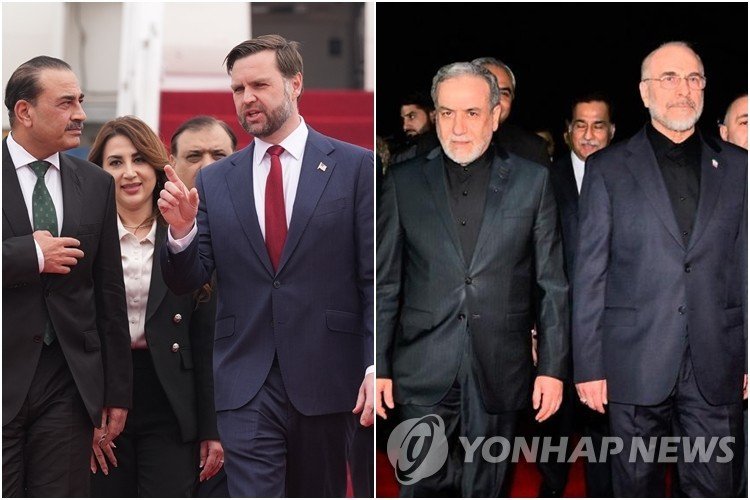
[The Financial News] As the two-week ceasefire deadline between the US and Iran nears 22 evening in ET, Donald Trump said he would extend it by one more day while maintaining the maritime blockade of the Strait of Hormuz. Iran, for its part, insisted that "there will be no negotiations under threat." However, because both sides have kept the negotiation channel open and the maritime blockade and talks are still moving forward at the same time, observers say the situation is more likely to end in last-minute coordination than in a sudden escalation. Although the direction of the peace talks remains unclear, the prevailing view is that negotiations will continue until just before the deadline.
Trump Says Ceasefire Ends on the 22nd, No Extension
On the 20th local time, Trump said the end of the US-Iran ceasefire would come at "Wednesday evening in Washington, D.C." The statement appears to reflect the actual start time of the ceasefire, as he interpreted the original two-week deadline, which had been seen as the 21st, as one day later.
He also ruled out any extension, saying the chance was "very small," effectively setting a final deadline. By making clear that talks would begin on the 21st but that there would be no additional grace period, he appeared to be using the deadline to put strong pressure on both sides to reach an agreement.
The blockade of the strait will also remain in place. Trump said, "Iran desperately wants me to open the strait. But I will not open it until there is a signed agreement," signaling that the maritime blockade of the Strait of Hormuz will continue.
He also publicly raised the possibility of renewed fighting if no agreement is reached. "If there is no deal, I would clearly expect the fighting to resume," he said, adding, "I will not rush into a bad deal." His remarks suggested that he does not intend to be pressured by time during the negotiations.
The blockade is already having an effect. CENTCOM announced that 27 ships traveling to and from Iranian ports turned back or reversed course after the maritime blockade began on the 13th. More recently, tensions have risen again after an Iranian cargo ship was seized by the US military.
Trump also suggested possible economic support after regime change, saying on Truth Social that "if Iran's new leadership is wise, it can look forward to a prosperous future." He cited Venezuela as an example and presented a model of economic normalization after regime change.
JD Vance, the US vice president, is expected to depart for Islamabad, Pakistan, the venue for the talks, on the 21st. Steven Charles Witkoff, the president's special envoy, and Jared Kushner, Trump's son-in-law, may also accompany him.
Some confusion has emerged as Trump's shifting remarks have led to conflicting reports. In an interview with the New York Post, he said Vance had already left for Pakistan, but some media outlets reported that he was still in the US.
Iran Distrusts Talks, Says No to "Surrender Negotiations"
Iran has shown deep distrust of the negotiations themselves. It has not formally confirmed whether it will attend the second round of peace talks. Reports suggesting possible participation have appeared alongside Iran's insistence that the US change its stance before it will join the talks.Mohammad Bagher Ghalibaf, the speaker leading the negotiating team, said on X that "negotiations under the shadow of threats are unacceptable." He criticized the US maritime blockade and military pressure as an attempt to turn the talks into a "table of surrender," and said, "Iran has spent the past two weeks preparing new cards on the battlefield." His remarks suggest that Iran is keeping military options open alongside diplomacy.
Masoud Pezeshkian, the Iranian president, also directly criticized the US. He said that "respecting promises is the basis of meaningful dialogue" and added that "the signals sent recently by US officials are unconstructive and contradictory, and in the end amount to a demand for surrender," underscoring his deep distrust of Washington's past behavior.
According to Axios, a source said mediators from Pakistan, Egypt, and the Republic of Türkiye urged the Iranian side to attend the meeting, and that approval from Supreme Leader Mojtaba Khamenei was eventually given late on the 20th.
[email protected] Kim Kyung-min Reporter