Government Responds to Controversy Over Oil Price Cap: "The Increase Is Smaller Than in the US and Europe"
- Input
- 2026-04-21 13:52:56
- Updated
- 2026-04-21 13:52:56
[The Financial News]
The government pushed back against criticism that the oil price cap has kept gasoline and diesel prices too low, weakening demand suppression, citing examples from Japan and other countries.
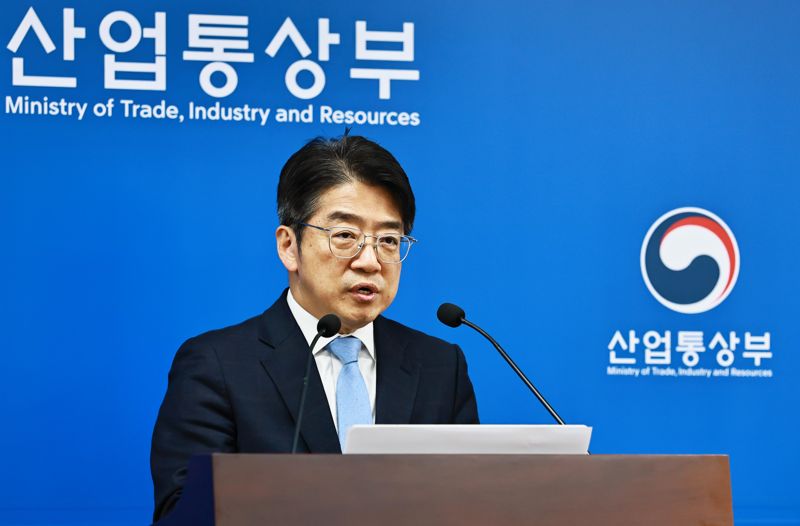
At a briefing for the "Middle East Situation Response Headquarters" held at the Government Complex Sejong on the 21st, Yang Ki-uk, Director-General for Industrial and Resource Security at the Ministry of Trade, Industry and Energy (MOTIE), said, "The price cap chosen by the government contributes to the stabilization of prices and other aspects of the public livelihood economy, and it also plays an important role in protecting livelihood consumers such as truck drivers and farmers, as well as vulnerable groups."
Since the oil price cap was introduced, gasoline and diesel prices have remained relatively stable and demand has not fallen sharply. As a result, some have argued that excessive government control is distorting the market. Concerns have also persisted over the fiscal burden of compensating refiners for the gap between market prices and the lower capped prices.
The government responded by comparing Korea with major economies. According to MOTIE, as of Feb. 27, just before the outbreak of the Middle East war, domestic gasoline prices had risen 18.4 percent and diesel prices 25.0 percent. Those increases were higher than Japan's over the same period, with gasoline up 7.28 percent and diesel up 9.40 percent, but lower than in the US, where gasoline rose 35.6 percent and diesel 47.1 percent.
In Japan, the government has curbed fuel price increases by providing subsidies at the wholesale level to refiners and other suppliers. In contrast, Korea has used a price cap instead of subsidies to slow the pace of price increases, and the government said that difference in policy is reflected in the price trend.
In European countries such as the United Kingdom, France and Germany, gasoline prices rose by around 17 percent over the same period, showing a similar increase to Korea. Diesel prices climbed by more than 30 percent, about 5 percentage points higher than in Korea.
Yang explained, "The price cap is a measure the government took in an extraordinary situation." He added, "Gasoline is mainly used by ordinary consumers, while diesel is primarily used by people engaged in production activities, such as truck drivers and farmers, so we are designing policy with the characteristics of each fuel type in mind."
Supply and demand measures are also being implemented in parallel. According to MOTIE, applications by the four major oil refining companies for stockpile swaps amount to about 32 million barrels. More than 70 percent of that is in the form of a "time swap," which advances the supply date and is intended to reduce the time lag that arises while securing alternative volumes in the event of a blockade of the Strait of Hormuz.
Industries are also cooperating across sectors to respond to supply chain instability. The shipbuilding industry and the petrochemical industry have begun a mutually beneficial partnership over ethylene gas supply. HD Hyundai plans to receive about 2,000 tons of ethylene gas from HD HYUNDAI CHEMICAL CO., LTD. in May and to provide part of that volume to small and midsize shipbuilders.
Another key variable is when liquefied natural gas (LNG) prices will be reflected in domestic rates. International LNG prices have surged since the war, but domestic tariffs have not yet fully reflected the increase. The government expects the actual impact to emerge in the second half of this year, noting that it usually takes more than two to three months for LNG prices to be passed through domestically. There are also forecasts that, if this coincides with summer electricity demand, it could add pressure for higher electricity bills.
[email protected] Park Ji-young Reporter