Is It Real or an Illusion? Gangnam Jeonse Prices Surge by Up to 600 Million Won in a Week
- Input
- 2026-04-22 06:00:00
- Updated
- 2026-04-22 06:00:00
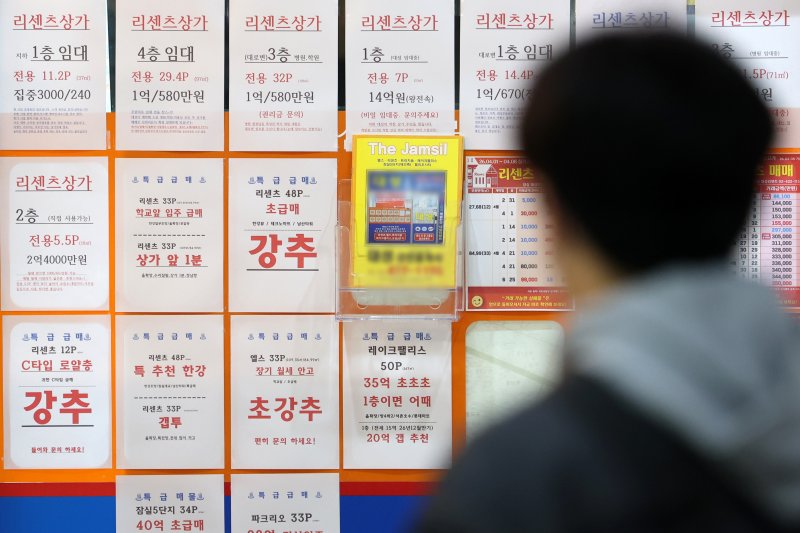
[The Financial News] Jeonse prices at major apartment complexes in the Gangnam area of Seoul are moving differently from the downward trend in sale prices. As the number of jeonse listings has fallen by more than 13% in a month and the market has tilted toward sellers, some mixed semi-jeonse deals are also creating the illusion that prices are lower than they really are.
According to real estate platform Asil on the 22nd, among the Seoul apartment complexes with the biggest recent jeonse gains, the 114-square-meter unit at Ricentz in Jamsil-dong, Songpa District, jumped from 1.4 billion won to 2.05 billion won in just one week, an increase of 650 million won. The 59-square-meter unit at Raemian Firstige in Banpo-dong, Seocho District, also rose from the 700 million won range to the 1.3 billion won range in a month. The 114-square-meter unit at Banpo Central Xi climbed 345 million won week on week, from 2.25 billion won to 2.55 billion won. This sharp rise is believed to reflect a return from semi-jeonse to standard jeonse, which pushed deposits back up.
In some complexes, transactions at prices hundreds of millions of won lower have also appeared, showing a mixed price trend. In particular, many of the deals that appear to be declines in the Banpo-dong area of Seocho District were found to be semi-jeonse contracts.
According to local brokers in Banpo, current jeonse prices for the 59-square-meter unit at Acro River Park are around 1.5 billion won, while the 84-square-meter unit is in the 1.9 billion to 2 billion won range. Units with full Han River views are priced as high as 2.2 billion to 2.3 billion won. Transactions in the 700 million to 800 million won range seen on online listing screens reflect semi-jeonse contracts, in which the deposit is lowered and monthly rent is charged, so they should not be interpreted as a drop in jeonse prices, the brokers said. One broker said, "There are almost no listings in the 20- and 30-pyeong range, and deals are being made mostly for high-priced large units." The broker added, "As more landlords prefer semi-jeonse because of the burden of holding taxes, pure jeonse listings have decreased further."
The drop in listings is also visible in the numbers. As of April 21, Seoul had 15,105 jeonse listings, down 13.2% from 17,395 a month earlier, according to Asil. By district, Songpa District saw the biggest decline, falling 30.3% from 2,793 to 1,948. Seocho District rose 3.5% from 3,638 to 3,768, but that increase was affected by the inclusion of semi-jeonse listings.
The same trend was confirmed in the weekly apartment price report released by KREB for the second week of April, based on data as of April 13. Seoul jeonse prices rose 0.17% from the previous week, widening the pace of increase. Songpa District gained 0.28%, and Seocho District rose 0.10%. By contrast, sale prices remained weak or flat, with Gangnam District down 0.06%, Seocho District down 0.06%, and Songpa District down 0.01%.
Experts say the root cause is a seller's market created by a shortage of listings. Park Won-gap, Chief Real Estate Expert Commissioner at Kookmin Bank, said, "When jeonse listings are scarce, tenants inevitably lose bargaining power, and contracts are made at the prices set by landlords." He added, "Record-high transactions can serve as a benchmark and add upward pressure on prices." He also noted, "As the volume of jeonse available for circulation shrinks, landlords gain the upper hand and tenants are put at a disadvantage. Unless supply improves, the problem will be difficult to resolve structurally."
[email protected] Jang In-seo Reporter