Ruling Party Pushes to Raise Awareness of Anti-Stock-Price-Suppression Measures, Aiming for Legislation This Year
- Input
- 2026-04-21 12:02:56
- Updated
- 2026-04-21 12:02:56
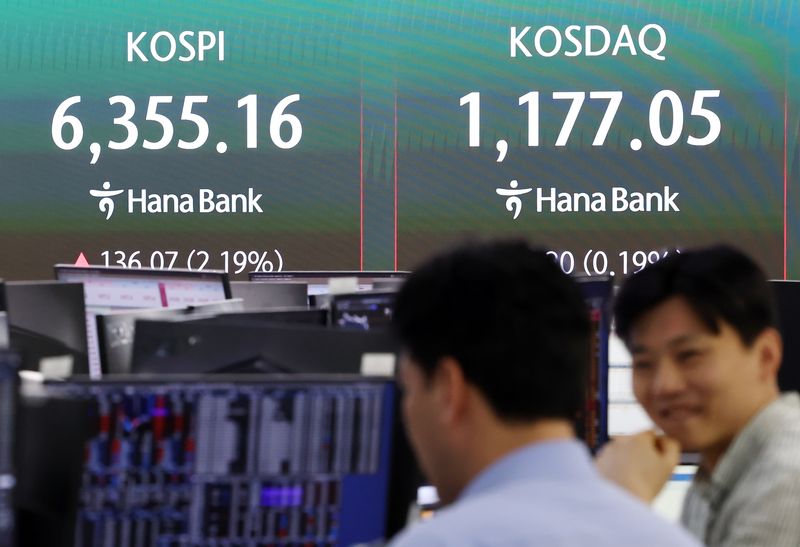
[Financial News] The Democratic Party of Korea is moving to launch legislation aimed at preventing companies from deliberately suppressing stock prices as a follow-up measure to the Third Amendment to the Commercial Act.
Lee Jeong-moon of the National Policy Committee held a forum at the National Assembly of the Republic of Korea on the 21st under the theme, "Remaining shareholder protection tasks after the Commercial Act amendment." Another forum with the same purpose was held on the 16th at the initiative of Rep. Kim Hyun-jung. The party is accelerating efforts to build public consensus on anti-stock-price-suppression legislation.
At the forum, participants argued that deliberate stock-price suppression by companies is contributing to the "Korea discount" through the low price-to-book ratios of listed firms in South Korea. Several bills aimed at improving P/B ratios have already been submitted to the National Assembly of the Republic of Korea. A key example is an amendment to the Inheritance and Gift Tax Act proposed by Rep. Lee So-young. The bill would value listed shares with a P/B ratio below 0.8 times at 80% of net asset value, as if they were unlisted shares, thereby setting a floor for tax calculations. The goal is to prevent companies from intentionally depressing stock prices to reduce inheritance and gift tax burdens. Rep. Kim Hyun-jung has also proposed an amendment to the Financial Investment Services and Capital Markets Act that would require listed companies with a P/B ratio below 1.0 for two consecutive years to disclose a corporate value-enhancement plan.
Experts at the forum generally supported the bills, but said they focus too narrowly on a single indicator, the P/B ratio. In the case of financial companies such as banks, insurers, and securities firms, external factors such as benchmark interest rates have a major impact. If laws built around a single P/B metric are applied, confusion could arise. Low P/B ratios caused by external conditions could be misread as deliberate stock-price suppression.
For that reason, participants suggested benchmarking Japan's Corporate Value-Up Program, which takes a comprehensive look at various indicators, including P/B ratios, and adopts shareholder-friendly communication practices. In the case of Japanese listed companies, they compare and analyze a range of indicators, including P/B ratio, cost of equity (COE), return on equity (ROE), weighted average cost of capital (WACC), return on invested capital (ROIC), and price-earnings ratio (PER), before formulating and disclosing management strategies.
Regarding the anti-stock-price-suppression legislation, Lee said, "The National Policy Committee will work through amendments to the Financial Investment Services and Capital Markets Act and other measures to keep stock prices on an upward trend." The Democratic Party's goal is to pass the bill before the end of the year.
[email protected] Kim Hyeong-gu Reporter