Hyun-Song Shin Puts CBDC Front and Center on Day One, With No Mention of Stablecoins
- Input
- 2026-04-21 11:13:13
- Updated
- 2026-04-21 11:13:13
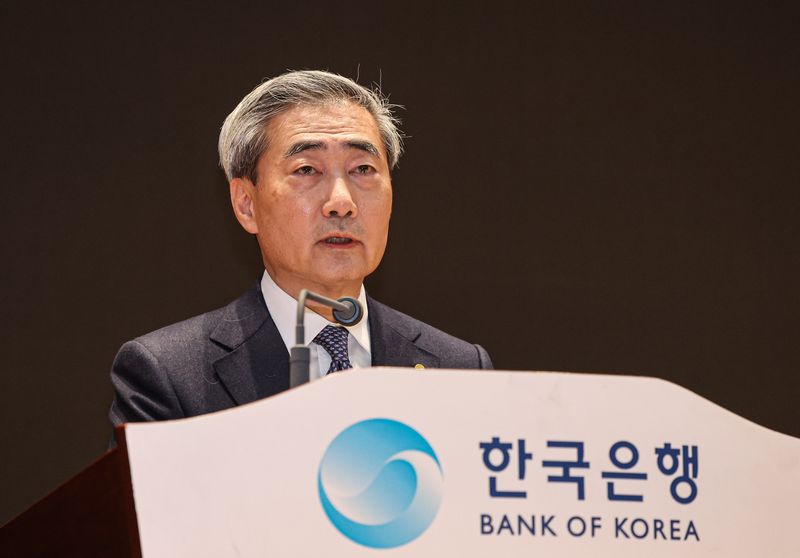
At the inauguration ceremony held at the BOK in Jung-gu, Seoul, on the 21st, Shin said, "In response to digital financial innovation, we must also prepare one step ahead in designing the future monetary system." He added, "Through Phase 2 of Project Han-gang, we will increase the usability of CBDCs and deposit tokens, and through international cooperation such as Project Agora, we will strengthen the won's standing in the digital payment environment."
Project Han-gang is an initiative to create a structure in which the central bank issues an institutional CBDC and commercial banks issue deposit tokens based on it for distribution to consumers. In Phase 1, which ran for about two years from October 2023 to August 2025, the project tested whether digital currency and deposit tokens could function smoothly throughout the entire process of production, issuance, distribution, redemption, and destruction.
Phase 2 began in February with expanded systems such as biometric authentication and person-to-person transfers. In the first half of this year, the BOK plans to begin a pilot program supporting treasury fund disbursements, and in the second half it will launch follow-up real-world transactions with nine banks. Between March and October, it will also conduct comprehensive consulting with external institutions to lay the groundwork for commercialization.
At his confirmation hearing on the 15th, Shin also left room for the coexistence of CBDCs and Korean won stablecoins, saying that "each may have a role depending on its use." But he also indicated that CBDCs should take priority, noting that "because there are foreign exchange regulations in Korea, the idea of activating deposit tokens based on CBDCs emerged on the premise that banks can best handle customer verification and related tasks."
After the inauguration ceremony, he also visited the press room and indirectly backed CBDCs, saying, "If you look at the inaugural address, you can see where the focus lies." The speech made no mention of the Korean won stablecoin at all. Observers say this reflects his long-held view that it is only a supplementary tool.
The BOK under Shin is expected to devote most of its efforts to CBDCs. While serving as chief economist at the Bank for International Settlements (BIS), Shin said at the 2025 World Congress of the Econometric Society (ESWC 2025) in August last year that "Project Han-gang must continue without interruption." The BIS, where he once worked, is designing expanded digital currency infrastructure such as Project Agora together with central banks around the world.
Shin also appears to retain a negative view of the structural limitations of stablecoins, which he has pointed out before. Their exchange with fiat currency is not always guaranteed on a one-to-one basis, and because they are issued by private entities on public blockchains, central bank control is limited. They are also relatively vulnerable to security risks such as hacking.
[email protected] Kim Tae-il Reporter