The United States Operates a 'Two-Track' Approach, Sharing North Korea Monitoring Intelligence Normally but Limiting Technical Data
- Input
- 2026-04-21 12:16:46
- Updated
- 2026-04-21 12:16:46
According to a military source on the 21st, "It is true that the U.S. has been limiting the sharing of some North Korea-related information collected through satellites since early this month," adding that "the restricted information consists of some technical data related to North Korea."
The military is reportedly judging that there is no impact on its defense posture, as the sharing of key North Korea monitoring and reconnaissance intelligence, including missile launch activity, is continuing normally as before.
The U.S. move to restrict North Korea-related intelligence is said to be a follow-up measure in response to comments made by Minister of Unification Chung Dong-young at the National Assembly on the 6th of last month, when he mentioned "Kusong, North Pyongan Province" as another known location of North Korea's uranium enrichment facilities, in addition to Nyongbyon, North Pyongan Province, and Kangson.
The United States obtains North Korea-related intelligence through a range of assets, including satellites, signals interception, and reconnaissance, and shares it with South Korea, its ally. It is also said to have asked South Korea to come up with measures to prevent a repeat of the incident in which sensitive information it had shared was disclosed without prior consultation.
The United States is continuing to closely share real-time surveillance intelligence that detects signs of enemy provocations, while taking a limited approach to technical data containing key information on weapons systems for security reasons. This is seen as a "two-track" measure aimed at maintaining operational efficiency among allies while thoroughly preventing the leakage of its advanced military technology.
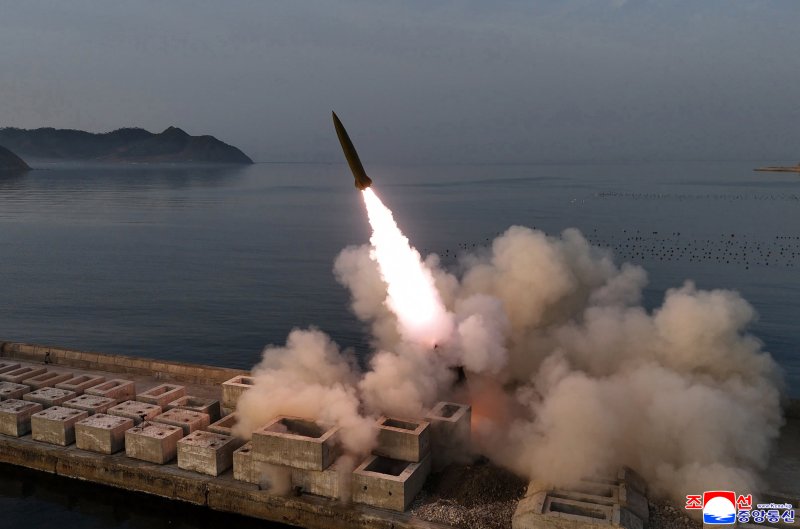
North Korea has been increasing the scale and frequency of its provocations, including ballistic missile launches, since the 9th Party Congress earlier this year.
Some are also raising concerns that if problems arise in the sharing of North Korea monitoring and reconnaissance intelligence, on which South Korea has relied heavily on the United States, it could weaken military readiness.
A military source explained that even when North Korea fired several ballistic missiles from the Sinpo area in South Hamgyong Province on the 19th, the allies had already identified unusual North Korean military activity in the area before the launch through intelligence sharing between South Korea and the United States and were closely monitoring it. The source added that multiple movements of North Korean submarines have recently been detected in the Sinpo area, and that North Korea may soon attempt an SLBM launch.
[email protected] Lee Jong-yoon Reporter