U.S. Begins Refunds of $166 Billion in Illegal Tariffs, with Companies Getting Paid but Consumers Left Out
- Input
- 2026-04-21 10:56:35
- Updated
- 2026-04-21 10:56:35
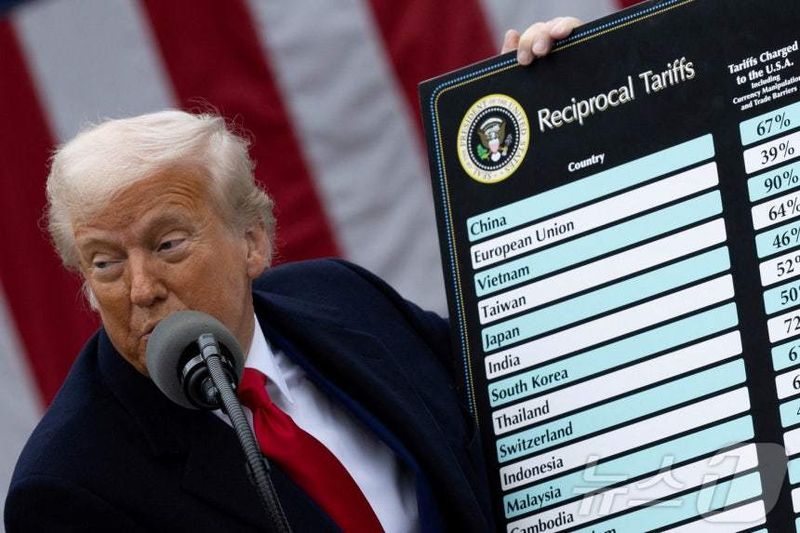
U.S. Customs and Border Protection (CBP) began accepting refund applications from importers on the same day through a system called Consolidated Administration and Processing of Entries (CAPE). The refunds follow the U.S. Supreme Court's ruling in February that the reciprocal tariffs imposed by President Trump last year on trading partners around the world under the International Emergency Economic Powers Act (IEEPA) were unlawful.
According to materials CBP submitted to the United States Court of International Trade (USCIT), about 330,000 importers are eligible for refunds, covering 53 million import entries in total. The government has collected roughly $166 billion in tariffs so far, an unusually large amount for a single tariff policy.
Applications are already moving quickly. As of April 9, 56,497 importers had completed the preliminary steps needed to receive the electronic refunds, and the amount involved reached $127 billion, more than three-quarters of the total refundable sum.
"Do we have to apply again to get it back?" ... Complaints also emerge on the ground
Companies have begun the refund process, but reactions on the ground are mixed.On the day, Jay Foreman, CEO of toy maker Basic Fun, said, "So far, so good. The system is a little sluggish, but it is working." Kathy Abel, CEO of outdoor apparel company Wild Rye, also said, "I am relieved that the portal seems to be working properly."
By contrast, Rick Woldenberg, CEO of toy company Learning Resources, voiced frustration with the refund system, saying, "The government has a Supreme Court ruling saying it overcollected taxes, so why do I have to tell them to give it back to me?" In this regard, the BBC reported that "reactions were mixed, especially among small and medium-sized businesses," adding that "some had a smooth process, while others experienced delays and errors."
'Consumers excluded' controversy spreads ... companies cautious, government draws a line
The biggest controversy is that consumer refunds are effectively impossible. According to the BBC, some consumers have filed class-action lawsuits, arguing that companies should pass refund amounts back to customers. EssilorLuxottica, FedEx Corporation, and Costco Wholesale Corporation are among the defendants. In this context, the fact that the tariff burden was not passed through to prices at a full 100 percent, along with the additional costs companies absorbed such as rising debt and falling sales, has been cited as a major obstacle to consumer refunds.Companies are responding differently. FedEx said it would return the refund money to customers, and Costco also hinted at possible price cuts. But many companies have not clearly said whether they will pass the refunds on to consumers. Some are instead looking to use the refunds as a buffer against any future reimposition of tariffs. The BBC reported that "some companies are even holding off on new hiring and investment over concerns about additional tariffs."
The U.S. government is also drawing a line on any possible consumer benefit. Office of the United States Trade Representative (USTR) chief Jamieson Greer described the refunds as a "windfall" and recommended using them for worker bonuses and similar purposes. United States Secretary of the Treasury Scott Bessent also said, "I don't think American consumers will see this money," ruling out the possibility of consumer refunds.
[email protected] Hong Chaewan Reporter