"South Korea–U.S. missile launch information sharing is functioning normally"... Relief grows over concerns about Chung Dong-young risk
- Input
- 2026-04-21 08:28:05
- Updated
- 2026-04-21 08:28:05
Earlier, the United States had raised concerns and restricted intelligence sharing on North Korea after Chung Dong-young, the MOU minister, disclosed the location of North Korea's third nuclear facility in Kusong, North Pyongan Province, a top-secret U.S. intelligence item, during a session of the Foreign Affairs and Unification Committee of the National Assembly on the 6th of last month.
According to political and security sources on the 21st, South Korean and U.S. authorities are still collecting and sharing intelligence on North Korea's military activities as usual, and the surveillance and reconnaissance posture toward North Korea has not been affected. Even during the past week, when South Korea–United States intelligence exchanges were disrupted, sensitive information was quickly shared in response to North Korea's missile provocations.
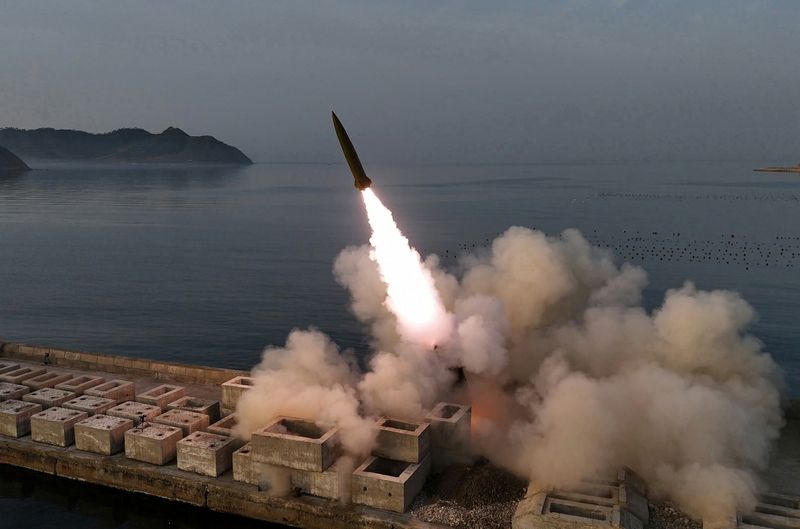
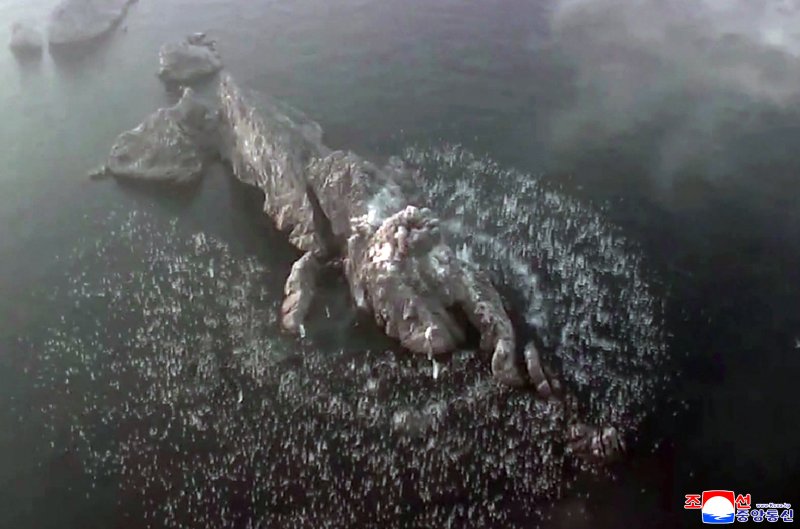
When North Korea fired several ballistic missiles from the Sinpo area in South Hamgyong Province on the 19th, authorities said they had already detected unusual North Korean military movements there before the launch and were closely monitoring the situation. North Korea's missile launch data is known to be detected first by advanced U.S. reconnaissance satellites and other assets.
Still, it appears to be true that the U.S. partially restricted information sharing while protesting Chung Dong-young's disclosure of classified information. South Korean security authorities, however, are assessing that the blocked U.S. intelligence does not rise to a level that would significantly affect security on the Korean Peninsula.
The Ministry of National Defense of the Republic of Korea and the Ministry of Foreign Affairs of the Republic of Korea are working to resolve the disruption in South Korea–United States intelligence sharing. Through diplomatic channels, they are pushing for a full normalization of information exchange with the United States. The military also plans to stress the importance of reciprocal exchanges, including North Korea-related intelligence that South Korea provides to the United States.
Chung Dong-young, who caused the disruption in South Korea–United States security intelligence sharing, issued a belated statement of regret on the 20th, but he continues to argue that he was referring only to publicly available information. He also says he does not know the details of the intelligence-sharing breakdown between South Korea and the United States.
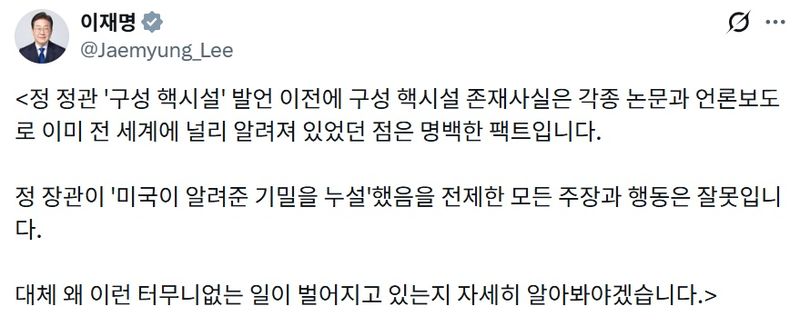
Cheong Wa Dae, which had remained silent until then, also pushed back. President Lee Jae Myung wrote directly on social media on the 20th, saying, "It is an obvious fact that the existence of the Kusong nuclear facility was already widely known around the world through various papers and media reports before Minister Chung's remarks about the 'Kusong nuclear facility.' I need to look into why such an absurd thing is happening in detail." However, the People Power Party has been urging the president every day to dismiss Chung. The party said, "By dismissing the allegation that he leaked classified information shared by the U.S. as a false claim, the president has effectively granted Chung immunity."
[email protected] Kim Kyung-soo Reporter