TurboQuant, Then HUDIMM: Efficiency Strategies Gain Speed in Response to Chipflation
- Input
- 2026-04-22 06:59:00
- Updated
- 2026-04-22 06:59:00
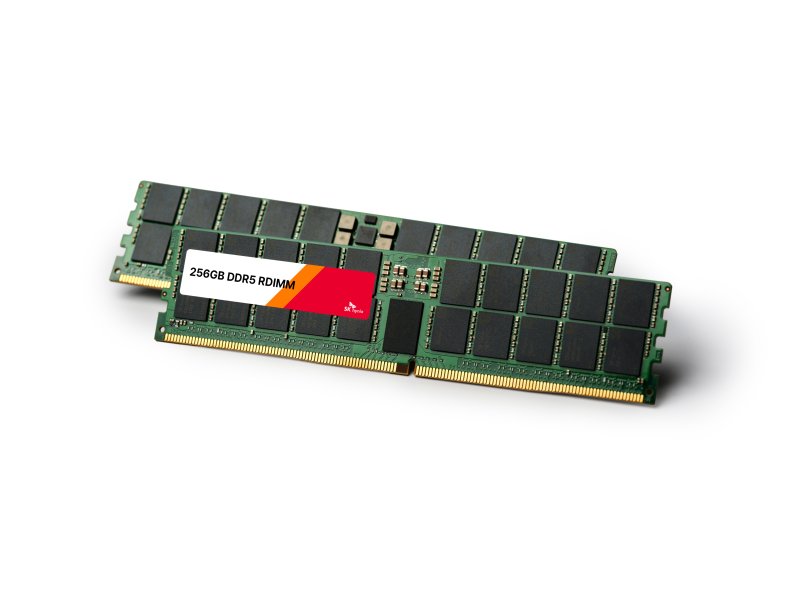
[Financial News] As the chipflation trend continues, the industry is rapidly converging on a strategy of efficiency. With cost pressures mounting across memory and artificial intelligence (AI) computing, companies are rolling out ways to lower hardware specifications and reduce production costs, as well as methods to improve computing efficiency and minimize resource use.
According to industry sources on the 22nd, Taiwan-based PC component maker ASRock recently unveiled HUDIMM, a new DDR5 standard that simplifies memory architecture.
Unlike conventional DDR5 memory sticks, which typically use two 32-bit subchannels, HUDIMM uses only a single 32-bit subchannel. Subchannels are like lanes inside memory that divide data transfer paths, and more of them generally improve parallel processing performance. HUDIMM cuts that number in half, sacrificing some performance. At the same time, it reduces the number of DRAM chips needed for a memory module by about half, which lowers manufacturing costs.
Industry observers say HUDIMM is likely to serve as an alternative for targeting the entry-level market with stronger price competitiveness. In particular, with DRAM prices continuing to surge, it could align with demand from buyers looking to ease cost burdens.
Google is also expected to formally release a paper on TurboQuant, an AI memory compression technology, at the International Conference on Learning Representations (ICLR), which will be held in Rio de Janeiro, Brazil, from the 23rd to the 27th. TurboQuant compresses the KV cache, which AI uses to remember context, to as little as one-sixth of its original size. The technology is drawing industry attention because it can dramatically reduce memory usage compared with existing methods.
As the spread of large AI models rapidly drives up memory and power costs in data centers, technologies that improve computing efficiency are directly tied to better cost structures. By increasing the amount of work that can be handled on the same infrastructure, they are seen as a way for operators to improve return on investment.
HUDIMM and TurboQuant differ in their application areas, but they share the same goal of responding to cost pressure. The former lowers costs by simplifying hardware architecture, while the latter takes an approach that improves resource efficiency through data optimization. In other words, efforts to boost efficiency are continuing as a way to ease the burden of chipflation.
Industry watchers believe this trend could go beyond a short-term response and lead to structural change. Demand is shifting away from performance-only competition and toward products that emphasize value for money. In particular, with memory prices becoming more volatile, efficiency technologies could help defend market demand while also creating new demand.
Consumers are also expected to have more choices. As performance-focused products are released alongside price-competitive lines, the range of options available for different uses could widen.
Industry sources also say the spread of efficiency technologies could ultimately broaden the market base. One industry official said, "It is too early to say exactly how things will unfold, but HUDIMM and TurboQuant could become catalysts that expand customer options, and that could help grow the overall market."
[email protected] Jeong Won-il Reporter