"KOSPI 8000 Is Coming"... Why Goldman Sachs Raised Its Target Again: "AI Semiconductor Boom"
- Input
- 2026-04-20 15:45:58
- Updated
- 2026-04-20 15:45:58
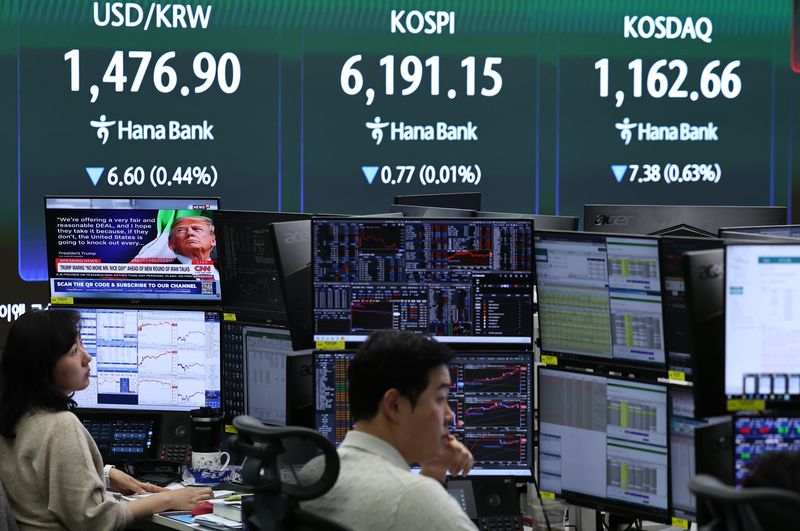
[The Financial News] Goldman Sachs, a global investment bank (IB), has raised its 12-month target for the KOSPI Composite Index from 7,000 to 8,000, expressing strong optimism about the Korean stock market. The firm said the AI semiconductor boom is lifting the market's overall fundamentals, while undervaluation and improving foreign inflows are creating significant room for further gains.
"Semiconductor demand is expanding faster than expected, driving the Korean market"
According to the financial investment industry on the 20th, Goldman Sachs said in a report released on the 18th local time that it had sharply raised its forecast for KOSPI earnings growth this year from 130% to 220%, and lifted its upper target for the index to 8,000.
Semiconductors were the clear reason behind the upgrade. Goldman Sachs said global semiconductor demand, tied directly to AI infrastructure, is expanding faster than expected and creating an "exceptionally favorable" operating environment for Korean companies.
It also dismissed concerns about excessive concentration in a single sector. The report said earnings growth for the broader market, excluding heavyweight names such as Samsung Electronics Co., Ltd. and SK hynix Inc., is also expected to reach 48%. It added that the improvement in earnings will spread across the industrial sector.
"Still in an undervalued range" and government-led value-up momentum seen as a catalyst
On valuation, Goldman Sachs said the market remains undervalued. It noted that the KOSPI Composite Index's 12-month forward price-earnings ratio is around 7.5 times, well below the roughly 10 times average seen at past market peaks and 2.1 standard deviations away from its historical average.
The firm also said government-led Corporate Value-up Program measures and companies' expanded shareholder-return policies, including treasury share cancellations, have not yet been fully reflected in current stock prices. It described this as a powerful additional upside catalyst.
It also said downside risk is limited. Even under a worst-case downturn scenario in which earnings fall 33%, with a P/E of 11 times applied based on historical earnings troughs, Goldman Sachs said the lower end of the KOSPI Composite Index is well supported around 6,250. It described the current range as an opportunity with far greater expected return than risk.
Foreign selling eases... positive signal on supply and demand
The firm also saw clear positive signals on supply and demand. It said the heavy foreign selling that had centered on semiconductor stocks since late January has begun to ease, and that capital inflows are gradually resuming.
Goldman Sachs said foreign ownership in the KOSPI semiconductor sector is currently 1.3 standard deviations below average. It added that Korea's weighting in global mutual funds and in emerging economies and Asia, excluding Japan, remains underweight. This suggests there is room for a potentially explosive additional inflow of foreign passive funds betting on further index gains.
Goldman Sachs is not the first to project a KOSPI Composite Index of 8,000. Earlier, Nomura Securities became the first in the industry in February to set its first-half target at 7,500 and said the index could rise to 8,000 in the most optimistic scenario.
Morgan Stanley and JPMorgan Chase & Co. later issued targets of 7,500, while domestic brokerages also raised their forecasts one after another, with Hana Securities at 7,900, NH Investment & Securities at 7,300, and Korea Investment & Securities at 7,250.
[email protected] Seong Min-seo Reporter