Sanae Takaichi Cabinet Approval Rating Falls to Lowest Since Launch Amid Middle East Tensions; 85% Say They Feel Anxious
- Input
- 2026-04-20 14:33:43
- Updated
- 2026-04-20 14:33:43
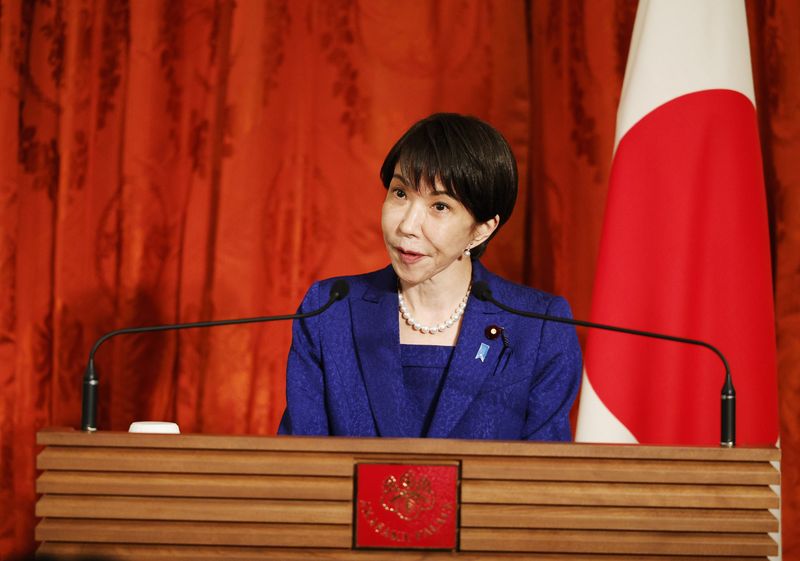
[Financial News, Tokyo = Reporter Seo Hye-jin] A survey found that approval for the Sanae Takaichi cabinet in Japan has fallen to its lowest level since it took office, as concerns over rising prices grow amid worsening tensions in the Middle East. The increase in worries about inflation linked to instability in the Middle East appears to have weighed on support. Even so, the approval rating remains relatively high at around 50% to 60%.
In a nationwide poll conducted by the Yomiuri Shimbun from the 17th to the 19th and released on the 20th, approval for the Takaichi cabinet stood at 66%, down 5 percentage points from the previous survey conducted from March 20 to 22. It was the lowest level since the cabinet launched in October last year. The share of respondents who said they did not support the cabinet rose 4 points from the previous survey to 24%.
By age group, the decline was steeper among older respondents. Approval fell 4 points each to 69% among those aged 18 to 39 and 73% among those aged 40 to 59. Among people aged 60 and older, it dropped 9 points to 57%.
By political affiliation, support among ruling party backers fell 3 points to 92%. The drop was larger among opposition supporters, at 45%, and among independents, at 51%, with declines of 6 points and 8 points, respectively.
In another nationwide poll released the same day by the Mainichi Shimbun and conducted on the 18th and 19th, approval for the Takaichi cabinet was 53%, the lowest level since it took office.
By contrast, a poll conducted during the same period and released by The Asahi Shimbun showed approval for the Takaichi cabinet at 64%, up 3 points from the previous survey. The share who said they did not support the cabinet fell 2 points to 24%.
The main factor behind the decline in approval appears to be the recent deterioration in Middle East tensions.
Although cabinet approval remains high, dissatisfaction with measures to address inflation has risen somewhat. As global tensions have intensified following attacks on Iran by the US and Israel, concerns over disruptions to crude oil supplies have grown, along with fears of higher prices.
In the Yomiuri poll, 85% of respondents said they were "worried" about how the situation in Iran would affect their daily lives, far exceeding the 13% who said they were not worried. Asked whether they thought they would need to cut spending or save energy because of the situation in Iran, 72% said yes, while only 24% said no.
In The Asahi Shimbun poll, 82% of respondents said they felt either "very anxious" or "somewhat anxious" about shortages of daily necessities due to the Middle East situation.
Support was also strong for the government to call on people to save money or conserve energy. In the Asahi poll, 66% said it would be better for the government to make such an appeal, more than twice the 29% who said it was unnecessary. In the Yomiuri survey, 72% said saving money or energy was necessary, compared with 24% who said it was not.
[email protected] Seo Hye-jin Reporter