U.S.-Iran final-round talks intensify as compromise "10 years plus 10 years" plan emerges
- Input
- 2026-04-20 10:41:19
- Updated
- 2026-04-20 10:41:19
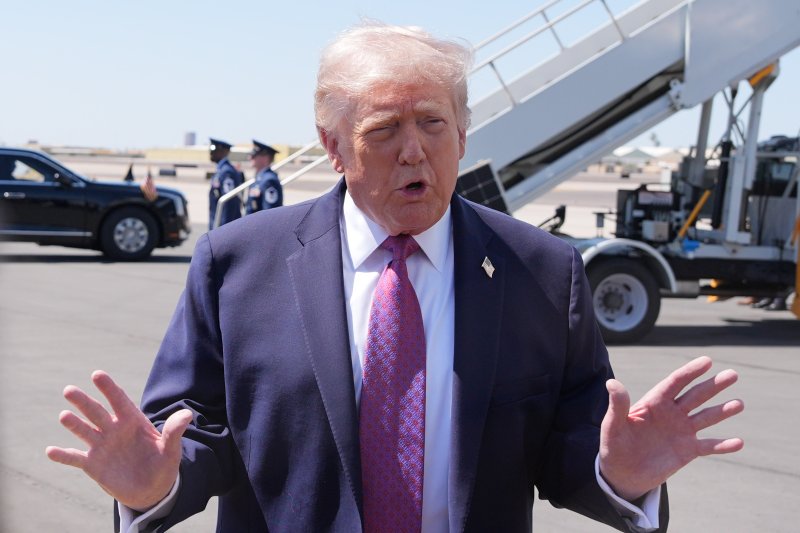
On the 19th local time, U.S. President Donald Trump wrote on Truth Social, "My delegation is heading to Islamabad, Pakistan," and added, "They will arrive there tomorrow evening for talks." Iran, however, said the schedule for a second round of negotiations has not yet been finalized, casting doubt on the outlook for the talks.
Foreign media outlets reported that the two sides are continuing to adjust their positions through exchanges over key issues, including how to handle Iran's highly enriched uranium and the future direction of its nuclear program. Since neither side wants a full-scale war, a phased mini-deal is being raised as a more likely outcome than a complete agreement.
Will Iran move uranium to France?
The biggest disagreement in the first round of talks, and still the central sticking point, is how Iran's highly enriched uranium should be handled. Iran still has about 400 kilograms of uranium enriched to 60 percent. That level is enough to be converted into a nuclear weapon at any time. President Trump claimed that Iran had agreed to remove it to the U.S., but Tehran immediately denied it and drew a firm line, saying, "That is not even up for discussion."
CNN reported, however, that one option under discussion is handing over the uranium stockpile in exchange for the release of frozen Iranian assets. Iran is demanding the unfreezing of more than $20 billion in assets and broad sanctions relief, leaving a wide gap between the two sides.
Another option is also being discussed. The most likely scenario is to downblend the material to low-enriched uranium inside Iran under the supervision of the International Atomic Energy Agency (IAEA). A mixed approach, in which some material is shipped abroad, is also being considered, with Turkey and France mentioned as possible destinations. Reuters reported that it would be politically difficult for Iran to ship the uranium directly to the U.S. Iran is also said to have proposed storing it overseas for a certain period.
Iran's nuclear program and the '10 years plus 10 years' card
How long Iran would suspend its uranium enrichment program is another major point of conflict. The U.S. is demanding a suspension of up to 20 years, while Iran has countered with a proposal for a limited five-year suspension.
Iran has strongly opposed any indefinite suspension, calling it "an exception to international law." The dispute is seen as a core reason for the difficulty in negotiations, as it is not simply a matter of duration but a fundamental clash over nuclear sovereignty and regime security guarantees. Still, some signs of flexibility have recently emerged. According to The Wall Street Journal (WSJ), Iran is said to have sounded out the U.S. on the possibility of allowing part of its nuclear program after 10 years.
One proposal under discussion would have Iran halt uranium enrichment for 10 years, then allow the production of a small amount of low-enriched uranium for at least another 10 years.
Escalation in the Strait of Hormuz emerges as a new variable
The Strait of Hormuz is also a key variable. It has now emerged as the front line of the power struggle between the U.S. and Iran. Soon after Trump announced the dispatch of the negotiating team, the U.S. military opened fire on and seized an Iranian merchant vessel, prompting Iran to threaten retaliation.
Ebrahim Azizi, chair of the National Security and Foreign Policy Committee of the Iranian Parliament, said, "The right of passage through Hormuz is an inalienable right," adding, "Iran will decide whether ships are allowed to pass." Iran is seen as using its ability to control the strait both as a bargaining chip and as a long-term deterrent aimed at the U.S. Washington, meanwhile, is standing firm on maintaining the blockade of Iranian ports until a final agreement is reached.
Ali Vaez, Iran director at the International Crisis Group (ICG), said, "Iran believes it will be difficult to reach a sustainable agreement within the timeline set by Trump," and added, "A comprehensive and final deal in the short term will not be easy."
[email protected] Lee Byung-chul, Correspondent Reporter