Rhee Chang-yong Says Economy Cannot Be Stabilized or Grown Through Monetary Policy Alone as He Leaves BOK
- Input
- 2026-04-20 10:00:00
- Updated
- 2026-04-20 10:00:00
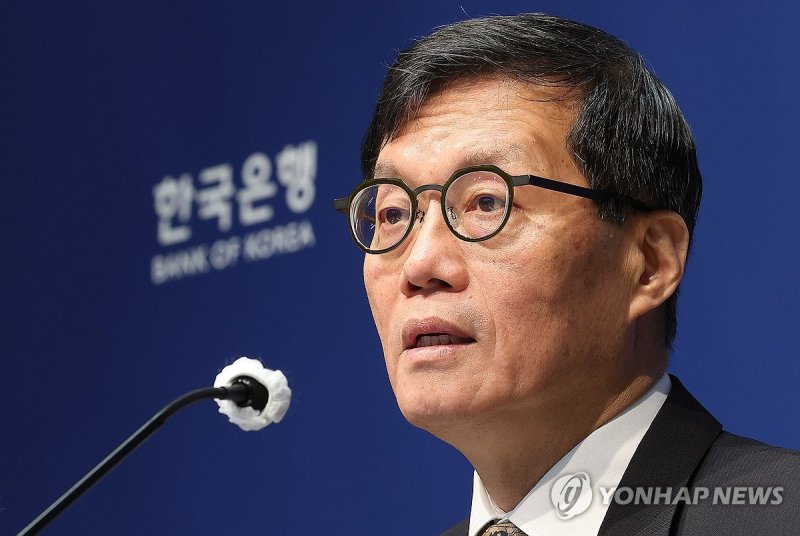
At his farewell ceremony at the BOK in Jung District, Seoul, Rhee said, "It is becoming increasingly difficult to achieve economic stability and growth through monetary and fiscal policy alone." He added, "Public expectations of policymakers remain high, based on past successes, and the gap between those expectations and reality is widening."
As an example, Rhee pointed to the foreign exchange market, where flows of capital by foreign investors once played a dominant role. He noted that the influence of domestic companies, individuals and the National Pension Service has now expanded significantly. He said South Korea has entered an era in which overseas investment by residents is shaped not only by the interest-rate gap between home and abroad, but also by labor-market conditions, tax policy, pension systems and global geopolitical risks.
He went on to say, "If we try to manage the exchange rate only through foreign exchange market intervention or interest-rate policy, as we have done so far, without making institutional improvements, the side effects could become even greater." He added that the problems of low birth rates and low growth must be addressed by adjusting interests and conflicts through structural reform in areas such as labor and education, even if that means enduring short-term pain rather than relying on temporary measures.
His point was that monetary policy, the powerful but single tool available to the BOK, and fiscal policy carried out with public funds by the Ministry of Economy and Finance (MOEF) are only temporary responses. He argued that efforts should instead focus on changing the structure itself.
In the same vein, Rhee said, "The recent semiconductor boom has helped stabilize the economy and foreign exchange market to some extent." But he added, "This also shows that structural problems, such as excessive dependence on a single industry and the resulting polarization, are in fact deepening further."
Rhee also referred to the "structural reform series" launched during his term. The series expanded the scope of BOK reports, which had previously been limited to interest rates and inflation, to topics such as low birth rates and aging, balanced regional development and education reform. More than 20 reports have been published so far. He urged researchers to continue studying medium- and long-term tasks needed to solve structural problems facing the Korean economy, including education, housing, balanced development, youth employment and elderly poverty.
[email protected] Kim Tae-il Reporter