Iranian President Says the U.S. Will Betray Again, Expressing Distrust in Call With Pakistan's Leader
- Input
- 2026-04-20 07:36:44
- Updated
- 2026-04-20 07:36:44
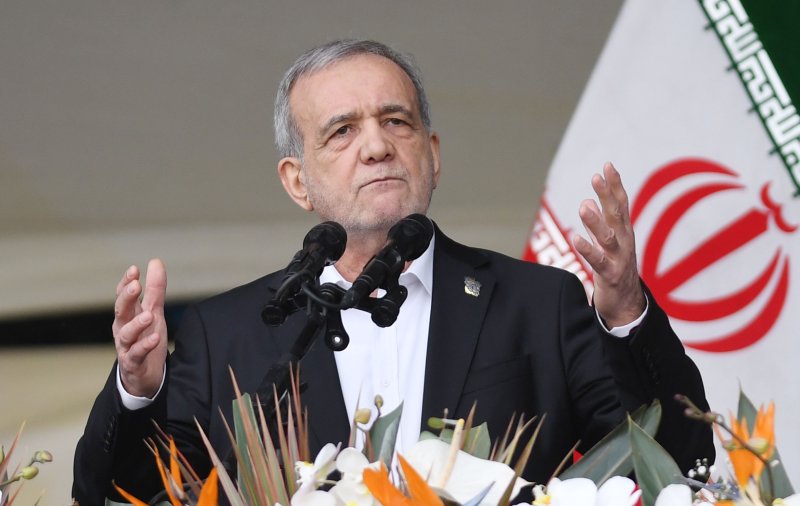
[Financial News] As the Donald Trump administration pushes to resume a second round of talks, the Islamic Republic of Iran fired back, saying, "The United States has repeatedly violated its promises." In a phone call with Pakistan's leader, it also made its distrust of renewed negotiations plain, saying, "A maritime blockade is illegal and a violation of the ceasefire."
On the 19th, local time, Pakistan Prime Minister Shehbaz Sharif and Iranian President Masoud Pezeshkian held a phone call lasting about 45 minutes to discuss the situation in the Middle East and ways to establish peace. The two leaders reaffirmed their willingness to cooperate, but their positions on talks with the U.S. were clearly different.
Sharif praised Iran for entering negotiations and shared the results of diplomatic contacts with the Kingdom of Saudi Arabia, the State of Qatar, and the Republic of Türkiye. He stressed that these efforts are "helping diplomatic work for sustainable peace." He also said Pakistan would continue to play a mediating role.
By contrast, President Pezeshkian voiced strong distrust of the U.S. He said, "The United States has continued to engage in bullying and irrational behavior during the negotiation process and throughout the ceasefire period," and criticized it for "continuously violating its promises."
He specifically targeted the issue of a maritime blockade. He argued that "a maritime blockade against Iran is a provocative and illegal measure, and a clear violation of the ceasefire agreement," adding that it also "goes against the principles of the UN Charter."
He also said that "the U.S.'s threatening remarks and actions are deepening doubts within Iran about its sincerity," and that they have "revealed the possibility of betraying diplomacy, as in the past." He added, "We will defend our sovereignty and national interests against further provocations by the United States and Israel."
Iran did not completely reject negotiations themselves, but it made its conditions clear. It reaffirmed that as long as U.S. measures such as the maritime blockade remain in place, it will be difficult to create an environment for talks.
Diplomatic channels remain active. On the same day, the foreign ministers of Pakistan and Iran also spoke by phone and emphasized that "continuous dialogue and engagement are necessary to resolve pending issues."
However, there was no specific mention of a future negotiation schedule in the leaders' call. While the U.S. is pushing for a second round of talks in Pakistan, Iran has already suggested through state media that it may not attend.
[email protected] Kim Kyung-min Reporter