"What's all the commotion every Monday?" Iranian ship seizure raises fears of retail investors dumping stocks for short-term gains [MZ Money Diary]
- Input
- 2026-04-20 07:00:00
- Updated
- 2026-04-20 07:00:00
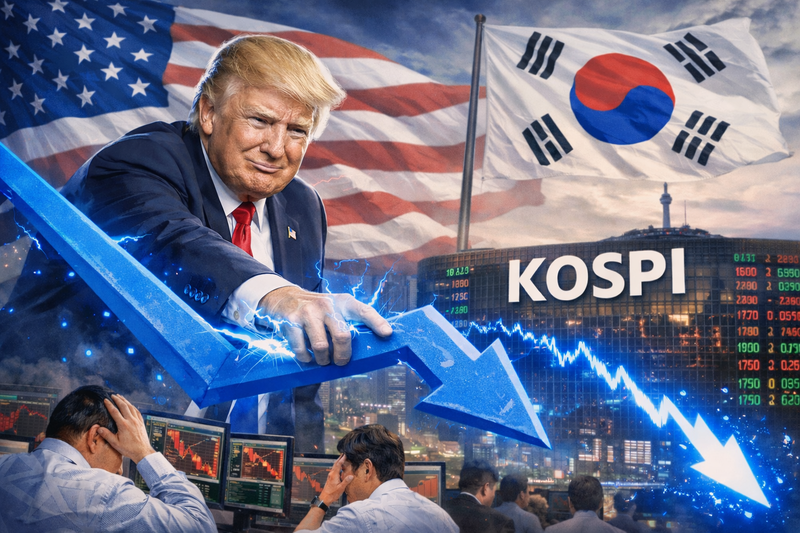
[Financial News] As hopes grew for an end to the war between the United States and Iran, and earnings season drew closer, the KOSPI Composite Index came within reach of a new all-time high. However, uncertainty surrounding the Strait of Hormuz has risen again, leaving open the possibility that South Korean stocks could swing on oil prices and exchange-rate movements on the 20th.
KOSPI lifted by hopes for peace and earnings, led by semiconductor stocks
According to the Korea Exchange (KRX), the KOSPI Composite Index closed on the 17th at 6,191.92, up 333.05 points, or 5%, from a week earlier. On the 16th, it reclaimed the 6,200 level by closing at 6,226.05. It was the first time in 48 days that the index had finished above 6,200, since 6,244.13 on Feb. 27, before the outbreak of war between the United States and Iran.
A record closing high is also not far away. The KOSPI's all-time peak stands at 6,307.27, set on Feb. 26. As of the 17th, it was just 115.35 points short of that level. So far this month, the index has rebounded 22.5% after falling to 5,052.46 on the 31st of last month.
Semiconductor stocks also helped push the index higher. Samsung Electronics and SK hynix rose 29.2% and 39.8%, respectively, this month. In the U.S. market, the S&P 500 and Nasdaq Composite Index both hit record highs, and the Nasdaq rose for 13 straight trading days.
The market is moving past the shock of war and looking for the next catalyst. With hopes for talks between the United States and Iran, the full earnings season, and expectations of improved liquidity, some analysts are even raising the possibility that the KOSPI could set a new record high. SK hynix is scheduled to report first-quarter earnings on the 23rd.
The United States seizes an Iranian ship... renewed closure of the Strait of Hormuz emerges as a 'variable'
The key variable is once again the Strait of Hormuz. On the 17th, June Brent crude oil futures on ICE Futures Europe in London, United Kingdom, settled at $90.38 per barrel, down 9.07% from the previous session. Oil prices plunged after Iran said it would temporarily lift restrictions on passage through the Strait of Hormuz during the ceasefire period.
The won also strengthened. In overnight trading at 2 a.m. on the 18th at the Seoul Foreign Exchange Market, the won–dollar exchange rate closed at 1,460.0 won, down 23.5 won from the previous day's daytime session close. Lower oil prices and a steadier exchange rate could encourage foreign investors to buy South Korean stocks.
Adding to that, Iran said over the weekend that it would again restrict passage through the Strait of Hormuz, raising the possibility of a rebound in oil prices. The Strait of Hormuz is a key route for Middle Eastern crude shipments. Whether traffic through the waterway remains open is seen as a factor that can move oil prices, exchange rates, and South Korean stocks at the same time.
Foreign investor flows also bear watching. On the 17th, the KOSPI fell 0.55% from the previous session after foreigners sold a net 1.9974 trillion won worth of shares. There are concerns that if tensions in the Middle East worsen again, a weaker won and foreign selling could occur together.
On Monday, the 20th, South Korean stocks may move up or down depending on oil and exchange-rate trends, alongside expectations that the KOSPI could break its all-time high. If hopes for peace hold, the rally led by semiconductor stocks could continue. But if fears of a renewed closure of the Strait of Hormuz intensify, short-term profit-taking could also emerge.
Remarks by U.S. President Donald Trump could also influence financial markets on the day. On the 19th local time, Trump said on his social media platform Truth Social that an Iranian cargo ship trying to pass through the Strait of Hormuz had been stopped and was now under U.S. control.
[email protected] Han Seung-gon Reporter