Vacant Gangnam Building Cuts Vacancy Rate from 75% to 0% After Introducing Shared Offices [Shared Offices on the Rise Again]
- Input
- 2026-04-19 19:42:33
- Updated
- 2026-04-19 19:42:33
■ Preference for shared offices over building new headquarters
According to industry sources on the 19th, more companies around the world are choosing shared offices instead of building headquarters or signing long-term leases to secure office space. This marks the full-scale rise of the so-called 'co-working 2.0 era,' as the experience of the COVID-19 pandemic has made flexible and scalable space access a necessity for corporate survival.
Not only Amazon, but Anthropic, a leader in generative AI, has also established a base at WeWork in Cambridge. Global companies across industries, including JPMorgan Chase & Co. and Pfizer Inc., are opting for shared offices rather than constructing new headquarters. An industry official said, "Like overseas examples, domestic companies are also shifting from remote work to office-based systems," adding, "As the expansion of the AI industry increases operational volatility, long-term contracts of five to 10 years, which are standard in the traditional office market, are structurally bound to clash."
This can also be seen as part of an 'asset-light strategy,' in which companies do not tie up capital in fixed assets such as buildings or land, but instead invest heavily in their core businesses. The goal is to minimize risk by maximizing organizational flexibility.
■ Solving vacancies through shared offices
This shift is also changing the landscape of Teheran-ro, the symbolic center of Seoul's office market. Large building owners in the Teheran-ro area, where vacancy concerns had grown amid the economic downturn, are increasingly turning to shared offices to attract tenants.
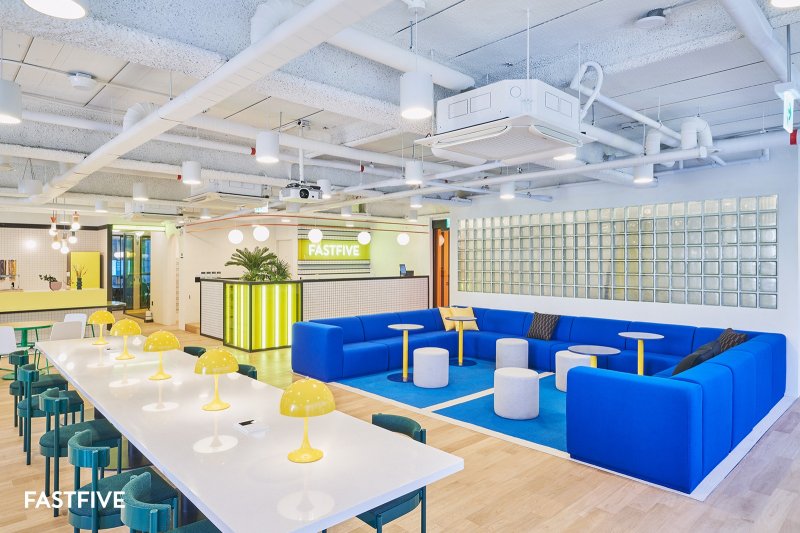
One example is Building A in Seocho District. During a large-scale reconstruction project, its floor area expanded to more than three times the previous size, making post-completion vacancy management and value enhancement urgent priorities. By partnering with the shared office platform FASTFIVE and entrusting overall operations to experts, the landlord raised the asset value by about 133% compared with the purchase price.
Another building that had been struggling with a high vacancy rate has also been transformed through shared offices. Building B in Gangnam District once had a vacancy rate of 75%, but after handing over operations and management to a shared office platform and adopting a Revenue-sharing model, the vacancy rate fell to 0%. Its asset value also rose by about 123% compared with the purchase price. An industry official said, "If vacancies persist for too long, there are growing concerns about facility deterioration, but simply increasing foot traffic and bringing life back into a building can also boost its value."
For landlords, bringing in a strong shared office brand reduces the hassle of finding individual tenants and makes it possible to secure long-term, stable income. Shared offices also serve as anchor tenants within buildings, helping raise the overall value of the property. Beyond simply collecting rent, their presence can improve a building's physical condition and tenant mix, thereby increasing its resale value. An industry official predicted, "As the flexibility demanded by large corporate tenants and the stable revenue structure sought by building owners align, the expansion of shared offices centered on Teheran-ro will continue for the time being."
Jeon Min-kyung, fnnews.com