[Editorial] Major conglomerate unions caught up in bonus competition should look to the future
- Input
- 2026-04-19 18:44:44
- Updated
- 2026-04-19 18:44:44
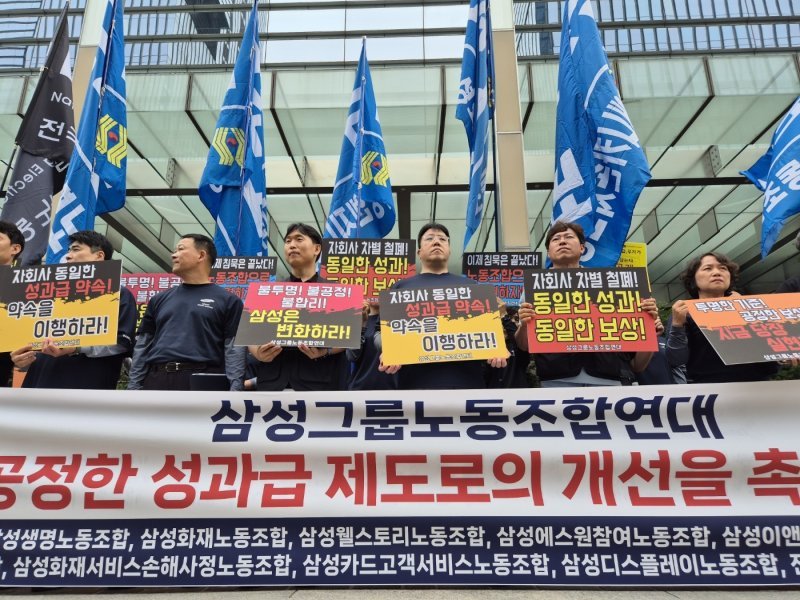
SK hynix Inc. agreed with its union to use 10% of operating profit as the bonus pool and abolished the previous cap of 1,000% of base pay. Samsung Electronics labor union is demanding 15% of operating profit as bonuses. Hyundai Motor Company Labor Union is pressuring management to introduce a full monthly salary system and provide bonuses funded by 30% of net profit.
The scale of these bonus demands is excessive and difficult to find precedent for at any major company in the world. If SK hynix Inc.'s operating profit this year is projected at 20 trillion won after the labor-management agreement, about 2 trillion won would have to be paid out as bonuses. Samsung Electronics Co., Ltd.'s semiconductor division is forecast to post 27 trillion won in operating profit, and if the union's demand is accepted, the bonus pool would reach 4.05 trillion won.
Paying a portion of corporate profit as bonuses is a matter of labor-management agreement, and it is meant to boost morale among employees who have contributed to the company's growth. But when the amount exceeds a certain level and reaches several times, or even ten times, annual salary, it first runs counter to common social standards. It can also deepen polarization and fuel a sense of unfairness.
Employees' efforts naturally contribute the most to a company's sales and profit growth, but they are not the only factor. Such growth would also have been possible thanks to policy support from the government to develop specific industries. In addition, without consumers willing to buy the products, better results would be impossible. There is no reason not to reward those consumers, who pay high prices, through price cuts.
Excessive bonus payments also run counter to shareholders' interests. From a shareholder's perspective, if large bonuses exceed cash dividends or treasury share cancellations as a form of shareholder return, they would not be able to stay silent.
The biggest problem is the loss of investment capacity. Companies should invest the most when profits are at their peak so they can prepare for the future. Investment should naturally be made when there is room to do so. When business conditions worsen and cash flow becomes tight, companies may want to invest but be unable to because they lack the funds. In other words, excessive bonus payments can become an obstacle to future development.
Investment covers many areas. Beyond research and development, there are many other places where money is needed, including facility investment and the construction of plants at home and abroad. Moreover, global competition in semiconductors and automobiles is becoming fiercer. SK hynix Inc., Samsung Electronics Co., Ltd. and Hyundai Motor Company may be earning large profits, but the amount they need to invest is also rising to astronomical levels.
Business conditions will not remain favorable forever. Semiconductor cycles exist, and the auto industry can also run into unexpected trouble from rising inventories when a downturn hits. Moreover, the Middle East war is still ongoing. U.S. tariffs also remain a major hurdle.
The unreasonable and excessive demands of unions that threaten strikes should be withdrawn, especially in light of the national economy and the circumstances of workers at other companies. A catastrophic strike must not be allowed to happen. Hardline unions that use strikes as leverage will face public criticism. Before that happens, the dispute should be settled through a reasonable labor-management agreement. Otherwise, the entire country could be dragged into a bonus crisis.