Will the Strait of Hormuz Really Reopen? Shipping Industry Takes a Wait-and-See Approach
- Input
- 2026-04-18 13:16:34
- Updated
- 2026-04-18 13:16:34
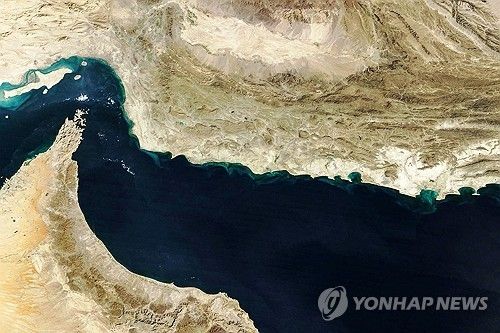
Expectations rose after Iran announced on the 17th local time that it would temporarily lift the blockade on the Strait of Hormuz. However, it is likely to take time before the waterway is actually reopened and ships can pass freely. The US and Iran still differ over the deadline and conditions for reopening, and the two sides are engaged in a war of nerves. As a result, the shipping industry is expected to find it difficult to resume normal operations in the Strait of Hormuz unless safety can be guaranteed.
The announcement that raised expectations came from Iran's Foreign Minister Abbas Araghchi, who posted on X, formerly Twitter, that "all merchant ships passing through the Strait of Hormuz will be fully allowed to sail during the remaining ceasefire period, reflecting the situation of the Lebanon ceasefire." However, it is unclear exactly what he meant by the "remaining ceasefire period."
President Donald Trump also immediately expressed his gratitude on Truth Social after Iran's announcement, and in another post said, "Iran has agreed to never, ever close the Strait of Hormuz again." That position is somewhat at odds with Iran's stance that the strait would only be temporarily opened during the ceasefire period.
Some analysts also interpret Iran's announcement as falling short of a complete and unrestricted reopening of the Strait of Hormuz.
Araghchi also said on the day that "merchant ships passing through the Strait of Hormuz must follow the 'adjusted route' previously announced by the Ports and Maritime Organization of Iran." The route runs past Larak Island rather than the existing shipping lane near Musandam, Oman.
A major obstacle to reopening the Strait of Hormuz is the US policy of maintaining its maritime blockade on Iran.
Trump said, "The maritime blockade on Iran will remain fully in place until the deal with Iran is 100% complete."
Brad Cooper, commander of CENTCOM, which oversees US forces in the Middle East, also told reporters that the US has the capability to maintain the blockade on Iran for as long as necessary. He stressed that "it will continue as long as President Trump orders it to remain in place."
Iran immediately pushed back against the US position. Mohammad Bagher Ghalibaf, speaker of Iran's parliament, wrote on X, formerly Twitter, that "if the blockade continues, the Strait of Hormuz will be closed again," arguing that passage through the strait depends on Iran's approval.
The shipping industry is taking a wait-and-see approach for now. A spokesperson for Hapag-Lloyd, the world's fifth-largest container shipping company, told NYT that "there are still unresolved issues." To move its six vessels stranded near the strait, the company would need to confirm insurance coverage and receive guidance from the Iranian government on which sea route to use and in what order the ships should depart.
CNBC reported that tankers were still unable to pass through the strait even after Iran's announcement, and released a tracking map video showing vessels turning back after failing to get through.
CNN also cited ship-tracking data analysis and reported that five cargo ships and one tanker entered the Gulf of Oman on the day in question but did not make it out of the Persian Gulf. It added that by the afternoon, 20 vessels, including a very large crude carrier, had headed toward the narrow channel of the Strait of Hormuz, but all appeared to have turned back.
[email protected] Park Shin-young Reporter