"Is This Feedback or Verbal Abuse?" vs. "Manager, I Just Recorded That Reprimand" [Kim Manager vs. Lee Associate]
- Input
- 2026-04-18 08:30:00
- Updated
- 2026-04-18 08:30:00
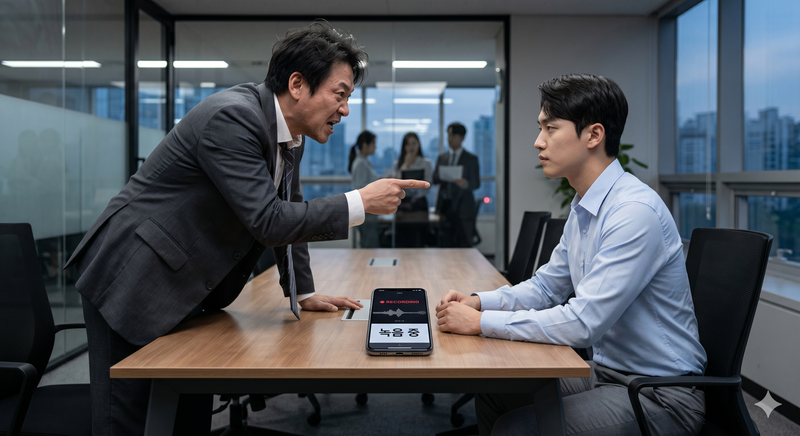
[The Financial News] In the sales team conference room, Kim Manager (49) raised his voice after slamming the proposal brought in by Lee Associate (28) onto the table.
"Is this what you call a report? Do you even have a brain, or not?"
At that moment, Lee Associate quietly slid his smartphone to the center of the table. A red "voice recording" button was running on the screen. "Manager, what you just said goes beyond a work-related critique and amounts to a personal insult. I will keep this as evidence of workplace harassment." Kim Manager suddenly felt speechless. A scene where a lecture to "do your job properly" is collected as evidence of a crime. This is the cold reality of South Korea's offices in 2026.
◇ "Back in my day, ashtrays were thrown" ... Kim Managers who have gone silent
For Kim Manager's generation, a superior's reprimand was an indispensable form of "growing pain" for the survival of the organization and the development of junior staff. They believed it was a senior employee's duty to harshly point out shortcomings. The older generation's complaint that "I didn't even use profanity, and I was only scolding someone for not doing their job well, so how is that workplace harassment?" is steeped in a sense of grievance.
But the standards have changed. Even a click of the tongue, a sigh, or a metaphor-laced rebuke such as, "Even an elementary school student could do better than this," can now become grounds for a complaint to labor authorities. As a result, managers at the director level are falling into "feedback phobia," shutting their mouths altogether out of fear of being recorded or reported. Rather than teaching the work, they would rather shoulder it themselves and stay late.
◇ The line between 'workplace criticism' and 'gaslighting' ... "Recording is the weak's self-defense"
By contrast, the logic of Lee Associate and the 20s and 30s generation is clear. They insist that "objective criticism of the result" and "emotional attacks on the person" must be strictly separated. To them, raising one's voice or publicly humiliating a colleague in front of others is not education. It is simply "gaslighting" and violence that exploits a power imbalance.
There are very few systematic ways for subordinates to resist unfair orders or verbal abuse from superiors. For Lee Associate, the smartphone recording function is the most rational and lawful form of self-defense available to the weaker party in an organization marked by power asymmetry. For young office workers, turning on the recording app the moment they enter a conference room has become a new survival manual.
◇ More than 10,000 harassment reports a year ... workplaces that have lost communication and frozen over
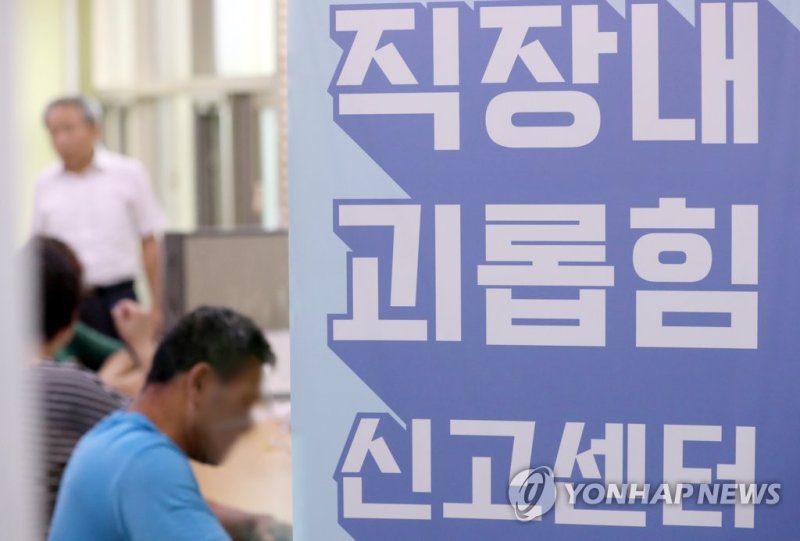
The statistics clearly show this tense atmosphere. According to the Ministry of Employment and Labor (MOEL), since the Prohibition Against Workplace Harassment (Article 76-2 of the Labor Standards Act) took effect in 2019, related reports have risen sharply every year and now far exceed 10,000 annually. What is notable, however, is that only about 10% of those cases are recognized as actual legal violations and lead to disciplinary action or fines.
That means the legal and emotional boundary between "legitimate work instructions" and "harassment" is highly ambiguous.
Labor experts, including Gabjil 119, say that "whereas in the past, emotional outbursts from superiors were lumped together as part of 'organizational culture' and endured, we have now entered an era in which they are defined as a clear violation of individual rights." The problem is that in this precarious balancing act, healthy mentoring and communication between generations inside organizations are also being completely severed.
A superior who has lost even the pretense of wanting to foster a junior's growth and instead puts up a wall of indifference. And a subordinate who stays on guard, always ready to press the record button. This sad game of reading the room, in which neither side can win, is still playing out today in tens of thousands of conference rooms across the country.
[email protected] Jeon Sang-il Reporter