Goldman Sachs Says South Korean Stocks Remain Undervalued, Expects Further Upside Cycle
- Input
- 2026-04-18 02:04:05
- Updated
- 2026-04-18 02:04:05
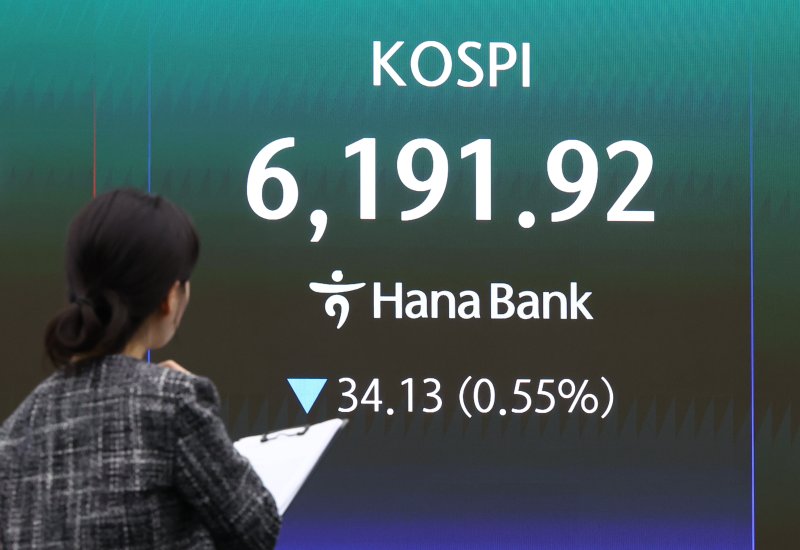
Goldman Sachs said South Korean stocks remain undervalued even after the KOSPI Composite Index surged 75% last year and 40% this year.
The firm said the market’s concentration in a few memory chip names such as Samsung Electronics and SK hynix, along with speculative positions by retail investors, has recently increased volatility. Even so, it said valuations remain low, suggesting there is still ample room for bargain hunting.
CNBC reported on the 17th local time that Goldman Sachs made the assessment in a recent research note.
The market remains undervalued
Goldman said the structural drivers behind the rebound in South Korean stocks remain intact.
Its analysts said corporate governance reform in South Korea is progressing "largely incremental" and that room for "undervaluation" remains across the market.
According to CNBC, South Korean stocks have traditionally lagged behind other emerging market peers. That was because the notorious chaebol distorted the market. Family-owned conglomerates have historically dominated entire industries, putting pressure on share prices and shareholder returns.
The Korea discount
For years, this was known as the "Korea discount." South Korean stocks consistently traded at lower price-to-earnings ratios than global markets. In other words, even with the same net profit outlook, shares were valued more cheaply.
Japan went through a similar experience.
Japan launched corporate governance reforms in the early 2010s, eventually paving the way for substantial gains for shareholders.
Goldman said South Korea still has a long way to go before it can say shareholder gains from governance reform have reached full success, as the process remains at an early stage.
The report said, "Performance so far this year has been driven mainly by earnings improvement," and added that it has been "supported in particular by strong demand for artificial intelligence (AI)-related semiconductors."
Shareholder value gains still fall short
The report also said, "The market remains discounted relative to regional and global peers," and added that this is true "despite steady improvements in shareholder value through the recent General Meeting of Shareholders season and ongoing corporate responses."
Goldman particularly praised the rise in share buybacks and cancellations, calling them examples of better governance. Even so, it noted that 70% of KOSPI-listed companies are still trading below book value.
The report said that while more companies are seeking to increase shareholder returns, governance reform is still moving at a gradual pace and improvements are meeting only part of shareholders’ expectations.
Goldman explained that this year’s General Meeting of Shareholders season confirmed the market is shifting into the early implementation phase of governance reform. It added that meaningful results are likely to come in future cycles.
The firm said additional governance improvements achieved through shareholder meetings are expected to serve as a catalyst for stock gains in the next market cycle.
The 2026 Iran War
CNBC, however, pointed to South Korea’s dependence on energy imports as a headwind. If the war in Iran drags on and the potential impact of an oil shock persists, the damage could spread across industries.
Kim Sung-hwan, minister of the Ministry of Climate, Energy and Environment, told CNBC in an interview that the war in Iran is "playing an important turning point" for South Korea’s transition to renewable energy. He said it is prompting the country to reduce its dependence on fossil fuels and increase the share of renewable energy such as solar power and wind power.
Kim said, "There is a growing national consensus that a fundamental energy transition is absolutely necessary."
CNBC noted that South Korea has set a goal of raising renewable energy generation capacity to 100 gigawatts (GW) by 2030. According to the Renewable Energy Research Institute, the country’s total renewable energy generation capacity currently stands at about 37 GW.
[email protected] Song Kyung-jae[email protected] Song Kyung-jae Reporter