U.S. shale oil producers move to boost output again amid high oil prices [Yoon Jae-joon's World View]
- Input
- 2026-04-18 05:00:00
- Updated
- 2026-04-18 05:00:00
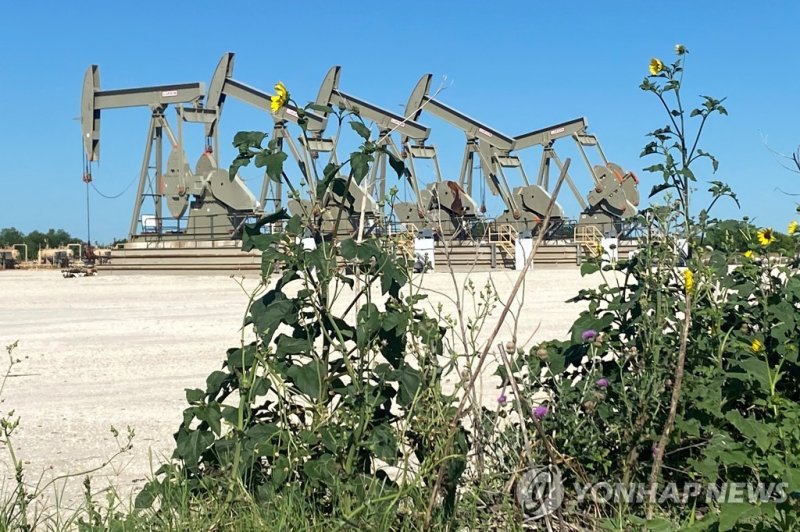
[The Financial News] U.S. shale oil producers, which had been reluctant to raise output even amid turmoil in the Middle East, are now showing signs of increasing production. The move is drawing attention as it could help push oil prices lower.
Since the United States and Israel launched airstrikes on Iran on Feb. 28 local time, oil prices have surged through the 16th. Brent crude has risen 31%, while West Texas Intermediate crude oil (WTI) has climbed 36%.
According to the Federal Reserve Bank of Dallas, shale producers consider $62 to $70 per barrel a profitable range for bringing additional wells online.
WTI even approached $113 per barrel on the 7th.
The shale boom in the United States played a major role in the collapse of global oil prices from mid-2014 to early 2016.
In October 2015, WTI even fell to the low $33 range per barrel.
After more than 20 years of expanding shale oil production, the United States has become the world’s largest oil producer, with average daily output of 13.6 million barrels.
In 2024, 64% of total U.S. crude oil production came from shale.
Even before the Iran war broke out, U.S. shale companies had been cutting investment because of the Biden administration’s hostile policies toward fossil fuels. At the same time, the Trump administration imposed tariffs on steel products while targeting $40 per barrel, adding to concerns across the industry.
Just months before the war, oil prices had fallen below $60 per barrel on global oversupply, threatening the profitability of shale producers.
The Trump administration called for higher crude output to bring prices down, but producers held back on investment, saying prices were not high enough to generate profits.
In January, the detention of Venezuelan President Nicolás Maduro Moros by U.S. special forces was also unwelcome news for shale companies.
But after the Iran war began and the Strait of Hormuz came under threat, the situation appears to be changing.
Continental Resources was the first to signal a production increase after the outbreak of the Iran war.
Harold Hamm, CEO of Continental Resources, widely known as a pioneer of shale oil, also raised the company’s production target while increasing its budget.
Hamm is known as one of the most ardent supporters of U.S. President Donald Trump among oil industry leaders.
In particular, production is expected to rise from wells that have not yet undergone hydraulic fracturing, or fracking, after drilling.
Matthew Bernstein, North America oil and gas director at Rystad Energy, said shale companies will decide on investment after analyzing oil price trends and whether high prices will persist. He added that signs of higher output are emerging, given that the war has lasted more than a month.
Still, energy information firms expect it will take several more months before production rises in the Permian Basin in Texas and New Mexico.
Mike Sommers, CEO of the American Petroleum Institute (API), said he is confident that higher oil prices will lead to increased U.S. production over the coming months.
Kieran Tompkins, an analyst at Capital Economics, said U.S. producers are the supply source that can respond fastest to oil price changes, but even so, it takes about three months.
As imports of Middle Eastern crude through the Strait of Hormuz are blocked, the United States is emerging as an alternative source of supply. Tankers from Asia and Europe are also turning toward the U.S., intensifying competition for shipments.
In particular, rising imports of U.S. crude by Asian and European countries pushed U.S. daily crude exports to 5.2 million barrels last week, up 1 million barrels in just one week. Exports of refined products, including gasoline, also rose to 7.5 million barrels per day. With more tankers heading to the United States, further export growth appears inevitable for now.
Oil experts noted that Asian tankers are at a disadvantage compared with European ones because they must travel farther, which raises costs.
U.S. oil companies are enjoying a tailwind from export opportunities, but the development could also prove to be a double-edged sword.
While oil exports benefit the U.S. economy, higher gasoline prices could increase the cost burden on American households and businesses.
The Financial Times (FT) reported that fierce competition to secure U.S. petroleum products could push prices even higher and worsen U.S. inflation. Although the U.S. government has not yet restricted exports of petroleum products, Rapidan Energy Group said restrictions could be considered if oil prices exceed $150 per barrel or if a ceasefire collapses.
[email protected] Yoon Jae-joon Reporter