"The construction market is at its worst; I struck out again today" — a heavy trip home from the dawn labor market [Recorder of the Low Places]
- Input
- 2026-04-18 06:00:00
- Updated
- 2026-04-18 06:00:00
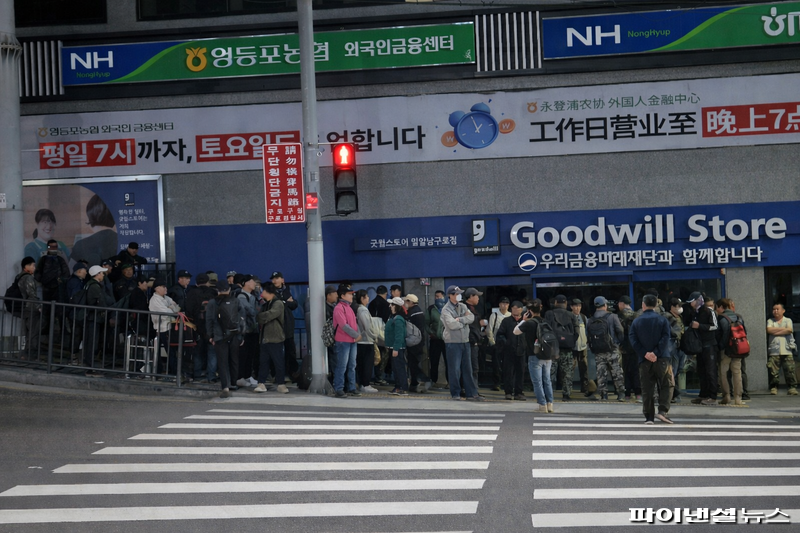
At Namguro Station labor market, people gather before the first train even starts running, hoping to find work. Day laborers met at the site said the number of construction jobs has shrunk, and more of them are returning home empty-handed even after coming out before dawn. It was a cold morning that showed how the construction slump is reaching workers who live day to day.
[The Financial News] "I just wish I could get some work, but it looks like I'm going home again today."At 4 a.m. on the 14th, a man in his late 50s, identified only as Kim, complained in front of a labor agency near Namguro Station in Seoul's Guro District. He was wearing a thin padded jacket over black work clothes. Vans came and went in front of the office, carrying workers to job sites. A few people got on, but even after the vans left, others remained where they were.
Before the first train, people had already gathered in the alley. Under the lights of a 24-hour convenience store and the labor agency sign, safety boots, work clothes, and worn backpacks were visible. Some smoked, while others held their phones and called other agencies. Without saying much, they kept glancing back and forth between the office door and the road.
Kim, who came from Bucheon, left home a little after 3 a.m. He has mainly worked on finishing jobs at construction sites, but he said the number of days he has been able to go out for work has fallen since last year. "I come out thinking there will be something, but these days I often end up waiting and going home," he said.The area near Namguro Station is known as one of Seoul's best-known dawn labor markets. Day laborers wait here to be assigned to jobs for the day.If they get work, they ride vans to construction sites in Seoul and the surrounding metropolitan area. If they do not, they either go to another labor agency or head home.Whether they can work is decided within the first hour or two before dawn.
The waiting line did not shrink even when the vans arrived

After 4:30 a.m., even more people had gathered in front of the office. One man stood holding a paper cup of coffee, and whenever a van stopped, eyes around him turned toward the road. A man in his mid-40s, identified only as Park, who said he had worked in formwork, was also waiting for an assignment in front of the office.Park said"In the past, I used to go out five days a week."These days, he said, even three days is not easy.He said the real issue is not how much the daily wage is, but how many days he can work. Even if the daily rate appears higher, fewer working days in a month mean less money for living expenses.
Among those waiting, Korean nationals and ethnic Chinese residents were mixed together. People who knew each other exchanged brief greetings, while others stayed focused on their phones. Few sat for long. They had to be ready to move as soon as a van arrived.
When one van left from in front of the office, the remaining workers returned to their spots. Those who had not gotten on looked toward the inside of the office. A man in his early 50s, identified only as Lee, said, "This is the most awkward time." They had to decide whether to keep waiting or go somewhere else.
As work dries up, the number of working days falls first
As 6 a.m. approached, some people headed to other alleys. There are several labor agencies around Namguro Station. If there is no work at one place, they look for another. But as the dawn hours pass, the chances of finding work decline. Site vehicles usually fill their crews early.
Lee, in his early 50s, who said he had worked demolition and cleanup jobs, said, "If there's even half a day, I'll go." Even a morning shift is better than going home empty-handed, he said. After subtracting transportation and meal costs, little is left, but it is still better than losing the whole day.For day laborers, one day's work is the same as one day's living expenses.There is no fixed monthly salary. If it rains or a site shuts down, income stops too. Even if they take a day off because they are sick, there is no guarantee of work the next day. The first thing people check at the dawn labor market is not the weather, but whether they have been assigned to a site.Another worker said he had only been able to work about half the days in the past month. "If I can't go out for work, the whole day is just empty," he said. He added that even when he goes home, he cannot feel at ease, because he has already spent the early morning waiting and must come out again the next day.
Construction employment falls even as overall jobs rise
The waiting at the site is closely tied to indicators for the construction economy.According to the "Employment Trends for March 2026" released on the 15th by the Ministry of Data and Statistics, total employment last month rose by 206,000 from a year earlier. But construction employment fell by 16,000. While overall employment increased, construction continued to decline.A similar trend appeared in the March issue of "Monthly Construction Market Trends," released on the 13th by the Construction Economy Research Institute of Korea. According to the institute, the number of construction workers in February stood at 1.869 million, down 2.1 percent from a year earlier.
Construction employment is highly sensitive to the amount of work at sites. When orders and groundbreaking projects decline, the amount of work available falls after a certain lag. Day laborers, who are called in by task, feel the drop in volume even faster.For the people who came to Namguro Station labor market, what mattered most waswhether they would be assigned work that day, not macroeconomic indicators. Even if the numbers improve, there is no income for the day unless a site calls.At this place, the recession is reduced to a simple question:"Will I go out today, or not?"
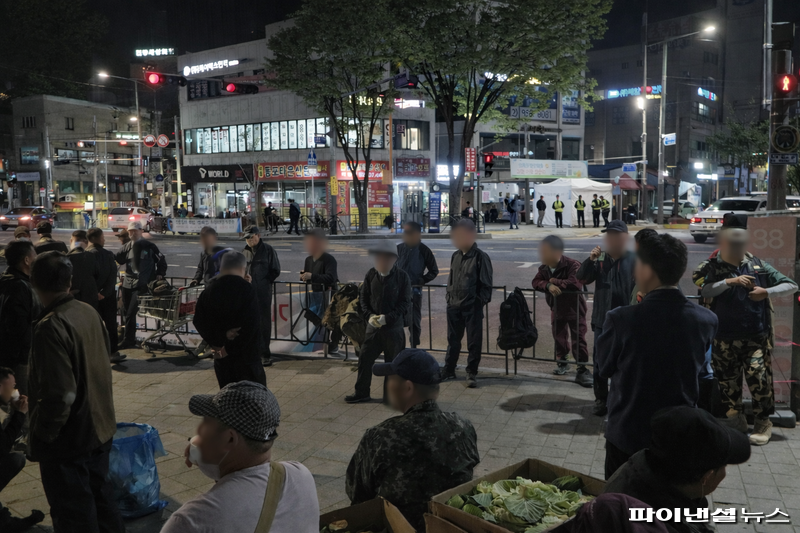
Those who got on the van, and those left behind
As time passed, some stood in front of the convenience store smoking, while others walked toward the station entrance. Some went looking for another agency. Park, who said he had worked in formwork, did not get a site assignment that day. "I'll wait a little longer, and if it doesn't work out, I'll head in," he said.When asked whether he could sleep again after going home, he answered with a smile."How could I sleep? I have to come out again tomorrow."He checked the labor agency numbers saved on his phone.
The dawn at Namguro Station labor market is short. Once the early-morning assignments are over, those who got on the vans head to construction sites, while the rest look for another agency or go home. Before office workers begin arriving at the station, their day has already split in two.
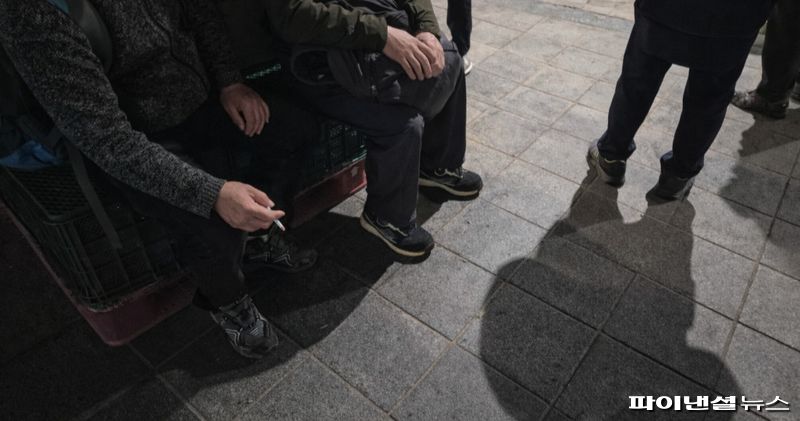
A dawn that returns empty-handed
Kim, who came from Bucheon, never managed to get on a van. He put his gloves back into his bag and walked toward the station. "I guess today isn't my day." When asked whether he would eat breakfast before heading in, he shook his head. "I need to save even that money," he said.
Those who failed to get work did not stay long. Some headed to the alley where other agencies were located, and some turned toward the station entrance. They had come out before dawn and waited, but if they could not get on a van, there was no income for the day.In front of the labor agency near Namguro Station, the construction slump showed up as waiting lines and empty-handed returns home.Between 4 a.m. and 6 a.m., people kept arriving, and only some left for job sites in vans. Those who remained said they would have to come out again at dawn the next day.
As people began to scatter through the alley, Kim made one last remark. "I have to come out again tomorrow. I can't not come."
We record the stories of real lives in print. Even if the language is rough, we preserve the words gathered on the scene as they are. From alleys and markets to someone's workplace, the record of an ordinary day that passed us by comes to readers. If you would like to receive Recorder of the Low Places more easily, please subscribe to the reporter page.
[email protected] Han Seung-gon Reporter