Second-Round Talks Likely in Pakistan Next Week... Israel and Lebanon Also Near Ceasefire [US–Iran Second-Round Talks Imminent]
- Input
- 2026-04-16 18:17:19
- Updated
- 2026-04-16 18:17:19
■ Trump eyes late April, says "end of the war is near"
According to Sky News in the United Kingdom on the 15th, United States President Donald John Trump referred to a possible end-of-war agreement with the Islamic Republic of Iran in an interview the previous day. Asked whether he could reach a deal with Iran before King Charles III of the United Kingdom pays a state visit to the United States, Trump replied, "It’s possible. Very possible. They (Iran) have been hit pretty hard." King Charles III is scheduled to visit the United States from the 27th to the 30th.
On the 15th, White House spokesperson Karoline Leavitt also told reporters at a press briefing, "We are optimistic about the prospects for an agreement." She stressed, "For Iran, clearly the best course of action is to accept the demands of the US president."
The United States has been attacking the Islamic Republic of Iran since February and on the 7th announced a two-week ceasefire. The ceasefire is set to end on the 21st. The two sides held talks to end the war in Islamabad, Pakistan, on the 11th and 12th but failed to produce results. Leavitt said, "There were a few incorrect reports this morning that we had formally requested an extension of the ceasefire, but that is not true at this time," adding, "We remain very committed to negotiations and talks."
That same day, Esmail Baghaei, spokesperson for the Islamic Republic of Iran’s Ministry of Foreign Affairs, said at a briefing, "Even after the Iranian delegation returned from Islamabad on the 12th, there have been several exchanges of messages with the United States through Pakistan." He explained that no date has yet been set for a second round of talks with the United States, nor has any decision been made on extending the ceasefire.
Foreign media outlets reported that Iran has proposed a compromise to the United States on control of the Strait of Hormuz, citing unnamed officials. According to one such official, Iran indicated that if a future agreement to prevent clashes is reached, it will not attack ships transiting between the territorial waters of Oman and the strait.
■ Second round also likely to be held in Pakistan
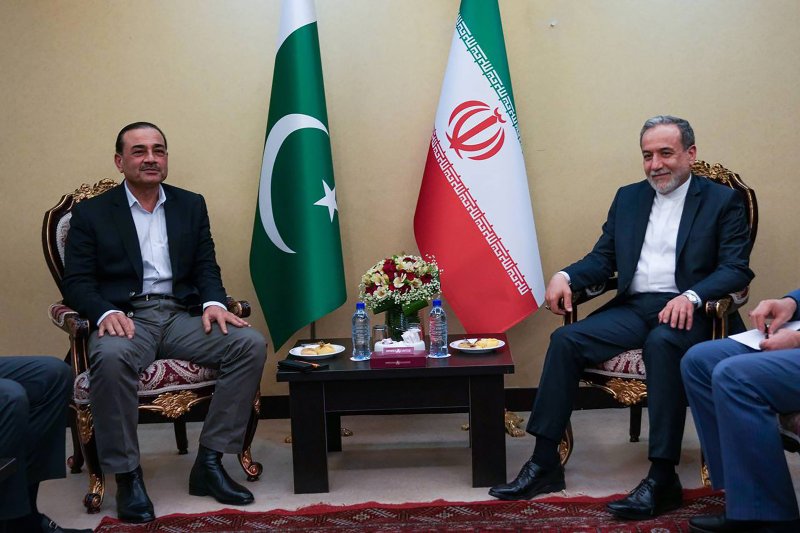
At the White House briefing on the 15th, Leavitt said of the venue for the second round of talks with the Islamic Republic of Iran, "It is very likely that it will be the same place as last time (Islamabad)." On the same day, Asim Munir, Pakistan’s Chief of the Army Staff, who is known as a key mediator in the end-of-war negotiations, arrived in Tehran and met with Islamic Republic of Iran foreign minister Abbas Araghchi.
According to The Associated Press (AP), the Pakistani delegation led by Asim Munir held a preliminary meeting with the Iranian side on the talks to end the war and agreed to continue discussions on the 16th.
An unnamed official told Tasnim News Agency on the 15th, "After its meeting with the Pakistani delegation, the Iranian side will conduct the necessary review and then decide whether to proceed with the next round of talks with the United States." The US political outlet Axios reported the same day that the United States and the Islamic Republic of Iran have exchanged draft texts for ending the war and are close to a "basic agreement."
For now, the two sides are engaging in a war of nerves ahead of the talks. On the 15th, Donald Trump posted on social media an audio warning from United States Central Command (CENTCOM) announcing the blockade of an Iranian port, in an apparent move to pressure Iran in the negotiations. That same day, The Washington Post reported that the USS George H.W. Bush aircraft carrier (CVN-77), which left the United States on the 31st of last month, is scheduled to arrive in the Middle East on the 21st. Once the Bush joins the fleet, the number of US aircraft carriers deployed in the region will rise to three. Also on the 15th, Khatam ol-Anbiya Central Headquarters, the Islamic Republic of Iran’s joint military command, issued a statement warning that it would respond if the United States continues to blockade the Strait of Hormuz and Iranian ports, declaring, "Iran’s powerful armed forces will not tolerate any import or export activity passing through the Persian Gulf, the Sea of Oman, or the Red Sea." It was the first time since the start of the conflict that Iran has officially mentioned controlling the Red Sea.
Meanwhile, Donald Trump wrote on social media on the 15th, "It’s been a very long time—34 years—since the leaders of Israel and Lebanon last held talks," adding, "It’s a great thing that a meeting will be held tomorrow." He described the upcoming talks as an effort "to create a bit of breathing room between Israel and Lebanon." Israel, which has been conducting joint airstrikes with the United States against the Islamic Republic of Iran, has been attacking Hezbollah, the pro-Iranian armed faction in Lebanon, since last month. The Iranian side has argued that halting the fighting in Lebanon is one of the conditions for the ceasefire it announced this month. Foreign media have reported that Israel, under pressure from the United States, could agree to a roughly one-week ceasefire in Lebanon. An official who spoke to Tasnim News Agency added, "A ceasefire in Lebanon would be a positive signal for Iran’s decision on the negotiations."
[email protected] Park Jong-won Reporter