US to Again Block Trade in Iranian Oil, Aiming to Choke Off Funds and Steer Talks [Second US–Iran Talks Imminent]
- Input
- 2026-04-16 18:17:14
- Updated
- 2026-04-16 18:17:14
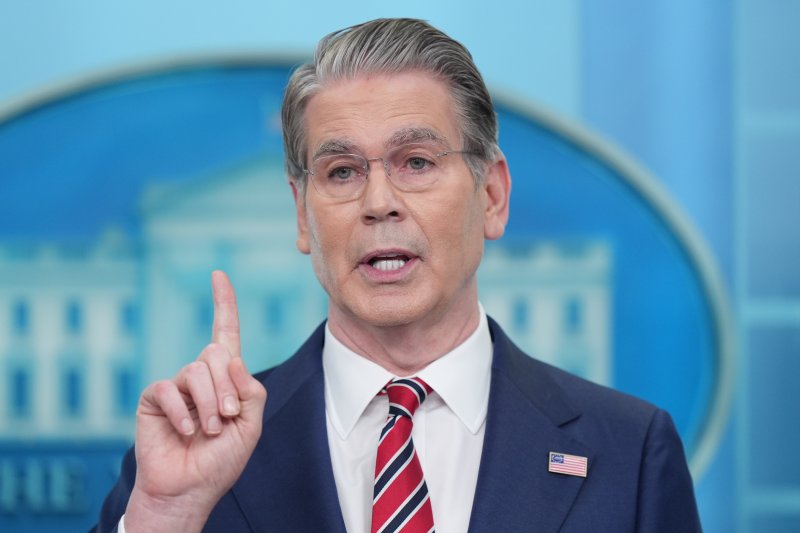
United States Secretary of the Treasury Scott Bessent stated at a regular briefing at the White House on the 15th (local time), "We will not renew the general license for Iranian and Russian oil." A general license is a temporary exemption that allows third countries to purchase oil from sanctioned states.
Initially, the US eased sanctions last month after the Middle East war sent global oil prices soaring and countries such as India struggled with fuel shortages. However, the waiver on Russian oil, which had been extended for one month on April 11, expired on May 11 with no further extension. The exemption for Iranian oil was also granted only for one month from April 20. It will end as soon as the deadline passes, with no renewal. Regarding the oil that briefly benefited from relaxed sanctions, Bessent dismissed concerns, saying, "Those were shipments that were already at sea before April 11, and they have all been used up."
The timing of the sanctions snapback is highly calculated. Just a day earlier, Washington had proposed a grand bargain to the Islamic Republic of Iran in an effort to break the deadlock. Immediately after putting a conciliatory offer on the table, it restored full oil sanctions and tightened Iran’s financial lifelines. Analysts say this reflects a clear bid to secure a dominant position at the upcoming second round of negotiations.
Bessent referred to an "economic wrath operation," stressing, "For more than a year, we have been exerting maximum pressure by blocking the flow of funds to the Iranian government and tracking the accounts of the Islamic Revolutionary Guard Corps (IRGC)." In practice, the Office of Foreign Assets Control (OFAC) of the U.S. Department of the Treasury has imposed sanctions on the network of the son of former Supreme National Security Council of Iran (SNSC) secretary Ali Shamkhani. OFAC explained, "He leads a multibillion-dollar Iranian–Russian oil sales empire that enriches families connected to the very top of the Iranian regime at the expense of the Iranian people." It is the largest single action taken since the resumption of former president Donald John Trump’s maximum-pressure campaign. Bessent warned, "Iran must understand that this will inflict damage equivalent to what we have seen in our military operations."
The main target of Washington’s economic pressure is China, which takes in more than 90% of Iranian crude exports. Bessent argued that, due to the closure of the Strait of Hormuz, China will have to halt purchases of Iranian oil, which currently accounts for about 8% of its energy demand.
He went further and directly targeted China’s financial system. "Two Chinese banks have received letters from the Treasury Department," he said, adding, "We have notified them that if we can prove Iranian funds have flowed through their accounts, we are prepared to impose secondary sanctions."
Secondary sanctions are a powerful tool that penalizes third parties that do business with sanctioned entities. Bessent said, "We view Iran’s bombing of Gulf Cooperation Council (GCC) countries as a fatal mistake," and added, "Neighboring states are now more willing to cooperate transparently in investigating Iranian funds within their domestic banking systems."
He also moved to calm public anxiety in the US over persistently high oil prices. Asked when average US gasoline prices, which have climbed above $4 per gallon, might fall, Bessent replied, "That will depend on how the negotiations proceed," but expressed optimism, saying, "Between June 20 and September 20, you will again see gas stations selling gasoline at $3 per gallon."
Having held a series of meetings with Middle Eastern finance ministers on the sidelines of the World Bank (WB) and International Monetary Fund (IMF) annual meetings, he noted, "They all say that if the Strait of Hormuz is reopened, oil shipments can resume within a week." He then pressed the industry, saying, "Gas stations raise prices very quickly, so when crude prices fall, I expect them to lower prices just as quickly."
[email protected] Kim Kyung-min Reporter